
Case Background
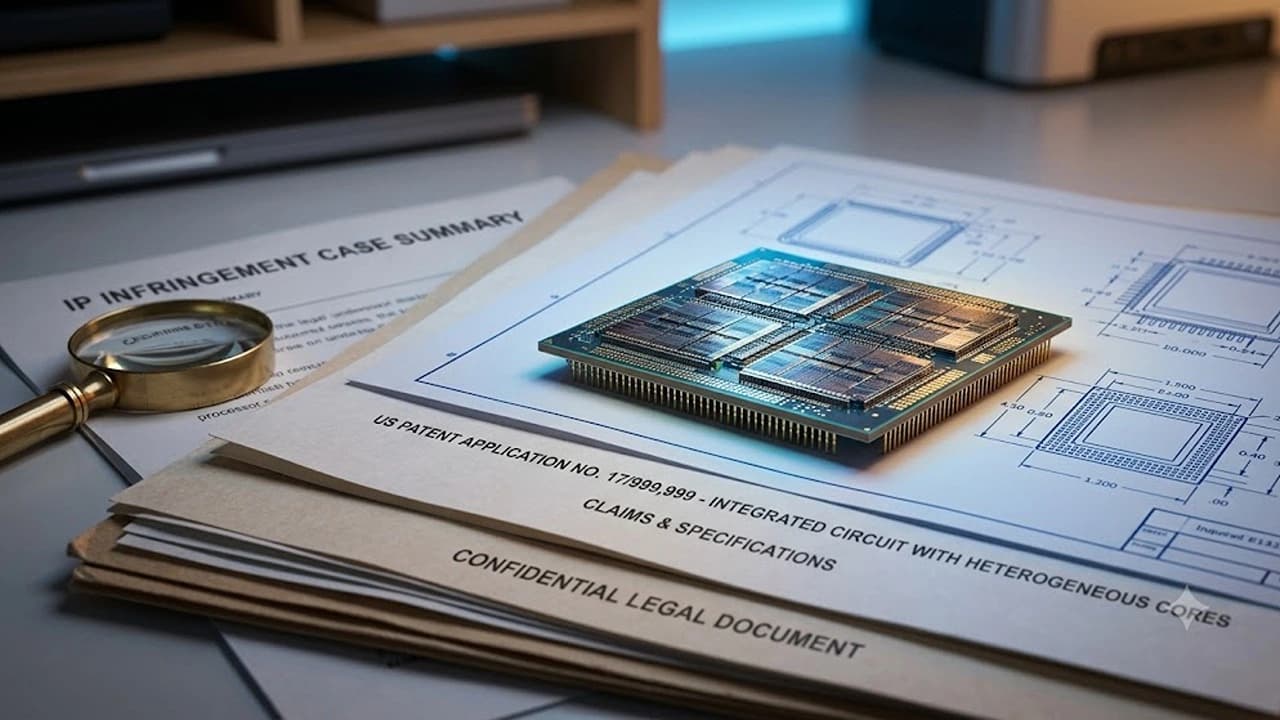
Ollnova Technologies Limited, an Irish company based in Dublin, sued Ecobee Technologies ULC, a Canadian smart thermostat manufacturer headquartered in Toronto, for patent infringement in the United States District Court for the Eastern District of Texas, Marshall Division. The case, numbered 2:22-cv-00072-JRG, was assigned to Judge J. Rodney Gilstrap. Ollnova filed its original complaint on March 8, 2022, and served Ecobee on March 21, 2022. An amended complaint followed on April 26, 2022. The case proceeded to a jury trial, and the jury returned its verdict on October 5, 2023.
Cause
Ollnova accused Ecobee of infringing four United States patents directed to improvements in wireless communications used in building automation systems. The patents at issue were U.S. Patent No. 7,860,495 (‘495 Patent), titled “Wireless Building Control Architecture”; U.S. Patent No. 7,746,887 (‘887 Patent), titled “Dynamic Value Reporting for Wireless Automated Systems”; U.S. Patent No. 8,264,371 (‘371 Patent), titled “Method and Device for Communicating Change-of-Value Information in a Building Automation System”; and U.S. Patent No. 8,224,282 (‘282 Patent), titled “Method and Device to Manage Power of Wireless Multi-Sensor Devices.” Ollnova owned all four patents by assignment and alleged that Ecobee directly infringed, induced infringement of, and contributorily infringed the patents.
Injury
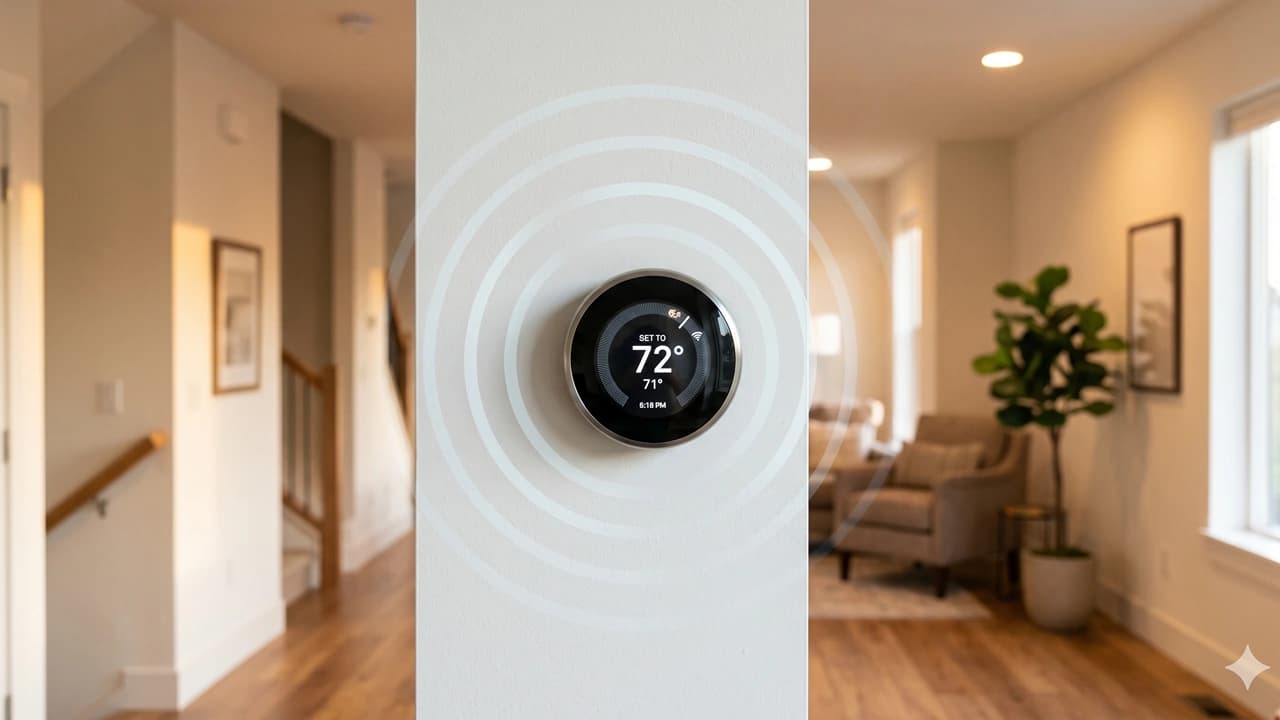
Ollnova alleged that Ecobee’s smart thermostat products used patented wireless communication and sensor technology without authorization. The accused products included the Ecobee Smart Thermostat, Ecobee Smart Thermostat with Voice Control, Ecobee Smart Si Thermostat, Ecobee3 Smart Thermostat, Ecobee4 Smart Thermostat, Ecobee3 Lite Smart Thermostat, and Ecobee Smart Sensor. Ollnova contended that Ecobee made, used, offered for sale, sold, and imported these products in the United States in violation of the patent laws.
Damages Sought
Ollnova sought monetary damages adequate to compensate for Ecobee’s infringement, including no less than a reasonable royalty. Ollnova also requested pre-judgment and post-judgment interest, compulsory ongoing licensing fees, an accounting of additional damages, and a finding that the case was exceptional under 35 U.S.C. § 285 to support an award of attorneys’ fees.
Key Arguments and Proceedings
Legal Representation
Plaintiff: Ollnova Technologies Limited
· Counsel for Plaintiff (Trial): Reza Mirzaie | Brett E. Cooper | Marc A. Fenster | Seth Hasenour | Drew B. Hollander of Russ August & Kabat, Los Angeles, California
· Counsel for Plaintiff (Appeal): Lucas M. Walker | Robert Auchter | Brett E. Cooper
Defendant: Ecobee Technologies ULC d/b/a Ecobee
· Counsel for Defendant (Trial): Timothy J. Carroll | Jason M. Dorsky | Manny J. Caixeiro | Daniel A. Apgar | Jennifer Parker Ainsworth
· Counsel for Defendant (Appeal): Michael P. Sandonato | Manny Caixeiro | Joshua Daniel Calabro | Jason M. Dorsky | Megan S. Woodworth
Claims
Ollnova asserted 14 claims across the four patents. From the ‘887 Patent, Ollnova asserted Claims 1, 11, 12, and 20. From the ‘495 Patent, it asserted Claims 1 and 2. From the ‘282 Patent, claims 1, 3, 6, and 21 were asserted. From the ‘371 Patent, Ollnova asserted Claims 1, 5, and 17. Ollnova argued that Ecobee’s thermostat and sensor products practiced the claimed inventions by using dual wireless network architectures, selective data transmission based on threshold conditions, change-of-value reporting with repeated transmissions, and multi-sensor power management features covered by these patents.
Defense
Ecobee denied all infringement allegations and raised several defenses. On patent eligibility under 35 U.S.C. § 101, Ecobee moved to dismiss all four patents as claiming abstract ideas. The district Court denied the motion, ruling that the ‘887, ‘371, and ‘282 patents were not directed to abstract ideas at step one of the Alice framework, while the ‘495 Patent was directed to the abstract idea of “controlling generic components using information from two separate sources,” but factual disputes remained at step two. On invalidity, Ecobee argued that the asserted claims were anticipated or obvious in light of prior art. Ecobee also alleged inequitable conduct during prosecution of the ‘887 and ‘282 Patents, claiming that the original applicants deliberately withheld material prior art references from the U.S. Patent and Trademark Office. Ecobee filed counterclaims seeking declarations of non-infringement and invalidity and asked the Court to declare the case exceptional.
Jury Verdict
On October 5, 2023, the jury returned its verdict. It found that Ecobee infringed at least one of the asserted patents, though the verdict form contained only a single infringement question covering all four patents and did not require the jury to specify which patent or patents were infringed.
Patent Eligibility
On patent eligibility of the ‘495 Patent, the jury found that Ecobee failed to prove by clear and convincing evidence that the asserted claims involved only well-understood, routine, and conventional technology as of April 9, 2004.
Invalidity
The jury delivered a split decision on invalidity. For the ‘495 Patent, it found that Claims 1 and 2 were not invalid. For the ‘282 Patent, the jury found all four asserted claims — Claims 1, 3, 6, and 21 — invalid as anticipated or obvious in light of the prior art.
Damages
The jury awarded Ollnova $11,500,000.00 in damages as a lump sum royalty covering the life of the patents.
Appeal
Both parties appealed to the United States Court of Appeals for the Federal Circuit under Case Nos. 2025-1045 and 2025-1046. A three-judge panel of Circuit Judges Chen, Cunningham, and Stark decided the appeal on June 4, 2026. The Federal Circuit vacated the infringement and damages judgments and ordered a new trial on both issues. The Court held that the district Court’s verdict form improperly combined all four patents into a single infringement question, which created a risk that jurors did not unanimously agree on which specific patent was infringed. The Court relied on its earlier decision in Optis Cellular Technology v. Apple, which held that a materially identical verdict form was an abuse of discretion because it permitted a finding of infringement without juror agreement on which patent was at issue.
The Federal Circuit also vacated and remanded the ‘495 Patent’s eligibility determination under Alice step two. The Court found that the jury instructions failed to identify the abstract idea and did not tell the jury that the abstract idea itself could not supply the inventive concept. This error effectively allowed the jury to treat the abstract idea as the inventive concept, contrary to established precedent.
The Court affirmed the district Court’s rulings that the ‘887 and ‘371 Patents were not directed to abstract ideas under Section 101. It also affirmed the denial of Ecobee’s motion for judgment as a matter of law on non-infringement of the ‘371 Patent. Because the infringement and damages judgments were vacated, the Court did not reach the remaining issues regarding Ecobee’s Daubert motions on damages and marking or Ollnova’s challenge to the district Court’s limitation of prejudgment interest and dismissed those portions of the appeals.
Court documents are available upon request at [email protected]