
Case Background
Aspen Networks, Inc., a California corporation with its principal place of business in Santa Clara, filed a patent infringement lawsuit against Cellco Partnership d/b/a Verizon Wireless, a Delaware general partnership headquartered in Basking Ridge, New Jersey, in the United States District Court for the Eastern District of Texas, Marshall Division. The case was assigned to the Court after Aspen filed its complaint on December 1, 2023. Verizon filed its answer on February 8, 2024. Both parties demanded a jury trial.
Cause
Aspen Networks sued Verizon Wireless for patent infringement under 35 U.S.C. §§ 271, 281, and 284–85. The patent at the center of the dispute was U.S. Patent No. 8,009,554, titled "Method For Multiple Link Quality of Service for Voice and Video Over Internet Protocol." The United States Patent and Trademark Office issued the patent on August 30, 2011, with Aspen Networks listed as the assignee.
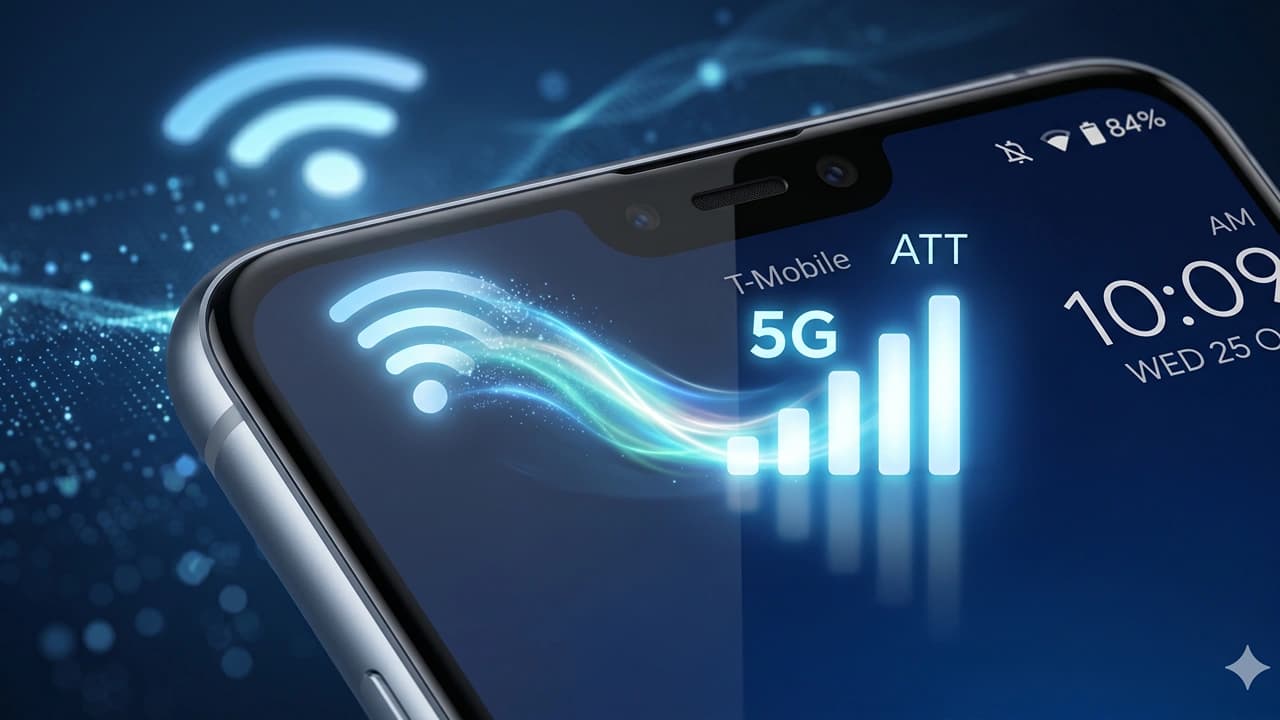
The patent described a method that allowed voice and video calls to switch seamlessly between a Wi-Fi network and a cellular network without dropping the call. Aspen claimed it developed this technology in 2006. According to Aspen, Verizon's Voice over Wi-Fi calling service — known as VoWi-Fi — used this patented technology without permission. Verizon introduced Wi-Fi calling to its customers in 2015.
Injury
Aspen argued that Verizon used its intellectual property without authorization, which allowed Verizon to offer uninterrupted calls to its customers while avoiding the cost of building additional cellular towers. Aspen maintained that this unauthorized use caused substantial and ongoing financial harm.
Damages Sought
Aspen asked the Court to declare Verizon's infringement willful and sought compensatory damages, treble damages for willful infringement, a permanent injunction, and attorney's fees under 35 U.S.C. § 285.
Key Arguments and Proceedings
Legal Representation
Plaintiff: Aspen Networks, Inc.
· Counsel for Plaintiff: Fabio E. Marino | Steven M. Levitan | Andrew Beverina | Jace Williams | Eric H. Findlay | Barry J Herman | Christine H Dupriest | Julie Giardina
Defendant: Cellco Partnership d/b/a Verizon Wireless
· Counsel for Defendant: Deron R. Dacus | Holly Engelmann | Kevin P. Anderson | Glenn D. Richeson | Jayla C. Grant | Aleksander Jerzy Goranin | Brianna M. Vinci | Elissa Sanford | John R Gibson | John Hillman | Matthew Sean Yungwirth | Robert M. Palumbos
Key Arguments by Counsel
Aspen argued that its patent covered the fundamental method by which a phone call moves between a Wi-Fi network and a cellular LTE network without interruption. The company pointed to Verizon's own website and technical documentation to show that Verizon's VoWi-Fi service used the Session Initiation Protocol, the Real-Time Transport Protocol, and Network Address Translation the exact technical components described in the patent claims. Aspen further argued that Verizon remained willfully ignorant of its patent rights by maintaining a company practice of not reviewing patents held by others, including instructing its employees not to do so.
Verizon denied all allegations of infringement. The company argued it did not infringe any valid and enforceable claim of the patent, either directly, by inducing others, or by contributing to infringement. Verizon also argued that the asserted claims were invalid under one or more provisions of 35 U.S.C. §§ 101, 102, 103, and 112. Additionally, Verizon raised defenses including prosecution history estoppel, patent exhaustion, license and implied license, statutory limitations on damages under 35 U.S.C. §§ 286 and 287, and the absence of willful infringement.
Claims
Aspen asserted infringement of Claims 1, 2, 6, 15, 16, and 20 of the '554 Patent.
Claim 1 covered a method of transmitting audio or video data between a source and destination over a first network path and switching that transmission to an alternative network path without disruption, where the transmission uses RTP and SIP protocols, at least one Network Address Translation is performed, and the SIP signaling sequence is maintained after the switch.
Claim 2 covered the same method where the switch from one network path to another occurs because of a stream quality event.
Claim 6 covered the same method where the source device is a mobile device.
Claim 15 covered a similar method involving Port Address Translation instead of Network Address Translation, requiring that the SIP signaling sequence be maintained after the switch.
Claim 16 covered the same PAT-based method where the switch occurs as a result of a stream quality event.
Claim 20 covered the same PAT-based method where the source device is a mobile device.
Defense
Verizon disputed each element of the infringement allegations and maintained that it did not perform all required steps of the asserted method claims. Verizon also argued that to the extent any steps were performed by third parties, it did not induce or contribute to any such performance. On validity, Verizon argued the patent claims failed to satisfy the statutory requirements for patentability. Verizon further contended that Aspen could not recover damages for any period before Aspen complied with the marking requirements of 35 U.S.C. § 287(a).
Jury Verdict
The jury returned its unanimous verdict on June 19, 2026, and the foreperson signed the verdict form on the 19th day of June 2026.
On Question No. 1, which asked whether Aspen proved by a preponderance of the evidence that Verizon directly infringed the patent, the jury answered YES on all six claims Claims 1, 2, 6, 15, 16, and 20.
On Question No. 2, which asked whether Verizon proved by clear and convincing evidence that any of those claims were invalid, the jury answered NO on all six claims, finding that Verizon failed to meet the higher burden required to invalidate a patent.
Because the jury found infringement of valid claims, it moved to Question No. 3 on damages. The jury awarded Aspen Networks $190,000,000, One hundred ninety million dollars as the amount that would adequately compensate Aspen for Verizon's infringement.
Court documents are available upon request at [email protected]