
Case Background
The legal battle began after Elon Musk agreed to purchase the social media giant Twitter, Inc. for approximately $44 billion in April 2022. Shortly after the announcement, Musk began making public statements that challenged the validity of Twitter’s reported user data, specifically concerning the prevalence of "spam" or "fake" accounts. These comments triggered a sharp decline in Twitter's stock price, causing significant financial losses for investors who sold their shares during this period of uncertainty. Lead Plaintiffs Steve Garrett, Nancy Price, John Garrett, and Brian Belgrave filed a class-action lawsuit on behalf of all investors who sold Twitter securities between May 13, 2022, and October 4, 2022. They alleged that Musk intentionally manipulated the market to either drive down the purchase price or back out of the deal entirely.
Cause
The Plaintiffs brought the action under the Securities Exchange Act of 1934, specifically Section 10(b) and Rule 10b-5. They alleged that Musk engaged in a fraudulent scheme by issuing false and misleading public statements to artificially depress Twitter’s stock price.
Injury
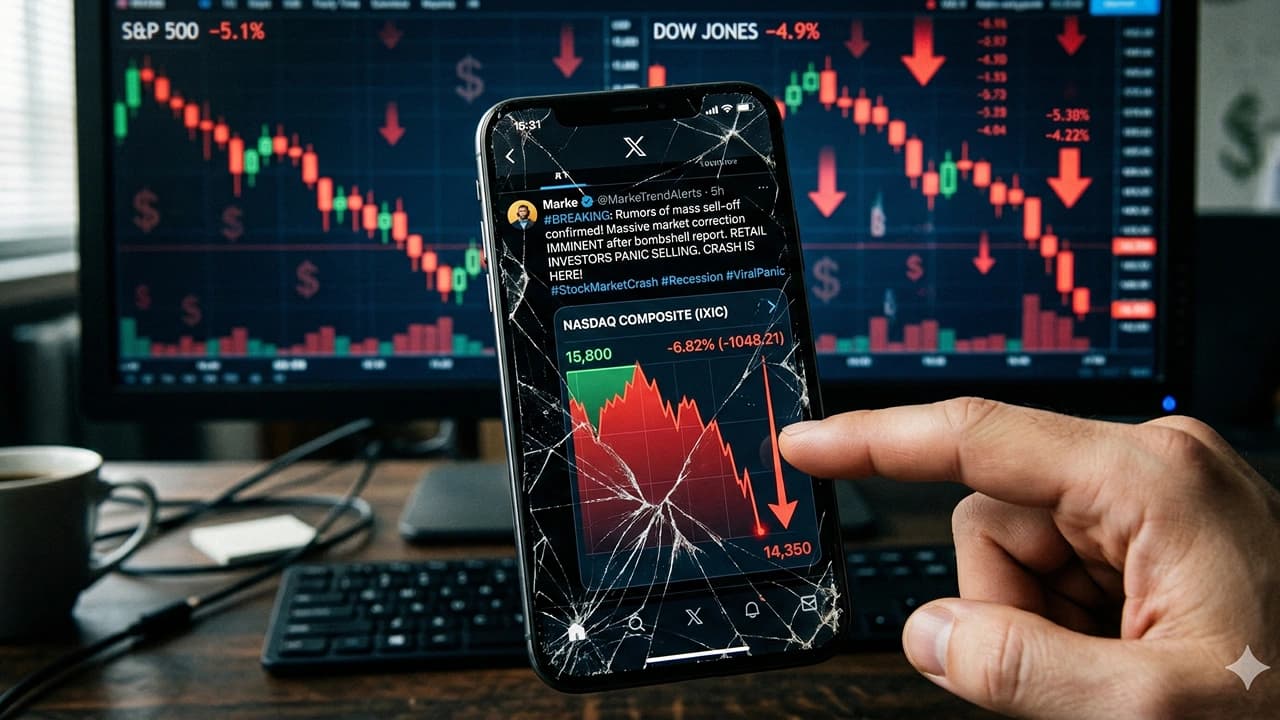
Investors who sold Twitter stock during the designated class period suffered direct economic harm. The stock price plummeted from over $50 per share to as low as $32.65 following Musk’s disparaging tweets and claims that the merger was "on hold".
Damages Sought
The Plaintiffs sought to recover the financial losses sustained due to the artificial deflation of the stock price. While the specific total was to be determined at trial, the complaint emphasized that the class suffered hundreds of millions of dollars in damages due to the market's reaction to Musk’s statements.
Key Arguments and Proceedings
The trial centered on whether Musk's tweets were factual statements or calculated deceptions. The Plaintiffs argued that Musk had already waived his right to further due diligence when he signed the "seller-friendly" merger agreement. Therefore, his public claims that the deal was "on hold" pending data verification were legally baseless and intended only to harm the stock price.
Legal Representation
Plaintiff(s): Steve Garrett, Nancy Price, John Garrett, and Brian Belgrave (representing the class).
· Counsel for Plaintiff(s): Joseph W. Cotchett | Mark C. Molumphy | Francis A. Bottini, Jr. | Albert Y. Chang | Aaron Paul Arnzen | Tyson Carl Redenbarger | Julia Q. Peng | Gia Jung | Caroline A. Yuen | Elle D. Lewis |
Defendant(s): Elon R. Musk.
Counsel for Defendant(s): Alex Spiro | Joseph C. Sarles | Stephen Andrew Broome | Ellyde Roko Thompson | Emily Frances Couture | Jesse A. Bernstein | Jonathan E. Feder | Joseph Caldwell Sarles | Matthew Alexander Bergjans | Michael Timothy Lifrak | Nathan Archibald | Phillip Jobe | Rebecca Arno | Stephanie Kelemen | Francis A. Bottini, Jr.
Key Arguments or Remarks by Counsel
Counsel for the Plaintiffs argued that Musk acted in "bad faith" and used his massive social media following as a "jackhammer" to erode trust in Twitter. They highlighted that Musk later admitted in a media interview that he only completed the deal because he was legally forced to do so, not because his concerns about "bots" had been resolved.
Musk’s defense team maintained that his statements were expressions of genuine concern regarding the health of the company he was about to acquire. They argued that Twitter had provided misleading information regarding its "monetizable daily active users" (mDAU) and that Musk had a right to speak publicly about these discrepancies.
Claims
The core claim was that Musk’s May 13 tweet stating the deal was "on hold" was a material misrepresentation because the merger agreement did not allow for such a unilateral pause. The Plaintiffs also cited subsequent statements where Musk claimed "fake accounts" made up 20% or more of the platform, far higher than Twitter's official 5% estimate.
Defense
The defense contended that the tweets were not "false" but reflected Musk’s ongoing investigation into Twitter’s internal data. They argued that any stock price decline resulted from the market's own assessment of Twitter's value, not from a "scheme" by Musk.
Jury Verdict
After deliberating on the evidence and the specific statements made by Elon Musk, the jury reached a verdict on March 20, 2026.
Liability: The jury found in favor of the Plaintiffs on two of the three statements and on the scheme claim, with a mixed result overall.
For Statement 1 that the Twitter deal was temporarily on hold pending details supporting the calculation that spam/fake accounts represent less than 5% of users the jury found that the Plaintiffs proved their Rule 10b-5(b) claim. For Statement 2 Musk's claim that fake/spam accounts were probably at least four or five times the 5% figure, with the lowest estimate being about 20% the jury found that the Plaintiffs did not prove their Rule 10b-5(b) claim. For Statement 3 Musk's assertion that 20% of accounts were fake/spam, that his offer was based on Twitter's SEC filings being accurate, and that the deal could not move forward until Twitter's CEO proved less than 5% the jury found that the Plaintiffs did prove their Rule 10b-5(b) claim. On the question of whether Musk engaged in a scheme to defraud Twitter investors under Rule 10b-5(a) and/or (c), the jury answered no.
Damages
Because the jury answered yes to questions 1 and 3, it proceeded to the damages section. The jury determined the per-share artificial deflation of Twitter stock for each trading day during the class period, from May 13, 2022, through October 3, 2022, with values ranging from a high of $7.94 per share (May 18, 2022) down to $2.88 per share (September 30, 2022). The jury selected the damages amount as calculated by the Plaintiffs' expert in Exhibit 298, based on Musk's false statements.
The verdict was dated March 20, 2026, and signed by the jury foreperson.
Court documents are available upon request at [email protected]