
Case Background
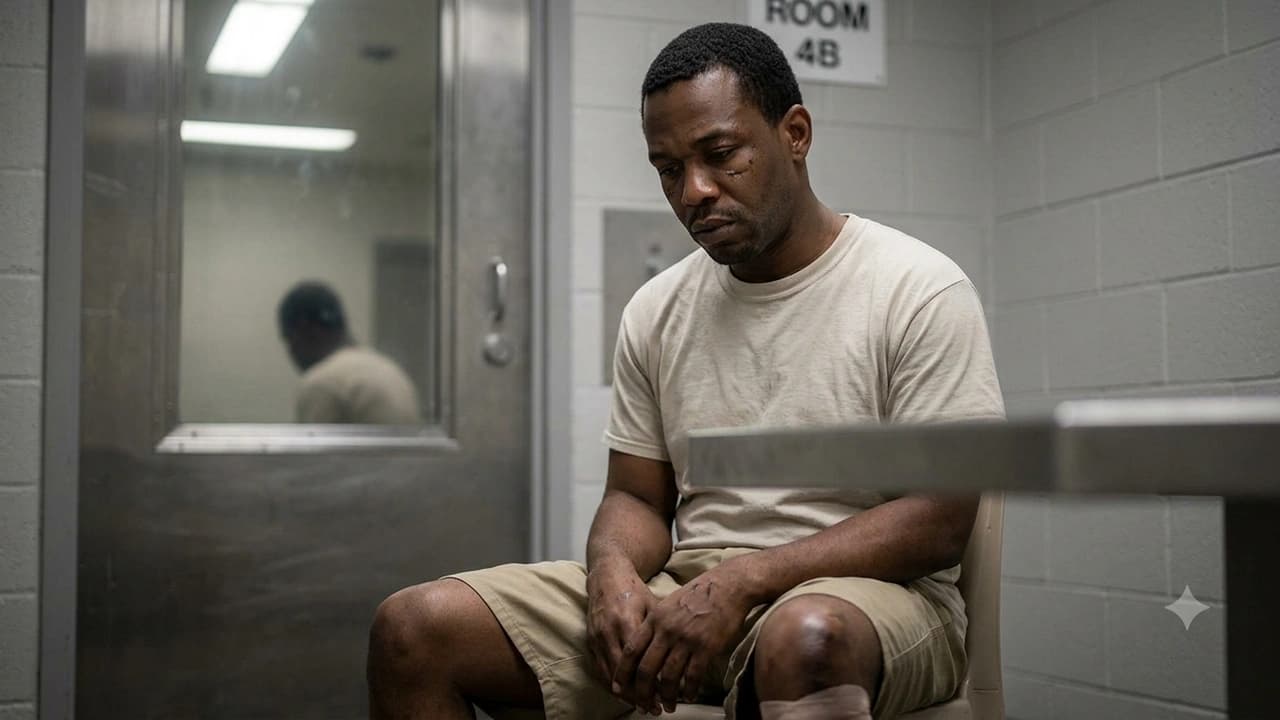
The incident occurred inside the Turner Guilford Knight Correctional Center, a facility operated by the Miami-Dade Corrections and Rehabilitation Department. Keschener Destin was a thirty-eight-year-old pretrial detainee housed in unit K64 of the facility. On May 1, 2020, at approximately 5:00 p.m., an altercation occurred inside Destin's cell between Destin and Corrections Officer E. Loiseau. Following the physical encounter, jail administrators placed Destin in solitary confinement for 118 days. Destin subsequently filed a federal civil rights lawsuit alleging that the officer had used excessive force and that the detention department had failed to properly train and supervise its personnel.
Cause
The dispute began during a routine security check when Officer Loiseau noticed a pair of uniform shorts hanging over the top of Destin's cell door. Officer Loiseau ordered Destin to remove the clothing because it obstructed the view into the room. Destin had washed his clothing in the shower and hung the shorts on the door to dry because the officer previously told him the facility dryer was off-limits. According to internal investigative records, Officer Loiseau claimed that Destin refused the order, shouted profanities, and charged at him with balled fists. Officer Loiseau stated that he then deployed a chemical spray in self-defense and brought Destin to the ground.
Destin provided a completely different account of the event during subsequent administrative and legal proceedings. Destin stated that he questioned the officer's aggressive tone and asked him what part of Haiti he was from. This question visibly upset Officer Loiseau, who then put on tactical gloves, drew his pepper spray while walking up the stairs, and sprayed Destin without provocation. Destin asserted that the officer then choked him, threw him to the floor, dragged him across the unit, and kicked him in the face after a supervisor placed him in handcuffs. Video evidence later reviewed by an internal disciplinary committee confirmed that Officer Loiseau had drawn his spray along his leg while climbing the stairs, flatly contradicting the officer's written report that he only pulled the spray after Destin charged him.
Injury
Destin suffered several physical and psychological injuries as a direct result of the chemical spray and physical force used during the altercation. He sustained partial vision loss directly caused by the chemical agent. He also suffered persistent, chronic pain in his knees and legs due to being thrown down and dragged across the concrete floor. Aside from the initial decontamination wash in the jail clinic, Destin did not receive further medical treatment or accommodations for his ongoing knee pain. Jail medical staff later denied his formal request for a lower bunk assignment. Furthermore, Destin suffered severe emotional distress, mental anguish, and depression, which were compounded by his immediate placement in solitary confinement for nearly four months.
Damages Sought
Destin sought both compensatory and punitive damages from the Defendants. He demanded compensatory damages to cover his physical injuries, severe pain, vision loss, and the intense psychological trauma caused by the beating and the subsequent 118 days of isolation. He requested punitive damages on the ground that Officer Loiseau acted with intentional malice, discriminatory animus, and a reckless indifference to his federally protected constitutional rights. Additionally, Destin requested that the Court issue permanent injunctions. The first proposed injunction sought to prohibit jail staff from executing retaliatory actions or using unlawful physical force against him. The second proposed injunction sought to compel the correction department to implement comprehensive training programs for officers handling similar institutional situations.
Key Arguments and Proceedings
Legal Representation
Plaintiff(s): Keschener Destin
· Counsel for Plaintiff: Pro Se
Defendant(s): Corrections Officer E. Loiseau and the Miami-Dade Corrections and Rehabilitation Department.
Counsel for Defendant(s): Geraldine Bonzon-Keenan | Bernard Pastor | Jennifer Laura Hochstadt | Erica Sunny Shultz Zaron
Key Arguments or Remarks by Counsel
Claims
Destin argued that Officer Loiseau violated his fundamental rights under the Fourteenth Amendment of the United States Constitution. He asserted claims for the deprivation of substantive and procedural due process, focusing directly on the use of excessive physical force by a state official. Destin alleged that Officer Loiseau singled him out and executed the physical assault based on racial and ethnic discrimination. He argued that the officer fabricated the disciplinary write-up to cover up an unjustified beating. Destin further argued that the Miami-Dade Corrections and Rehabilitation Department maintained a liability under federal law because it had failed to properly train, instruct, and supervise its corrections officers, which directly resulted in constitutional violations and unlawful retaliatory confinement.
Defense
Counsel for the Defendants argued that the complaint failed to state any valid claim upon which a Court could grant legal relief. The defense asserted that the lawsuit was entirely frivolous and lacked legal merit. They argued that Officer Loiseau was entitled to qualified immunity because his actions were objectively reasonable, executed without malice, and remained entirely within the scope of his discretionary authority as a county corrections officer. The defense contended that the officer did not violate any clearly established constitutional laws.
Furthermore, the defense argued that Destin's injuries resulted entirely from his own violent misconduct and explicit failure to follow lawful commands. They asserted that Destin posed an immediate threat of serious physical harm to the officer and the security of the unit. The defense argued that the officer acted reasonably in self-defense and used a justified, proportional amount of force to control an aggressive inmate. They claimed that Destin's aggressive actions constituted an intervening and superseding cause that legally exculpated the officer from liability. Finally, the defense argued that any potential damages should be barred or reduced because Destin failed to mitigate his injuries, and they demanded a legal set-off for any third-party medical benefits or insurance proceeds paid on Destin's behalf.
Jury Verdict
The trial concluded before a federal jury in the United States District Court for the Southern District of Florida. The jury deliberated on the specific interrogatories provided in the official verdict form. Following their review of the testimony and evidence, the jury returned a verdict completely in favor of the Defendant, Officer E. Loiseau on 2nd June 2026.
The jury specifically found that the Plaintiff did not prove by a preponderance of the evidence that Officer Loiseau intentionally committed acts that violated Keschener Destin's constitutional right to be free from the use of excessive force. Because the jury answered "No" to the foundational question of whether an unconstitutional violation had occurred, they did not proceed to evaluate whether the officer's conduct caused physical injury, nor did they calculate any compensatory or nominal damages. The jury further determined that no punitive damages were warranted, as there was no finding of malice or reckless indifference to federally protected rights. The foreperson signed and dated the verdict form, formally concluding the trial with a complete defense verdict.
Court documents are available upon request at [email protected]