
Case Background
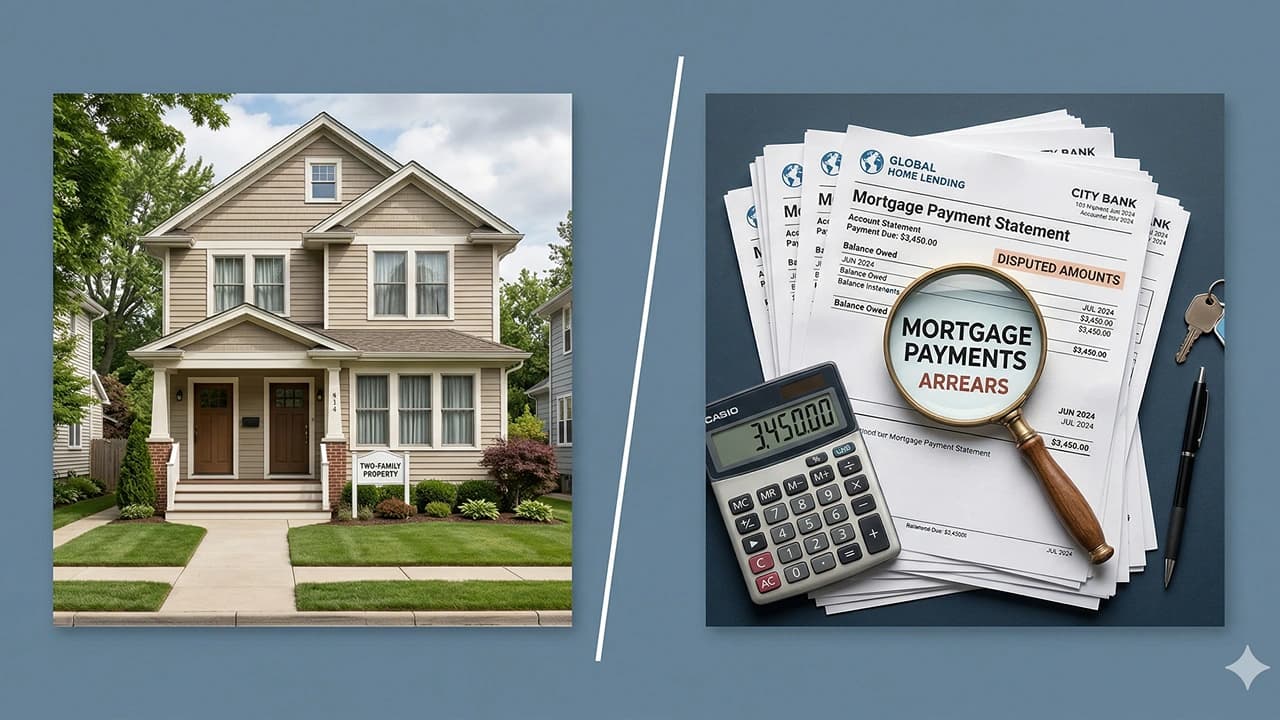
Ralston Brown, a Bridgeport, Connecticut resident, filed suit against Carrington Mortgage Services, LLC, an Anaheim, California-based mortgage company, in the Connecticut Superior Court. Brown obtained a home equity refinance loan of $216,000 against his property at 100–102 Harral Avenue in Bridgeport. The loan carried a fixed interest rate of 4.875% with monthly payments of $1,143.09 over a 30-year term. As part of the mortgage agreement, a portion of Brown’s monthly payment went into an escrow account managed by Carrington to cover property taxes and liability insurance premiums. At closing, the Defendant withheld $14,458.49 from the loan proceeds for the escrow fund. The Law Office of Raymond Hechedid handled the closing.
Cause
Just three months into the loan, in March 2018, Carrington significantly raised Brown’s monthly mortgage payment, claiming his insurance premiums increased. Brown alleged these representations were false. According to the complaint, the Defendant deliberately overpaid the insurance premiums, then when the insurance company refunded the excess amount back to Carrington, the company kept the refund without notifying Brown. Meanwhile, Carrington continued to charge Brown the inflated mortgage payment. Brown also alleged that Carrington applied late payment fees to his account as outstanding balances despite receiving his full payments on time. Eventually, Carrington refused to accept Brown’s mortgage payments altogether, returning two checks and stating the loan was in foreclosure.
Injury
Brown claimed he suffered financial harm from the overcharged mortgage payments, wrongfully applied late fees, and retained insurance premium refunds. He also cited emotional distress, including sleeplessness and extreme stress, resulting from the Defendant’s conduct and the threat of foreclosure on his home.
Damages Sought
Brown sought compensatory damages, punitive damages, treble damages under Connecticut’s unfair trade practices statute (Conn. Gen. Stat. §42-11m(a)), attorneys’ fees and costs, consequential damages, and an order directing Carrington to disgorge all revenues and profits gained through its alleged unfair practices. He also sought a waiver of the Defendant’s right to collect further mortgage payments.
Key Arguments and Proceedings
Legal Representation
Plaintiff: Ralston Brown
· Counsel for Plaintiff: Pro se | Andre Cayo
Defendant: Carrington Mortgage Services, LLC
· Counsel for Defendant: Jordan W. Schur, Esq. | Troutman Pepper Locke Llp | Phv Balser Justin D
Claims
Count One – Unfair Trade Practices
Brown alleged that Carrington engaged in unfair and deceptive trade practices under Connecticut law. He claimed the company deliberately overpaid his insurance premiums, retained refunds from the insurance company without disclosure, inflated his monthly payments based on false representations about premium increases, and applied unwarranted late fees. This count was addressed by the Court prior to the jury trial and was not included in the special verdict form submitted to the jury.
Count Two – Negligent Misrepresentation
Brown contended that even if Carrington’s conduct was not intentionally fraudulent, the company made false representations about insurance premium increases that Brown relied on to his detriment. The jury considered this claim under both Sections I and II of the special verdict form.
Count Three – Negligence
Brown asserted that he relied on Carrington to professionally manage his mortgage payments and escrow account. He placed complete faith and confidence in the Defendant to fulfill its duty of care. The complaint stated that Carrington breached this duty when it failed to handle his account properly, resulting in financial damages.
Count Four – Breach of Contract
Brown maintained that he complied with all terms of the mortgage agreement, while Carrington overcharged him and applied unwarranted late fees despite receiving timely payments. He further alleged that the Defendant returned two of his mortgage payment checks, effectively refusing to accept payment on a loan it claimed was in foreclosure.
Defense
Carrington denied all allegations and raised three special defenses. First, the Defendant argued that Brown failed to state a valid claim on any count. Second, Carrington contended it owed no legal duty to the Plaintiff regarding insurance premiums or premium refund disbursements, asserting those matters fell under the responsibility of Brown’s insurance company, Farmers Insurance. Third, the Defendant claimed that any negligence was committed by parties other than Carrington, including Brown himself and Farmers Insurance. At trial, the Defendant also raised a failure-to-mitigate defense and a setoff defense based on mortgage debt owed by Brown.
Jury Verdict
The jury returned its special verdict on March 6, 2026, before the Honorable Judge Jason Welch. The jury foreperson, Catherine Huxford, signed and certified the verdict form.
Negligence (Count Three)
On the negligence claim, the jury answered “No” to the threshold question of whether Brown proved Carrington was negligent in calculating and handling the escrow portion of his mortgage payment. Because the jury found no negligence, it did not reach the questions on causation or damages and returned a verdict in favor of the Defendant on this count.
Breach of Contract (Count Four)
On the breach of contract claim, the jury found that Brown proved the existence of an agreement between himself and Carrington. However, the jury answered “No” to the question of whether Brown performed his own obligations under the contract or whether his performance was excused. Because the jury found Brown did not satisfy this element, it did not proceed to the remaining questions on breach or damages and returned a verdict in favor of the Defendant.
Negligent Misrepresentation (Count Two)
The jury certification on the negligent misrepresentation count, which appeared in both Sections I and II of the verdict form, also resulted in a defense verdict. The jury found in favor of the Defendant against the Plaintiff on this claim.
Overall Outcome
The jury returned a complete defense verdict in favor of Carrington Mortgage Services, LLC, on all counts submitted for jury determination. Brown recovered no damages. The special defense sections regarding failure to mitigate and setoff based on mortgage debt were left unanswered, as they became moot once the jury found for the Defendant on all claims. The verdict was accepted by the Court on March 6, 2026.
Court Documents