
Case Background
Betajohmarie Brown worked as a registered nurse on a compliance team in the County of Los Angeles Department of Health Services. She started her employment in August 2018 at a facility located at 21801 South Western Avenue, Suite 250, in Torrance, California. Brown filed her original complaint on September 25, 2020, and filed a Second Amended Complaint on August 26, 2021, in the Superior Court of California, County of Los Angeles. The case proceeded to a jury trial on January 26, 2026, before the Honorable Michael C. Small in Department 57.
Cause
Brown alleged that she was physically and mentally disabled at the time she was hired. Her conditions included prior knee surgeries and knee replacement, carpal tunnel syndrome, degenerative disc disease, and depression. She stated that she discussed her disabilities and her need for specific workplace accommodations with the County before she was onboarded.
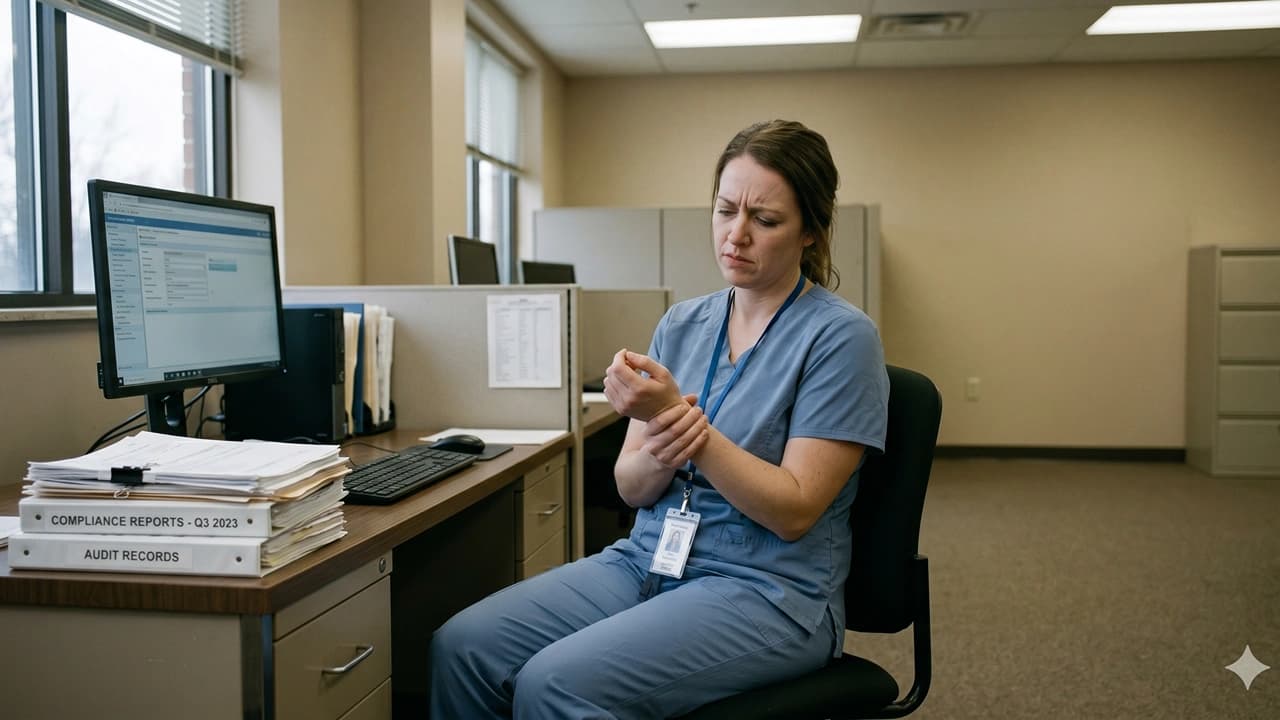
As part of her onboarding, Brown requested an ergonomic evaluation, a sit-and-stand workstation, and an anti-fatigue mat. Her physician provided continuing limitations that required her to sit or stand as needed in 30-minute intervals at her workstation. In October 2018, the County conducted an ergonomic evaluation that identified Brown's need for a task chair, an ergonomic keyboard, a document holder, an anti-fatigue mat, and a sit-and-stand workstation. Brown alleged that despite repeated requests, the County never provided her with a task chair, an anti-fatigue mat, or a sit-and-stand workstation.
Brown alleged that on her first day of work, she told her supervisor Beverly Ukoha that she needed to receive the accommodations she had previously requested. Ukoha's response was dismissive; she told Brown she had a lot of work that needed to be done and that Brown was hired to help her team. Brown alleged that Ukoha repeatedly called her "high maintenance" in front of co-workers when she raised accommodation requests and responded to her needs by saying she needed her reports. Brown alleged that when she told Ukoha the lack of accommodations was causing her excruciating pain, Ukoha appeared visibly irritated and made her comments in a hostile and dismissive manner.
On or around November 26, 2018, Brown's physician imposed further limitations: a five-to-ten-minute break every 30 minutes and no lifting more than 10 pounds for at least six months. Brown alleged that when she handed the doctor's note to Ukoha, Ukoha responded that the limitations were "self-imposed" and that it was up to Brown to follow her doctor's recommendations. Brown alleged there was no interactive process in response.
Brown alleged that in a subsequent meeting with Ukoha, Ms. Clark, and Mr. Fok, she again requested accommodations per the ergonomic report, and Ukoha stated she "can do what she can do" and that it was "on risk management." Brown also alleged that she asked Ukoha to provide accommodations or reduce her workload, and Ukoha responded that Brown was on probation for one year, that she was hired to help with Ukoha's workload, and that Ukoha would sign off on Brown's FMLA if Brown would push herself until August. Brown alleged she responded that she could not make it that long due to the severe pain she was in.
On or around February 12, 2019, Brown alleged she was called into Ukoha's office for a meeting where she was falsely accused of not performing duties, coming in late, not requesting Event IDs in a timely manner, being late to Ecaps and TEAM, calling in sick frequently, and not assembling complaint packages correctly. On or around June 11, 2019, Brown complained in writing to Mr. Fok that Ukoha retaliated against her for being disabled. On or around February 4, 2020, during a telephone interactive meeting with Dina Azar and Stephen Fok, Brown alleged she was advised to look for another position in the County if she believed she could not perform her current job duties, but was not offered any accommodations. Brown alleged that the County's failure to accommodate her forced her to go out on medical leave and that she had not been released as of the filing of the complaint.
Injury
Brown alleged that she suffered mental anguish, emotional distress, and a worsening of her physical disabilities as a result of the County's conduct. She also alleged lost wages and fringe benefits and past and future medical expenses.
Damages Sought
The Second Amended Complaint sought damages for lost employment income and benefits, general damages for pain and suffering, medical expenses, attorney's fees, costs of suit, and damages for the exacerbation of Brown's disabilities. No specific dollar amount was demanded; each category was stated as "according to proof."
Key Arguments and Proceedings
Legal Representation
Plaintiff: Betajohmarie Brown
· Counsel for Plaintiff: Timothy B. Sottile | Michael F. Baltaxe | Payam I. Aframian Esq | Victoria V. Felder
Defendant: County of Los Angeles
· Counsel for Defendant: Jeffery M. Hausman | Lisa A. Grigg
Key Arguments or Remarks by Counsel
Claims
Brown's Second Amended Complaint asserted six causes of action under California's Fair Employment and Housing Act: disability discrimination, harassment based on disability, failure to accommodate, failure to engage in a good faith interactive process, retaliation, and failure to prevent discrimination, harassment, and retaliation.
On February 28, 2022, the Court granted the County's demurrer to the second cause of action for harassment and the fifth cause of action for retaliation without leave to amend. Those claims were dismissed.
The special verdict form submitted to the jury addressed two claims: failure to provide a reasonable accommodation and disability discrimination based on disparate treatment.
Defense
The County filed a general denial to the remaining causes of action and asserted 42 affirmative defenses. This included failure to state a cause of action, statute of limitations, comparative fault, failure to mitigate damages, assumption of the risk, acts beyond the scope of employment, governmental immunities under multiple provisions of the California Government Code, unclean hands, laches, after-acquired evidence, bona fide occupational qualification, business necessity, undue hardship, inability to perform essential job duties, and failure to exhaust administrative remedies, among others.
Jury Verdict
A jury of 12 deliberated and returned a special verdict on February 17, 2026.
On the failure-to-accommodate claim, the jury found that Brown had physical disabilities that limited her ability to work, that the County knew of those disabilities, that Brown was able to perform her essential job duties with reasonable accommodation, that the County failed to provide reasonable accommodation, and that the County's failure was a substantial factor in causing harm to Brown.
On the disability discrimination claim based on disparate treatment, the jury found that the County knew of Brown's physical disabilities, that Brown could perform her essential job duties with reasonable accommodation, and that the County took adverse employment action against her. However, the jury found that Brown's physical disabilities were not a substantial motivating reason for the County's adverse employment action. The disparate treatment claim was not sustained.
The jury awarded Brown total damages of $11,845,510, broken down as follows: $958,000 in past lost earnings, $4,887,510 in future lost earnings, $3,000,000 in past noneconomic damages for physical pain, mental suffering, loss of enjoyment of life, physical impairment, inconvenience, grief, anxiety, humiliation, and emotional distress, and $3,000,000 in future noneconomic damages for the same categories.
The Court entered judgment on April 17, 2026, ordering the County to pay $11,845,510, together with costs and reasonable attorney's fees in amounts to be determined, with interest at a rate of seven percent per annum from the date of the entry of judgment.
Court documents are available upon request at [email protected]