

Case Background
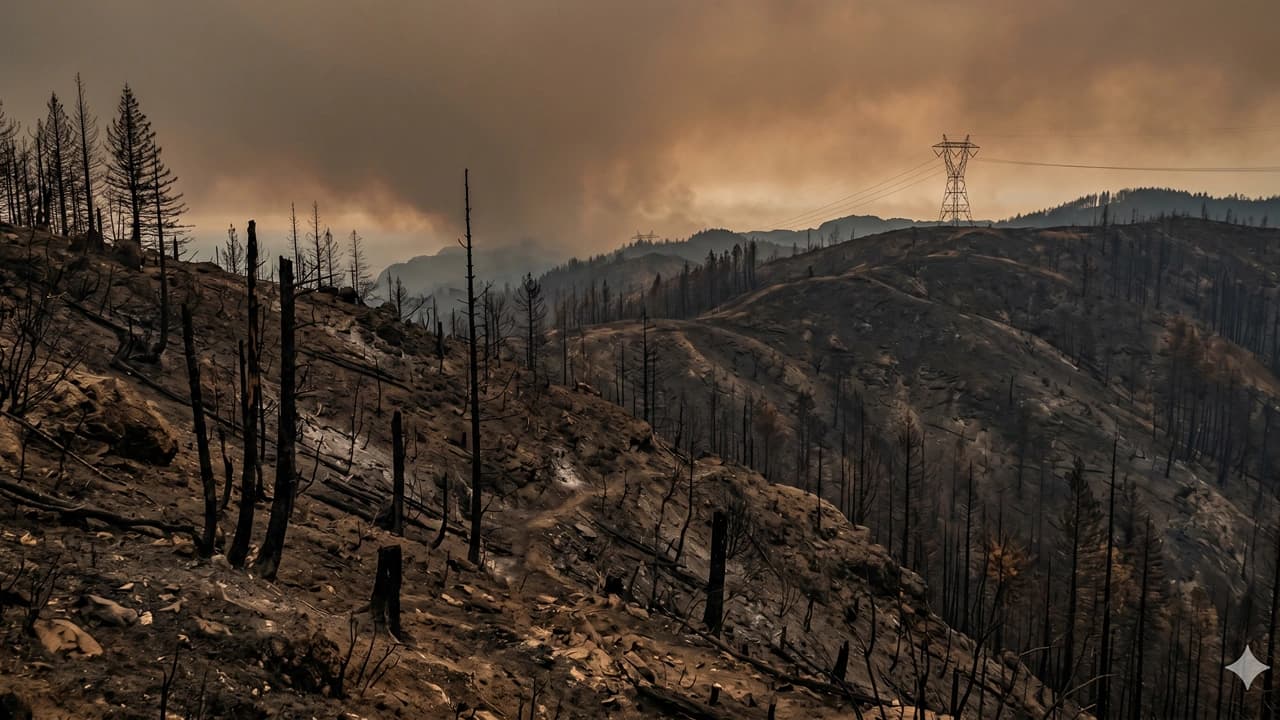
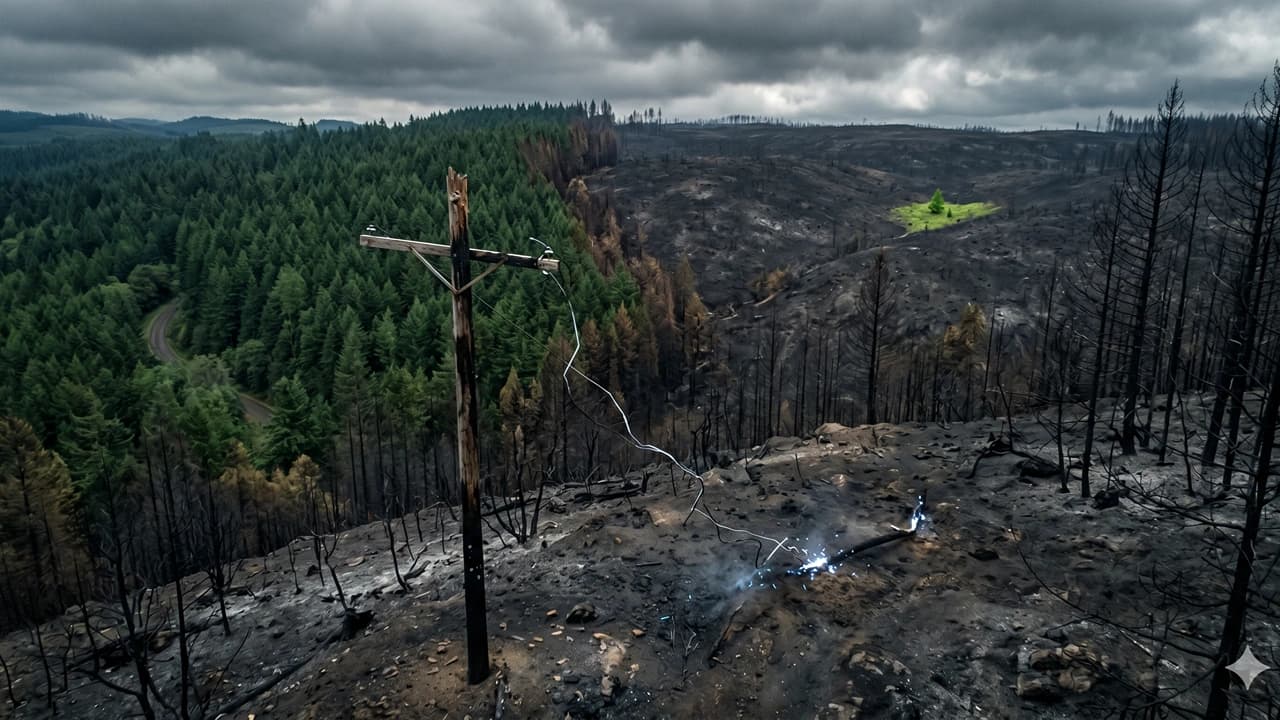
The case involved residents and property owners from multiple Oregon counties who brought a class action lawsuit against PacifiCorp, operating under the name Pacific Power. Plaintiff’s alleged that the utility company’s failure to de-energize its power lines during an extreme weather event on Labour Day 2020 led to some of the most devastating wildfires in Oregon history. Despite clear warnings from the National Weather Service about dangerously high winds and critical fire conditions, PacifiCorp left its electrical lines live, which allegedly caused multiple ignition points and widespread destruction. Plaintiffs claimed that the resulting fires scorched homes, schools, businesses, and forests across vast areas, displacing thousands of residents.
Cause of the dispute
The sequence began on September 5, 2020, when the National Weather Service warned of an impending windstorm. By Labour Day, Oregon experienced high temperatures, dry fuels, and wind gusts exceeding 75 mph. Other utility providers de-energized their lines. PacifiCorp did not. The Plaintiffs argued that PacifiCorp knew the risks and ignored internal policies, regulatory guidance, and industry practices about Public Safety Power Shutoffs (PSPS). Plaintiffs alleged the fires like the Santiam and Echo Mountain Complex fires originated from PacifiCorp’s downed, energized power lines. Investigations and witness statements confirmed power lines sparked flames across several counties. Plaintiffs asserted the company prioritized profit and convenience over community safety.
Injuries suffered
Many Plaintiffs lost their homes and personal possessions overnight. Some fled with only the clothes they wore. Others endured repeated evacuations and now live in hotels, vehicles, or temporary shelters. Plaintiffs described escaping by foot through wind-blown debris and roadblocks. Communities suffered displacement, trauma, and severe disruption. With roads blocked and no emergency notices, residents received no formal warnings. Many suffered emotional and psychological harm, in addition to the physical loss of shelter and stability. The smoke and airborne pollutants also harmed health state-wide for weeks.
Damages Sought
Plaintiffs sought over $600 million in damages. They claimed extensive property destruction, lost businesses, lost income, environmental harm, and emotional trauma. Damages also included costs of evacuation, temporary housing, and restoration. The class included individuals, families, and businesses who suffered varied losses across different communities. Many lacked insurance or received insufficient payouts. The complaint emphasized both the direct destruction of assets and the long-term disruption to families, livelihoods, and community cohesion.
KEY ARGUMENTS AND PROCEEDINGS:
LEGAL REPRESENTATION
o Plaintiff(s): Jeanyne James| Robin Colbert | Jane Drevo | Sam Drevo | Brooke Edge | Bill Edge | Sr., Lori Fowler| Iris Hampton | James Holland | Rachelle Mcmaster | Kristina Montoya | Northwest River Guides, Llc | Shariene Stockton | Kevin Stockton | Victor Palfreyman | Palfreyman Family Trust | Duance Brunn
o Counsel for Plaintiff(s): Carsen S Nies | Derek C Johnson | Benjamin Gould | Victor Cedeno | Keith A Ketterling | Amy Hausmann | Brandt Silver-Korn | Emily A Johnson | Landon Webster | Marilyn A Heiken | Matthew Preusch | Megan Delurey | Patrick Ntchobo | Paul Sewell | Rafey S Balabanian | Sarah R Osborn | Todd Logan | Zoe Seaman-Grant | Carsen S Nies | Daniel Mensher | Nicholas H Rosinia | Timothy S Dejong| Todd Logan | Yoona Park | Cody Berne | Per A Ramfjord
o Expert for the Plaintiff: Robin Thomas | David Anthony Braunreiter
· Defendant(s): Pacific Power
o Counsel for Defendant(s): Brad S Daniels | Abraham Weiss |Alison L Plessman | Blaine Evanson | Blair E Ganson | Brad S Daniels | Christopher Galeano | Craig A Fligor | Derek R Flores | Crystal S Chase | Douglas J Dixon | Ellen C Kenney | Emily Michael Munson | John S Cagan | Jonathan Kuang | Joshua Dubin | Kaitlyn K Lindaman| Katharine S Shepherd | Kenneth D Nguyen | Khoa D Nguyen | Marshall A Camp | Michael A Behrens | Michael P Schneider | Padraic W Foran | Rajan S Trehan | Varun Behl | Tyler J Killeen | Tyler Dang | Thomas King | Per A Ramfjord| Stephanie W Xiao | Samantha Sondag | Reilley D Keating | Rajan S Trehan
Claims Asserted
Plaintiffs brought multiple legal claims against PacifiCorp and Pacific Power, centered on the company’s alleged role in causing the 2020 Labour Day wildfires. The lead claim was negligence. Plaintiffs argued PacifiCorp failed to shut off power lines despite clear weather warnings, failed to inspect and maintain its infrastructure, and ignored the foreseeable risk of fire.
They also asserted gross negligence, claiming the utility acted with reckless disregard. Plaintiffs said PacifiCorp knew the potential for disaster, had internal fire prevention protocols, and still chose not to act putting public safety second to operational convenience.
The complaint included public and private nuisance claims. Public nuisance focused on widespread harm to communities, such as hazardous smoke and mass displacement. Private nuisance addressed interference with the use and enjoyment of private homes and land.
Plaintiffs further alleged trespass, arguing that fire caused by PacifiCorp’s equipment invaded their property unlawfully. They also claimed inverse condemnation, saying the utility’s operation resulted in the destruction of private property constituting a “taking” without compensation, similar to what applies to government action.
Defense Arguments
PacifiCorp responded by denying nearly every material allegation in the Plaintiffs' complaint. It argued that it bore no responsibility for the wildfires that swept through Oregon on Labour Day 2020. The company maintained that the fires stemmed from a rare and extreme weather event, not from negligence or mismanagement. It emphasized that the storm involved unprecedented high winds, high temperatures, and dry fuel conditions that combined to create a state-wide emergency. In its view, these were acts of nature well beyond the scope of any utility’s control.
PacifiCorp stressed that it had complied with all legal and regulatory obligations. The company stated it had conducted vegetation management, maintained its equipment, and issued public updates as conditions developed. It acknowledged the risks of wildfires but argued it had no legal duty to pre-emptively shut off power. According to the company, Oregon had not required utilities to use Public Safety Power Shutoffs (PSPS), and no state-wide protocol for such shutoffs existed at the time.
Moreover, the company argued that cutting off electricity would have risked lives and interfered with emergency operations. It suggested that de-energizing lines could have disabled communications, traffic systems, water pumps, and lifesaving medical equipment. PacifiCorp asserted it weighed these risks and acted reasonably under the circumstances.
Jury Verdict
The jury returned a substantial verdict in favor of the Plaintiffs in the sixth phase of the wildfire class action trial. The trial took place in the Circuit Court of the State of Oregon for the County of Multnomah and concluded on May 21, 2025. Presiding Judge Steffan Alexander oversaw the proceedings.
Jurors awarded compensatory damages to multiple named Plaintiffs for economic and noneconomic losses resulting from PacifiCorp’s role in the Labour Day 2020 wildfires. The verdict spanned three major fire zones: The Santiam Canyon Fire, the Echo Mountain Complex Fire, and the South Obenchain Fire.
In total, the jury awarded just over $50 million in this trial phase. The verdict further established PacifiCorp’s liability for damage caused by the fires.
Court documents are available upon request at [email protected]