
Case Background
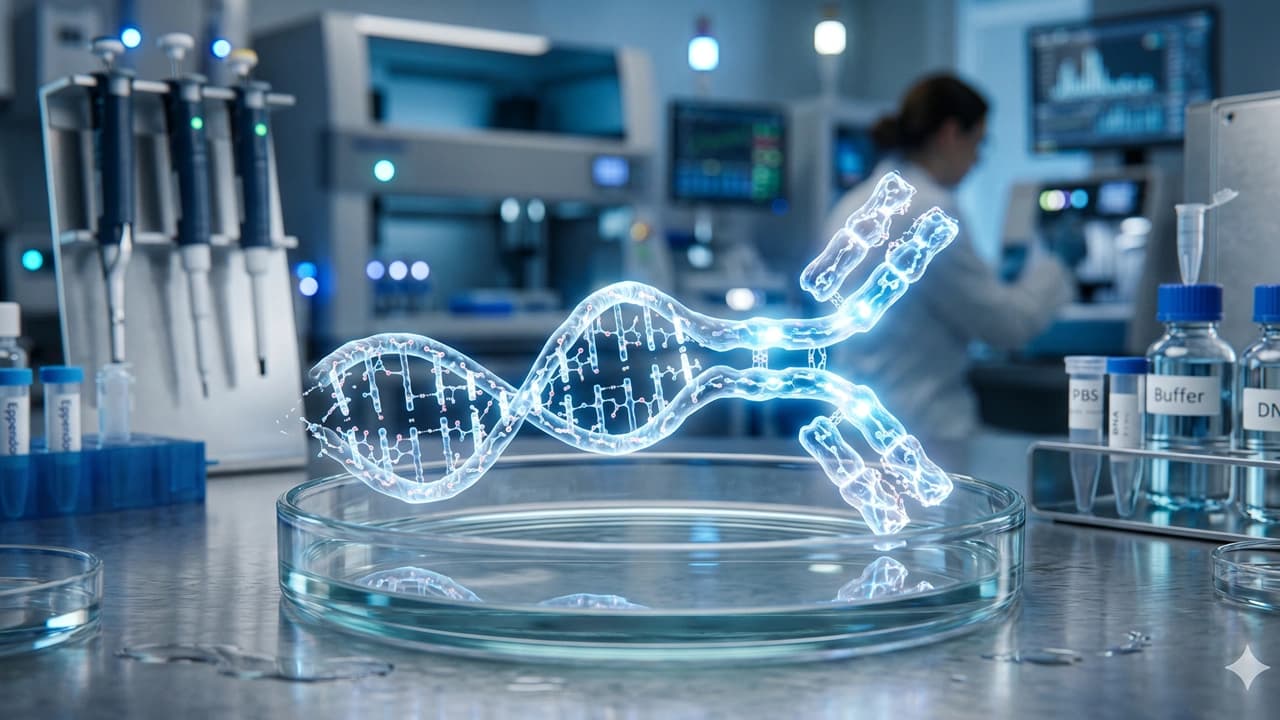
The Plaintiffs pioneered a novel method for developing fully human heavy chain-only antibodies in rodents. Their platform utilized transgenic rodents to generate functional heavy chain-only antibodies for therapeutic and research purposes. This biological system, marketed under the name Harbour Mice, allowed the Plaintiffs to build their business and form partnerships with multiple pharmaceutical entities.
The friction began around 2015 when the Defendant shifted its primary business plan to focus heavily on these specific types of antibodies. Without holding any recorded previous experience in this specific sub-field, the Defendant began constructing an antibody discovery platform using transgenic rats, which it subsequently commercialized as the UniRat platform. The Plaintiffs asserted that the Defendant modeled this discovery platform directly after the Harbour Mice framework. The Defendant grew highly successful by implementing its system, which ultimately culminated in its acquisition by Amgen Inc. for a transaction value exceeding $2.5 billion.
Cause
The corporate conflict centered around the unauthorized utilization of patented biological discovery systems. The Plaintiffs filed a civil lawsuit asserting patent infringement under federal patent laws. They specifically stated that the Defendant constructed, utilized, and marketed its own discovery platform by copying their patented inventions without obtaining an official license or permission.
Injury
The Plaintiffs asserted that the Defendant caused extensive and ongoing financial and operational injury to their enterprise. By utilizing the protected transgenic technology, the Defendant entered the marketplace as a direct commercial competitor. This competition allowed the Defendant to target the exact same pharmaceutical partners and exploit commercial opportunities that would have otherwise belonged to the original patent holders.
Damages Sought
To fix the commercial imbalances caused by the market competition, the Plaintiffs sought legal remedies through the Court system. They demanded appropriate financial compensation to cover the past and ongoing market losses generated by the structural duplication of their platform. They also requested that the Court issue formal legal orders to prevent the Defendant from continuing to use the patented methods.
Key Arguments and Proceedings
Legal Representation
Plaintiff(s): Harbour Antibodies BV | Harbour Antibodies HCAb BV | Erasmus University Medical Center Rotterdam | Dr. Roger Kingdon Craig.
Counsel for Plaintiff(s): Alan Richard Silverstein | Brian A. Biggs | David Ellis Moore | Adam Steinmetz | Bindu Ann George Palapura | Brian D. Matty | John M. Desmarais | Jordan N. Malz | Jun H. Tong | Karl Mullen | Kyle G. Petrie | Malisa Dang | Maria Tartakovsky | Michael E. Furrow | Michael A. Sitzman
Defendant(s): Teneobio, Inc. | Amgen Inc.
Counsel for Defendant(s): Jeremy A. Tigan | Cameron Paul Clark | Jack B. Blumenfeld | Megan Elizabeth Dellinger | Adrian L Rabin | Jennifer Gordon | Chanson Chang | Chih-Wei Wu | Chris Keller | Eliza P. Strong | Eric Alan Stone |Gwen Hochman Stewart | J. Drew Diamond | Jennifer R. Deneault | Jessica Zhao | Joseph E. Lasher | Megan F. Raymond | Naz Erdeniz Wehrli | Nicholas P. Groombridge | Paula S. Fritsch | Peter H. Sandel | Philip S. May | Rebecca E. Fett | Saurabh Gupta | Stephen Maniscalco | Steven Tang | Tanya S. Manno | Wendy A. Whiteford
Key Arguments or Remarks by Counsel
Claims
The Plaintiffs argued that their research teams spent years developing the technology, investing massive operational funds and human capital to secure patent titles from the regulatory office. They established that the unique configuration of their biological platforms successfully allowed rodents to produce fully human heavy chain-only antibodies. Counsel focused heavily on the structural reality that the Defendant's system explicitly incorporated the precise elements protected by the patent claims, particularly the specific heavy chain loci configurations. They claimed that the Defendant deliberately capitalized on the technology to draw commercial interest, which directly drove up the valuation of the firm before the multi-billion-dollar corporate buyout.
Defense
The Defendant denied all primary allegations regarding copying and patent infringement. While it acknowledged that its system successfully produced the specific chimeric heavy chain-only antibodies, it strongly rejected the assertion that it copied the underlying mechanism from the Plaintiffs' platform. It argued that the active claims within the patents were legally invalid and could not be enforced in Court. Specifically, the defense asserted that the technical descriptions in the patent text failed to meet the baseline legal standards required to clearly explain and support the claimed inventions to a person working in the field.
Jury Verdict
The members of the jury evaluated the evidence presented during the course of the trial and returned a unanimous verdict on 12th June 2026.
Infringement Affirmation
The jury officially concluded that the Plaintiffs successfully proved by a preponderance of the evidence that the Defendant infringed claim 2 of United States Patent Number 10,906,970. When reviewing the exact mechanics of this infringement, the jury specified that the critical element involving the cloning of the recombined heavy chain locus was met literally, rather than through the broader doctrine of equivalents.
Willfulness of Infringement
The jury reviewed whether the actions of the Defendant constituted a deliberate disregard of the known patent rights. Following their evaluation, the jury answered that the Plaintiffs failed to satisfy the necessary burden of proof to show that the infringement of claim 2 was legally willful.
Rejection of Invalidity Defenses
The Defendant attempted to eliminate the legal basis of the lawsuit by asserting that the underlying patent was invalid under several distinct legal doctrines. The jury systematically rejected every single one of these challenges, finding that the defense failed to supply clear and convincing evidence to support its claims:
Obviousness Challenge: The jury answered that the Defendant did not prove that claim 2 of the patent was invalid as obvious.
Enablement Defect: The jury determined that the Defendant failed to show that the patent text lacked a sufficient description to enable someone to use the technology.
Written Description Defect: The jury found that the Defendant failed to establish that the patent lacked a proper written description of the claimed biological invention.
Final Award of Damages
Because the jury affirmed the direct infringement and completely rejected all corresponding invalidity defenses, it proceeded to calculate the financial award required to balance the market harm. The jury determined that the Plaintiffs proved by a preponderance of the evidence that a total sum of $20,203,704 would fairly and reasonably compensate them for the market losses caused by the infringement. All participating jurors signed the final form to formally certify the verdict.
Court documents are available upon request at [email protected]