
Case Background
Vasu Holdings, LLC filed a patent infringement lawsuit against Samsung Electronics Co., Ltd. (SEC) and Samsung Electronics America, Inc. (SEA) on January 22, 2024, in the Eastern District of Texas, Marshall Division. The case centered on a portfolio of patents related to wireless networking and mobile communications technology, all originally assigned to Vasu Networks Corporation and listing Vasudevan Ganesan as inventor.
Cause
Vasu Holdings brought the case under Title 35 of the United States Code, alleging that Samsung infringed six patents: U.S. Patent No. 8,520,605 (the '605 Patent), titled "Apparatus for Controlling Broadband Access and Distribution of Content and Communications Through an Access Point"; U.S. Patent No. 8,886,181 (the '181 Patent), titled "Mobile Telephone VOIP/Cellular Seamless Roaming Switching Controller"; U.S. Patent No. 8,958,434 (the '434 Patent), titled "Method of Determining Broadband Content Usage Within a System"; U.S. Patent No. 10,206,154 (the '154 Patent), titled "Mobile Device WiFi/Cellular Seamless Roaming, Seamless Session Continuity, Always Connected Switching Controller"; U.S. Patent No. 10,368,281 (the '281 Patent), titled "Telephone with Automatic Switching Between Cellular and VOIP Networks"; and U.S. Patent No. 10,419,996 (the '996 Patent), titled "Mobile Device with Automatic Switching Between Cellular and WiFi Networks." The '996 Patent listed both Vasudevan Ganesan and Stephane H. Maes as inventors.
By the time the case reached trial, the asserted claims were narrowed to three: Claim 1 of the '181 Patent, Claim 37 of the '281 Patent, and Claim 1 of the '996 Patent. Vasu alleged both direct and indirect infringement, identifying Samsung's Galaxy phones, tablets, and WLAN access point products as the accused products.
Injury
Vasu Holdings alleged that Samsung's use of the patented technologies caused financial harm through lost royalties and licensing revenue. On January 12, 2024, Vasu sent Samsung a letter, through Kramer Levin, identifying the asserted patents and alleging infringement before the lawsuit was filed.
Damages Sought
Vasu sought monetary damages in the form of a reasonable royalty, a finding that Samsung's infringement was willful, enhanced damages, attorneys' fees, and a permanent injunction against further infringement.
Key Arguments and Proceedings
Legal Representation
Plaintiff: Vasu Holdings, LLC
· Counsel for Plaintiff: Elizabeth L. DeRieux | Paul J. Andre | Lisa Kobialka | James Hannah | Kristopher Kastens | Aakash Jariwala | Carlos J Tirado | Charles Francis Lee | Girija Gaur | Jennifer Lu Gilbert | Ken Mueller | Mike H. Lee | S. Calvin Capshaw , III
Defendants: Samsung Electronics Co., Ltd. and Samsung Electronics America, Inc.
· Counsel for Defendants: Melissa R. Smith | Steven Pepe | David S. Chun | Christopher M. Bonny | Mary (Mindy) V Sooter | Alexander Ernest Middleton | Alice Juwon Ahn | Amy Kreiger Wigmore | Andrew Thompson (Tom) Gorham | Arthur W Coviello | Brian Lebow | Brittany Amadi | Dominic E Massa | Harry Lee Gillam , Jr | James Lawrence Davis , Jr | James Travis Underwood | John Joseph Healy , Jr | Jolene L. Wang | Jordan L Hirsch | Joseph J Mueller | Kate Saxton | Kevin John Post | Mark D. Selwyn | Nancy Attalla | Steven Pepe
· Experts for both the parties: Andreas Groehn | Jim W. Bergman | Todor Cooklev
Key Arguments or Remarks by Counsel
Samsung filed a general denial in response to Vasu's complaint, denying each and every allegation not expressly admitted. Samsung's counsel denied that any Samsung product infringed any of the asserted patents and argued that the patents themselves were invalid. Samsung also challenged Vasu's standing, arguing that if the patent assignments were defective for any reason, Vasu did not have the right to bring the suit.
Vasu's counsel argued that Samsung's Galaxy smartphones, tablets, and enterprise WLAN networking equipment practiced the methods and systems described in the asserted patents. Vasu pointed to Samsung's own product manuals, support webpages, Samsung Care YouTube channel videos, and interactive product simulators as evidence that Samsung actively encouraged customers to use the features that Vasu claimed were covered by its patents.
Claims
Vasu brought twelve counts against Samsung across the six originally asserted patents, pairing each patent with a count of direct infringement and a count of indirect infringement. By trial, the case focused on three specific claims.
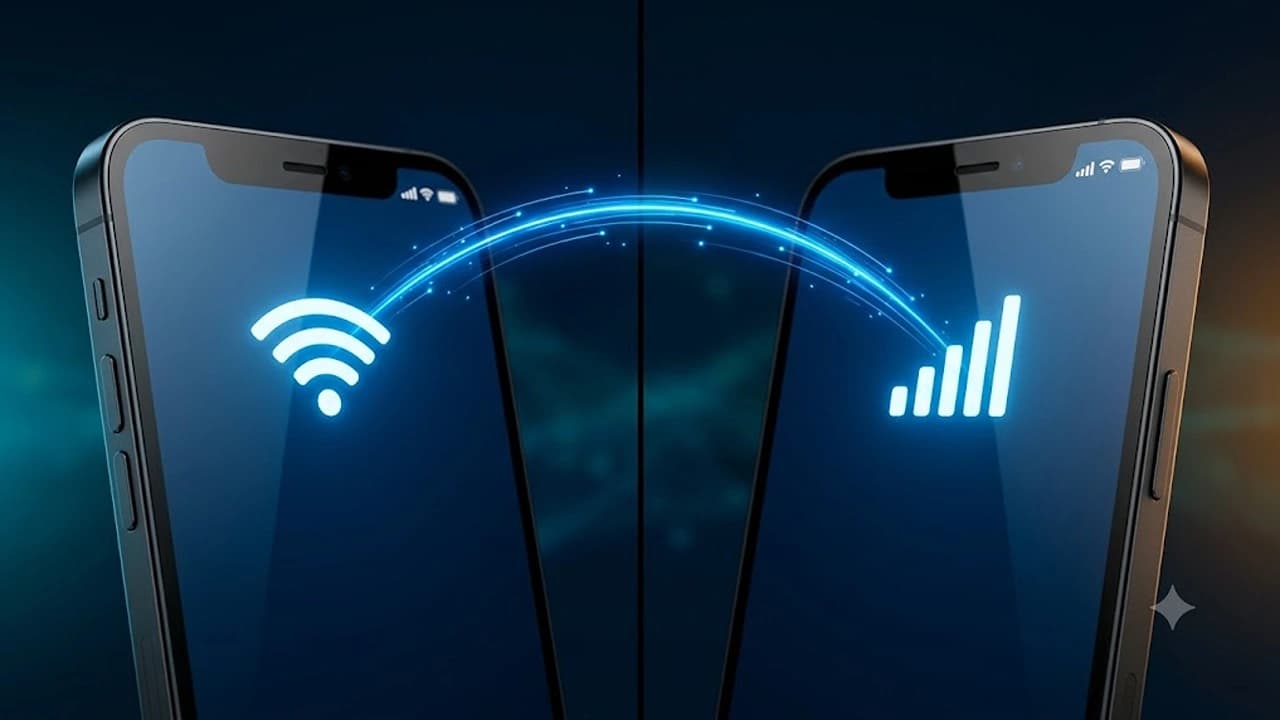
Claim 1 of the '181 Patent covered a method for providing communications for a mobile device that roams between multiple different types of wireless networks. The method described establishing a first communication link, monitoring signal strength of that link, and when the signal dropped below a set threshold, notifying an interface server and establishing a second communication link through that server without disrupting the first link. The device would then terminate transmission over the first link and redirect the second communication link directly to the mobile device, completing the switch to the second wireless network.
Claim 37 of the '281 Patent described a device with a switching system that moved an active communication from one communication module to another when the context of that communication changed. The claim included specific provisions for a timer mechanism that activated the second communication module from a sleep state, and specified threshold signal values that triggered the timer.
Claim 1 of the '996 Patent covered a device with a switching system that automatically shifted a previously established communication to a different network if the context changed for known networks or a new network with a more favorable context was detected. The claim described the second communication module moving from sleep mode to standby mode and then to active mode before the communication switch occurred.
For the indirect infringement counts, Vasu argued that Samsung induced customers and others to infringe through its networking support webpage, product support pages, Samsung Care YouTube channel videos, and interactive product simulators.
Defense
Samsung raised nine affirmative defenses. The company argued that Vasu's complaint failed to state a valid claim for relief. Samsung contended that every claim in all the asserted patents was invalid for failure to comply with one or more requirements under 35 U.S.C. Sections 101, 102, 103, and/or 112, covering patent eligibility, prior art, obviousness, and written description.
Samsung denied infringement under every theory, including direct infringement, joint infringement, contributory infringement, inducement, and infringement under the doctrine of equivalents. Samsung argued that any damages Vasu could recover were limited under 35 U.S.C. Sections 286 and 287 because Vasu failed to mark its own products with the patent numbers and failed to require or police the marking of its customers and licensees.
Samsung also raised prosecution history estoppel as a defense, arguing that statements and representations Vasu's counsel made during patent prosecution at the USPTO limited the scope of the patents. Samsung further invoked equitable defenses including estoppel, unclean hands, acquiescence, patent misuse, waiver, and inequitable conduct.
Jury Verdict
The jury returned its verdict on June 26, 2026, answering three questions about infringement, invalidity, and damages.
On infringement, the jury found that Vasu proved by a preponderance of the evidence that Samsung infringed Claim 1 of the '181 Patent. The jury found that Vasu did not prove infringement of Claim 37 of the '281 Patent or Claim 1 of the '996 Patent.
Because the jury found infringement of the '181 Patent, it considered Samsung's invalidity challenge for Claim 1 of that patent. The jury found that Samsung did not prove by clear and convincing evidence that Claim 1 of the '181 Patent was invalid.
On damages, the jury awarded Vasu Holdings $3,000,000 for Samsung's infringement of Claim 1 of the '181 Patent. Because the jury found no infringement of the '281 Patent or the '996 Patent, it awarded $0.00 on those claims. The total jury award came to $3,000,000. The verdict was signed by the jury foreperson on June 26, 2026.
Court documents are available upon request at [email protected]