

Case Background
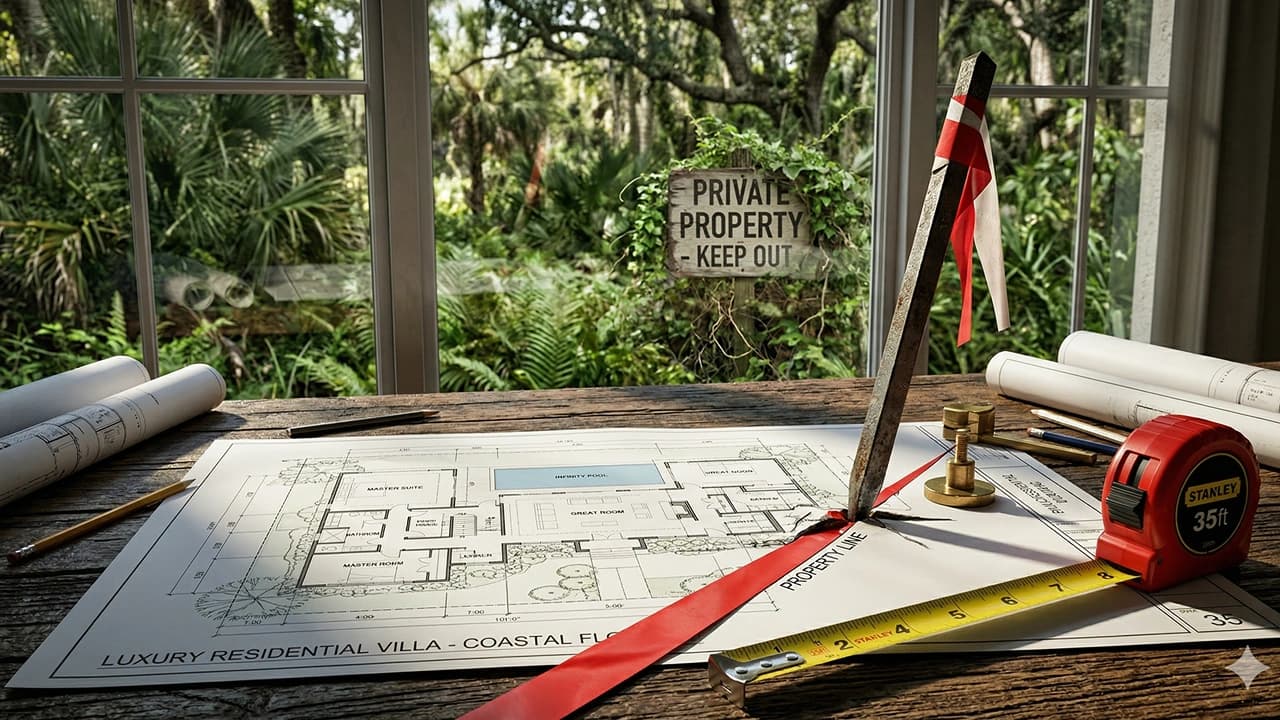
The legal battle began when Megladon, Inc., a residential developer, purchased a vacant lot at 13100 S.W. 77th Avenue in the Village of Pinecrest to build a new luxury home. Because the property sat on a long-standing residential lot, the project only required a standard building permit rather than complex new platting approvals. Megladon submitted its detailed architectural plans in late 2019, but the approval process ground to a halt when Village officials demanded a chunk of the private land for public use.
Cause
The conflict centered on a 7.5-foot strip of land along S.W. 131st Street. In April 2020, the Village’s Planning Director informed Megladon that it had to "dedicate" or hand over this portion of its property to the public as a condition for getting a building permit. The Village claimed it needed the land for a right-of-way, specifically for drainage and potential road widening. Megladon argued that this demand was an illegal "exaction" essentially a form of government extortion where a permit is held hostage until the owner gives up property rights without being paid.
Injury
Megladon suffered significant financial setbacks because the Village refused to process the permit application. The demand forced the developer to choose between shrinking the size of the proposed home or engaging in a costly total redesign of the project. Furthermore, the stalemate caused years of delay, which Megladon claimed made it miss a prime window in the South Florida real estate market.
Damages Sought
Megladon sued for compensation under Florida and federal laws that protect property owners from unconstitutional conditions. The developer sought a Court order to stop the Village from demanding the land and asked for money to cover the lost value of the property, the costs of delay, and its legal fees.
Key Arguments and Proceedings
Legal Representation
Plaintiff(s): Megladon, Inc.
· Counsel for Plaintiff(s): Amy Brigham Boulris | Carlos A. Haag | George S. LeMieux | Samantha V. Medina | Teresa Sofia Muniz | Timothy John McGinn , Jr
Defendant(s): Village of Pinecrest
· Counsel for Defendant(s): Eric L. Stettin | Alicia Gonzalez | Anne Reilly Flanigan | Bryan Christopher Siddique | Charles Mark Garabedian , Jr | Eric Lawrence Stettin
Key Arguments or Remarks by Counsel
Claims
Megladon’s legal team argued that the Village had no legal basis to demand the land. They pointed out that the new home would not create any new traffic or drainage problems that justified taking the property. Counsel asserted that the Village was using its permitting power to bypass its duty to pay "just compensation" for private property. They also highlighted that the Village Code actually exempted residential lots like this one from such infrastructure requirements.
Defense
The Village of Pinecrest contended that its requirements were standard and necessary for public safety and infrastructure. They argued that other neighbors had already given up similar strips of land when the street was first built and that Megladon should have to follow suit. The Village also tried to shift the responsibility, claiming that Miami-Dade County’s manuals required the dedication, and suggested that Megladon should have sought a waiver from the County instead of suing.
Jury Verdict
After hearing the evidence, the jury delivered a decisive victory for the property owner on March 12, 2026. The jury found that the Village of Pinecrest had a "custom" of requiring landowners to give up private property without compensation when they needed permits for remodeling or redevelopment. Crucially, the jury determined that this custom was unconstitutional and was based on a history of similar incidents where the Village had pressured owners into giving up land.
The jury concluded that the Village Council knew about this practice and allowed it to continue. Because this illegal custom directly caused Megladon's injuries, the jury awarded the developer $409,437.50 in damages for the Village’s refusal to issue the building permit. The jury also noted that Megladon had acted reasonably and did not fail to mitigate its damages during the long dispute.
Court documents are available upon request at [email protected]