
Case Background
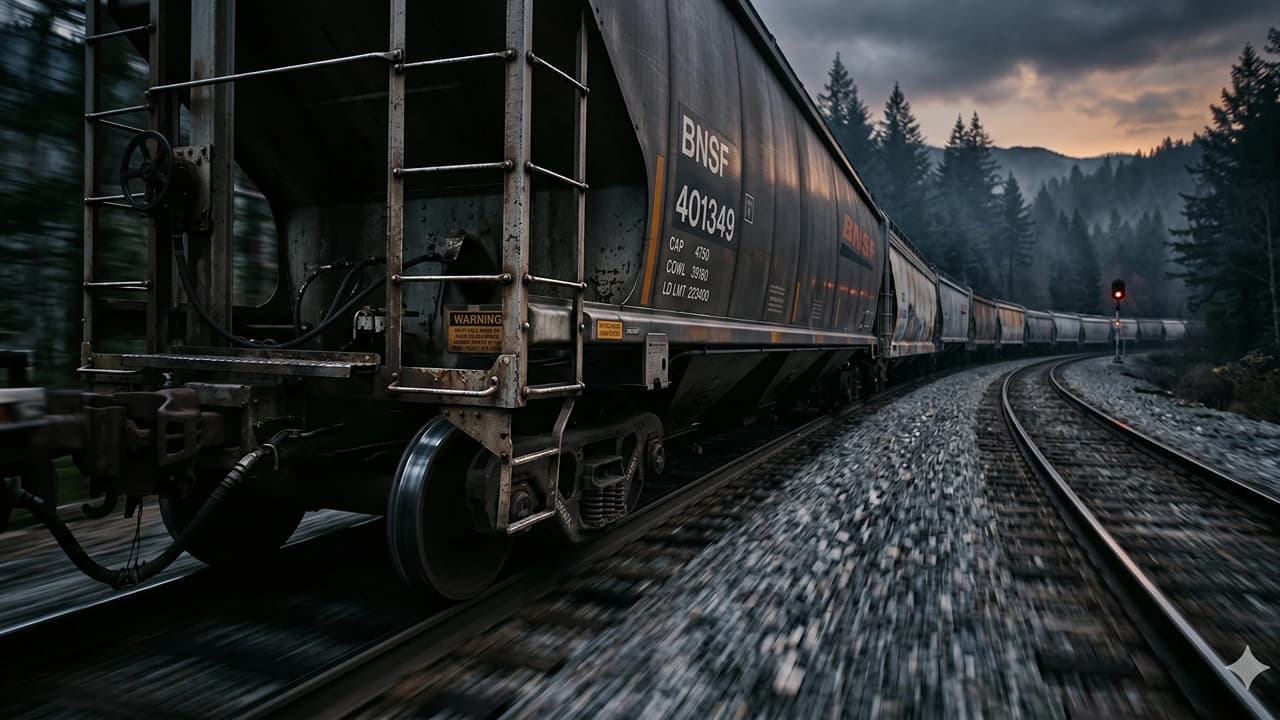
Josh Robson worked as a conductor for BNSF Railway Company, primarily operating out of Portland, Oregon. On August 8, 2020, Robson was performing his duties on a moving freight train when he realized the train was not responding to his commands. Fearing a catastrophic collision with other cars on the track, he felt he had no choice but to leap from the moving equipment to save his life. This decision set off a multi-year legal battle in the Multnomah County Circuit Court under the Federal Employers’ Liability Act (FELA), as Robson alleged the railroad failed to provide a safe working environment.
Cause
The cause of the legal action centered on the specific failures of the BNSF engineer and the equipment provided that day. According to the complaint, Robson signaled the engineer to slow and stop the train, but the engineer neither acknowledged the signals nor reduced speed.
Robson's legal team argued that the railroad acted negligently in several ways:
The company failed to stop the train in a timely manner.
The engineer did not warn Robson that the train would not be stopping.
The train operated at an unsafe speed given the conditions.
The crew failed to respond safely to the manual signals Robson provided while he rode on the exterior of the car.
BNSF eventually admitted liability for the breach of duty regarding the co-worker's operation of the train during this August incident.
Injury
The injuries Robson sustained were both immediate and progressive. When he jumped from the moving freight car, the impact caused significant trauma to his back and his right leg. Over time, these issues worsened, leading to additional injuries in his right ankle. Robson characterized these physical damages as permanent.
The complexity of the case increased due to a second incident on December 25, 2020. The defense alleged that Robson ran down a flight of stairs while intoxicated, which they argued contributed to his physical condition. However, the jury ultimately found that the injuries Robson suffered during that December incident were caused, at least in part, by BNSF's initial negligence.
In total, Robson claimed these injuries resulted in:
Approximately $500,000 in past lost wages and benefits.
Roughly $3,000,000 in future lost wages and earning capacity.
$2,500,000 in non-economic damages for pain, worry, and distress
Damages Sought
Robson sought significant financial compensation for the impact of these injuries. His legal team calculated past lost wages and benefits at approximately $500,000. Furthermore, they estimated that his future lost wages, benefits, and overall earning capacity totaled roughly $3,000,000. Beyond these economic losses, Robson requested $2,500,000 in non-economic damages to account for his past and future pain, worry, and distress. In total, the amount sought in the complaint reached $6,000,000.
Key Arguments and Proceedings
Legal Representation
Plaintiff: Josh Robson
· Counsel for Plaintiff: Dylan R. Williams | Anthony S. Petru | Paul Bovarnick
Defendant: BNSF Railway Company
· Counsel for Defendant: Nicholas E. Wheeler | Brandon L. Thornburg
Key Arguments or Remarks by Counsel
Claims
Robson’s legal team argued that BNSF Railway failed to provide a safe workplace. They specifically alleged that the railroad acted negligently because the engineer did not stop the train in time and failed to warn Robson that the train would continue at an unsafe speed. The core of their argument rested on the engineer's failure to respond to the manual signals Robson provided while he rode the exterior of the car. Because BNSF operated as a common carrier in interstate commerce, the Plaintiff brought the suit under the Federal Employers’ Liability Act (FELA).
Defense
BNSF Railway admitted that it owed Robson a legal duty and acknowledged that it breached that duty regarding the way the co-worker operated the train during the August 8, 2020, incident. However, the company contested the extent of the damages and Robson's own conduct following the accident. The defense raised several affirmative defenses, most notably that Robson failed to mitigate his damages. The railroad argued that Robson had not followed medical recommendations and had not taken reasonable steps to return to work. Most significantly, BNSF pointed to a separate incident on December 25, 2020. The defense alleged that Robson chose to run down a flight of stairs while intoxicated. They argued that any lingering or worsening injuries resulted from this choice rather than the original railroad accident. Consequently, the railroad maintained that any financial recovery should be reduced by the proportion of damages caused by these external factors.
Jury Verdict
The trial concluded in Multnomah County Circuit Court on March 17, 2026. The jury deliberated on several specific questions to determine the final compensation. First, the jury addressed the secondary incident from December 25, 2020. Although BNSF admitted liability for the original August crash, the jury had to decide if the railroad's negligence played any part in the injuries Robson sustained during that later Christmas Day event. The jury answered "Yes," finding a link between the railroad's initial negligence and the later complications. When calculating the total damages Robson incurred, the jury awarded a combined sum of $5,025,822. This total consisted of $3,553,822 in economic damages and $1,472,000 in non-economic damages. However, the jury also sided with the defense regarding the issue of mitigation. They determined that Robson had failed to mitigate his damages. As a result, the jury calculated a specific amount to be deducted from the total award. They decided that Robson’s failure to take reasonable steps to minimize his losses accounted for $1,256,455. The presiding juror signed the special verdict form on March 17, 2026, officially concluding the trial proceedings. This decision required at least nine jurors to agree on every answer provided in the verdict.
Court documents are available upon request at [email protected]