
Case Background
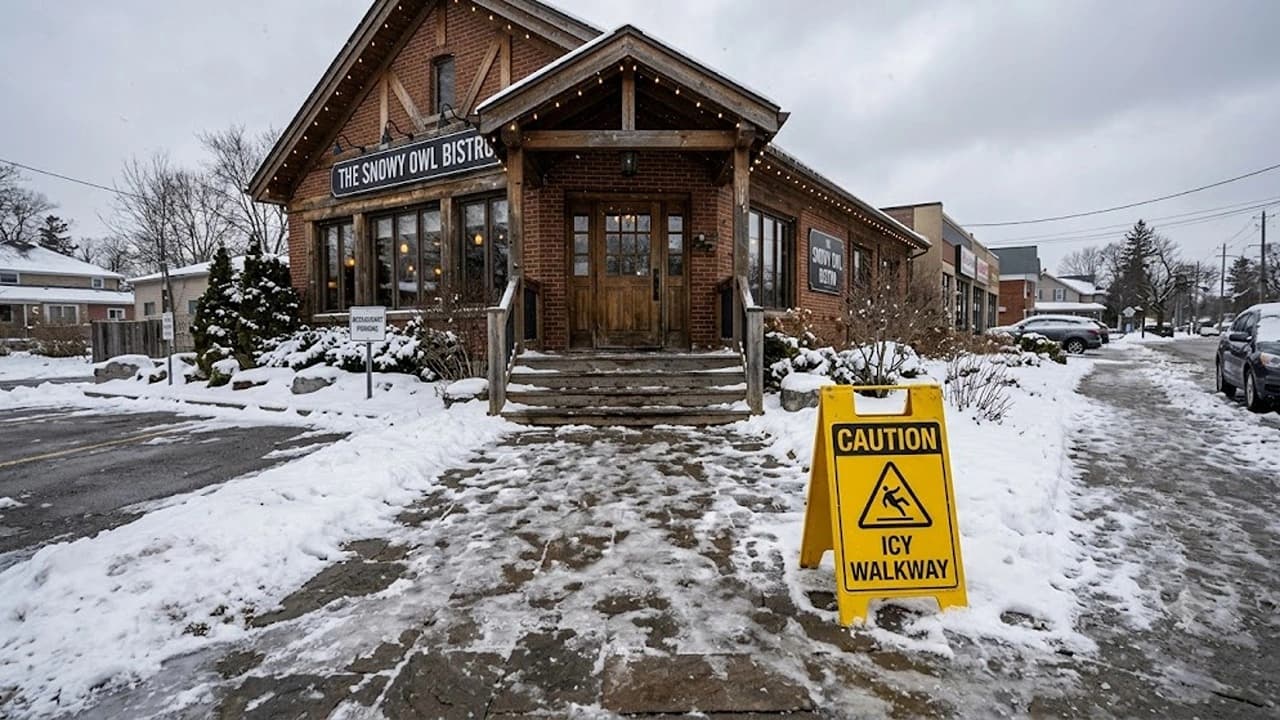
This case took place in the Superior Court for the Judicial District of Ansonia-Milford and revolved around a slip-and-fall incident that occurred in the parking lot of 55 Red Bush Lane, Milford, Connecticut, on January 4, 2018. James Tracey, a resident at the premises, slipped on snow and ice as he walked from his car toward his residence. He brought a lawsuit against Milford Property Management, LLC, claiming that their negligence caused his fall and the resulting injuries.
Cause
James Tracey explained that he walked across the parking lot at about 4:10 PM, heading for his home, when he suddenly slipped and fell on a patch of snow and ice. According to his claim, this hazard existed on the ground despite weather conditions, and he felt it directly contributed to the fall’s suddenness and danger.
Injury
The fall left James Tracey with several injuries, including damage to both feet and heels, quadriceps, and his lower back. These injuries caused him significant pain, both physically and mentally. The aftermath interrupted his everyday life and work, affecting his ability to enjoy activities as he previously did. Medical professionals had to provide various treatments, ranging from ambulance services, hospital care, specialized medical consultations, rehabilitation, and home services, to chiropractic care and imaging studies.
Damages
The jury reviewed the list of economic damages presented, reflecting the out-of-pocket costs Tracey incurred for treatment and recovery. Bills came from a range of providers, including ambulance and van services, hospital stays, rehabilitation centers, and specialists. The awarded amounts from each provider were as follows:
EFK of Connecticut (Nelson Ambulance): $4,106.84
Connecticut Handivan: $123.60
Bridgeport Hospital (Yale-New Haven Health): $71,748.00
Lord Chamberlain: $47,583.85
Orthopedic Specialty Group: $7,503.00
Northeast Medical Group (NEMG), Home Health Care: $4,572.00
Kindred at Home Services: $7,058.01
Southwest Community Health Center: $600.00
Ryders Rehabilitation: $2,138.89
University of Bridgeport Chiropractic Clinic: $190.15
Southern CT Vascular Center: $9,079.00
Yale Medicine Radiology & Biomedical Imaging: $180.00
The jury totaled the economic damages at $155,103.44. They also awarded $50,000 for Tracey’s non-economic damages, accounting for his physical pain, psychological impact, loss of enjoyment, and inconvenience.
Legal Representation
Plaintiff(s): James Tracey
· Counsel for Plaintiff(s): Steven J. Errante
· Expert for Plaintiff(s): Thomas Else
Defendant(s): Milford Property Management, LLC
· Counsel for Defendant(s): Miles N. Esty
· Expert for Defendant(s): John Bagioni | Richard Carpenos
Key Arguments and Proceedings
Plaintiff’s Arguments
Tracey’s legal team argued that Milford Property Management, as owner and operator of the property, had failed in their duty to keep the parking lot safe. The complaint detailed that the management company failed to sand, salt, shovel, or otherwise treat the icy area. The Plaintiff’s team insisted that there was enough time before his fall for the Defendant to address the hazard, that reasonable efforts to inspect and treat the lot were missing, and that inadequate warnings or barriers increased the danger. The case emphasized Tracey’s lawful presence and the seriousness of his injuries, both physically and emotionally.
Defendant’s Response
Milford Property Management denied the core allegations of negligence. Their attorneys argued that Tracey himself was responsible for his fall in part, saying he did not keep a proper lookout and chose to walk during bad weather when it was not reasonable to do so. The defense leaned heavily on what is known as the “ongoing storm doctrine,” maintaining that property owners do not need to clear snow or ice resulting from an ongoing storm until the storm has ended. They called attention to the weather conditions at the time and said any negligence was Tracey’s own fault.
Claims Asserted
The central claim from Tracey focused on premises liability that the property manager failed to address a known hazard on common property. He sought compensatory damages for medical expenses and pain and suffering. The complaint made clear that the injuries greatly disrupted his daily activities, work duties, and overall well-being, justifying the demand for damages.
Defense Arguments
The defense’s answer and special defense asserted Tracey’s contributory negligence and relied on the ongoing storm doctrine. They claimed that Tracey did not act with reasonable care for his own safety while walking across the lot and that any hazardous snow or ice was tied to an active storm at the time of his fall. Thus, they argued, the management company could not be held liable under established Connecticut law.
Jury Verdict
After weighing all the evidence and arguments, the jury answered several interrogatories:
The jury found that there was an ongoing storm during Tracey’s fall. Despite this, they decided that Tracey slipped because of older snow and ice that had already existed before the current storm.
They decided that the parking lot was defective as described in court instructions and that Milford Property Management should have known of and corrected the hazard in time.
The jury found that the Defendant’s negligence was a proximate cause of Tracey’s injuries.
However, it also decided that Tracey bore some responsibility for his injuries, specifically 25% of the fault.
Based on this split, the jury awarded economic damages and pain and suffering totaling $205,103.44 but reduced the final sum in accordance with Tracey’s comparative fault, for a final award of $153,827.58 to the Plaintiff.