
Case Background
On the morning of September 12, 2020, a quiet neighborhood intersection in Wolcott, Connecticut became the setting of a collision that later landed in court. Anthony Tedesco, a Burlington resident, was driving eastbound on Todd Road. John Venditti, of Wolcott, was driving northbound on Garrigus Court. Both roads met at a four-way stop.
According to Tedesco, he had stopped at his sign, looked for oncoming traffic, and then pulled into the intersection. At the same moment, Venditti’s car entered from Garrigus Court. Tedesco claimed Venditti rolled through his stop sign without stopping and crashed into him. The impact, he said, caused injuries that changed his daily life and work.
Tedesco filed a lawsuit in July 2022 in Waterbury Superior Court. He argued that Venditti’s negligence caused the crash, his injuries, and the financial burden that followed.
Cause that led to the dispute
The cause of the dispute centered on whether Venditti obeyed the stop sign at Garrigus Court. Tedesco’s complaint said the Defendant failed to stop, failed to brake in time, and failed to keep a proper lookout. He also argued that Venditti ignored traffic laws and basic rules of safe driving.
Venditti admitted that the vehicles collided but denied running the stop sign. His answer questioned whether Tedesco had truly stopped at his sign and suggested that Tedesco himself caused or contributed to the crash. The case therefore became a contest of two competing versions of the same moment at a small-town intersection.
Injury
After the accident, Tedesco reported injuries to his right shoulder, his neck, and his lower back. Doctors diagnosed him with a shoulder injury, cervical strain, and lumbar strain. He underwent treatment, which included therapy and medical visits.
Tedesco told the court that the injuries disrupted his work and personal life. He could not enjoy physical activities the way he had before. His daily routines required adjustments, and he lived with constant discomfort.
Damages
In his lawsuit, Tedesco sought compensation for his medical expenses, both past and anticipated. He also asked for damages for pain and suffering, loss of income, and the reduction in his ability to enjoy life. He argued that these damages were a direct result of Venditti’s careless driving.
The amount in demand exceeded $15,000, reflecting not just medical bills but also the toll of ongoing pain, stress, and lifestyle changes.
Key Arguments by Counsel
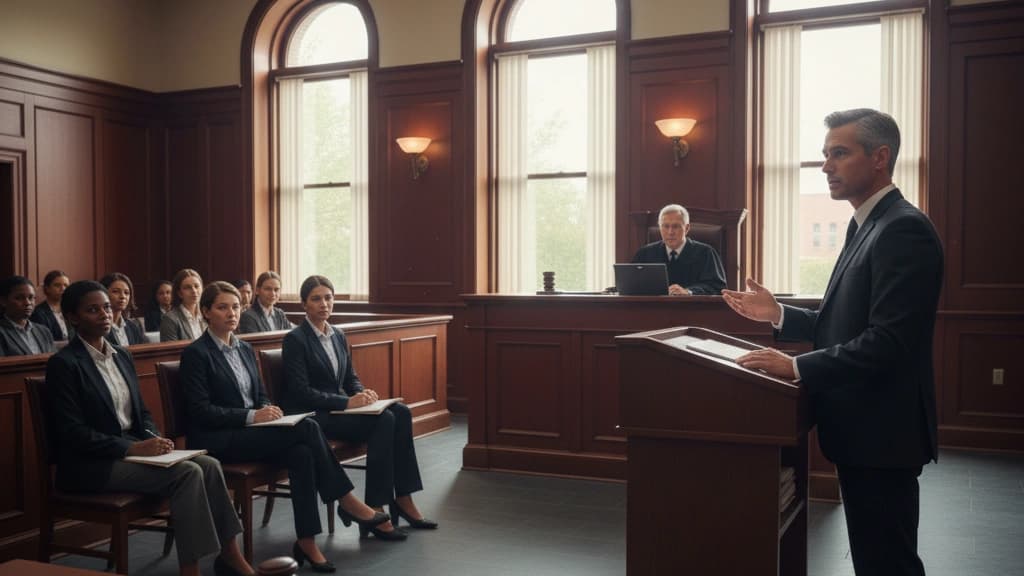
During closing remarks, the Plaintiff’s counsel described the case as a matter of simple responsibility. “A stop sign means stop,” she said, urging the jury to hold Venditti accountable for ignoring a basic rule of the road.
The defense countered by saying that accidents at four-way stops often result from confusion and timing, not negligence. They reminded the jury that both drivers had a duty to be careful and that Tedesco might have rushed into the intersection.
Legal Representation
Plaintiff: Anthony Tedesco
· Counsel for Plaintiff: Megan E. Boorsma
· Experts for Plaintiff: Luke Zalewski | Jennifer Delucia
Defendant: John Venditti
· Counsel for Defendant: Joshua A. Yahwak
Claims Asserted
Tedesco’s attorneys argued that the case was straightforward: Venditti had failed to stop at a clear traffic sign. They said the Defendant’s lack of attention and control turned a routine drive into a damaging accident. Counsel pointed to Connecticut traffic law, which requires every driver to stop at a stop sign and yield to others who entered first.
The complaint emphasized that Tedesco had obeyed the law by stopping at his sign. He had entered the intersection lawfully and safely, only to be struck by a driver who ignored his duty to stop. In their narrative, this was a textbook example of negligence.
The Plaintiff also stressed the human cost of the crash. Tedesco had lived with daily pain since the accident, and his right shoulder limited his range of motion. The injuries to his neck and back continued to bother him long after the accident, requiring medical care and rehabilitation. His legal team argued that his suffering and financial burden deserved fair compensation.
Defense Arguments
Venditti, through his attorneys, denied the claim that he had rolled through the stop sign. His defense argued that Tedesco bore responsibility for the collision. The defense raised special defenses that accused Tedesco of driving inattentively, failing to keep a proper lookout, and even failing to stop at his own stop sign.
They argued that Tedesco may have been speeding into the intersection and that his own negligence caused or at least contributed to the accident. By shifting focus, the defense sought to show that responsibility did not rest solely with Venditti.
Venditti’s counsel highlighted that motor vehicle accidents often come down to split-second decisions and conflicting memories. They claimed that the case was not as clear-cut as Tedesco described and that no negligence by Venditti could be proven with certainty.
Jury Verdict
The jury deliberated on March 6, 2024. They considered whether Tedesco had proven by a preponderance of the evidence that Venditti’s negligence caused the accident. The verdict form allowed the jury to assign percentages of liability between the two drivers.
In the end, the jury ruled in favor of Anthony Tedesco and against John Venditti. They found that Venditti was responsible for the accident. By their decision, they awarded damages to the Plaintiff.
The final award recognized Tedesco’s medical expenses and his pain and suffering. The amount reflected the jury’s view that the injuries were real, the negligence was clear, and compensation was necessary to make the Plaintiff whole.
Court Documents