
Case Background
Truck driver Harpreet Sidhu sued Southwire Company, LLC in San Bernardino County Superior Court in January 2024, roughly nine months after a workplace accident at one of the company's Southern California warehouses. Sidhu pursued claims for general negligence and premises liability, arguing that Southwire failed to keep its facility safe for the drivers and visitors who came through each day. The case landed before Judge Thomas S. Garza in Department S27 and moved toward a jury trial that focused almost entirely on the question of damages.
Cause
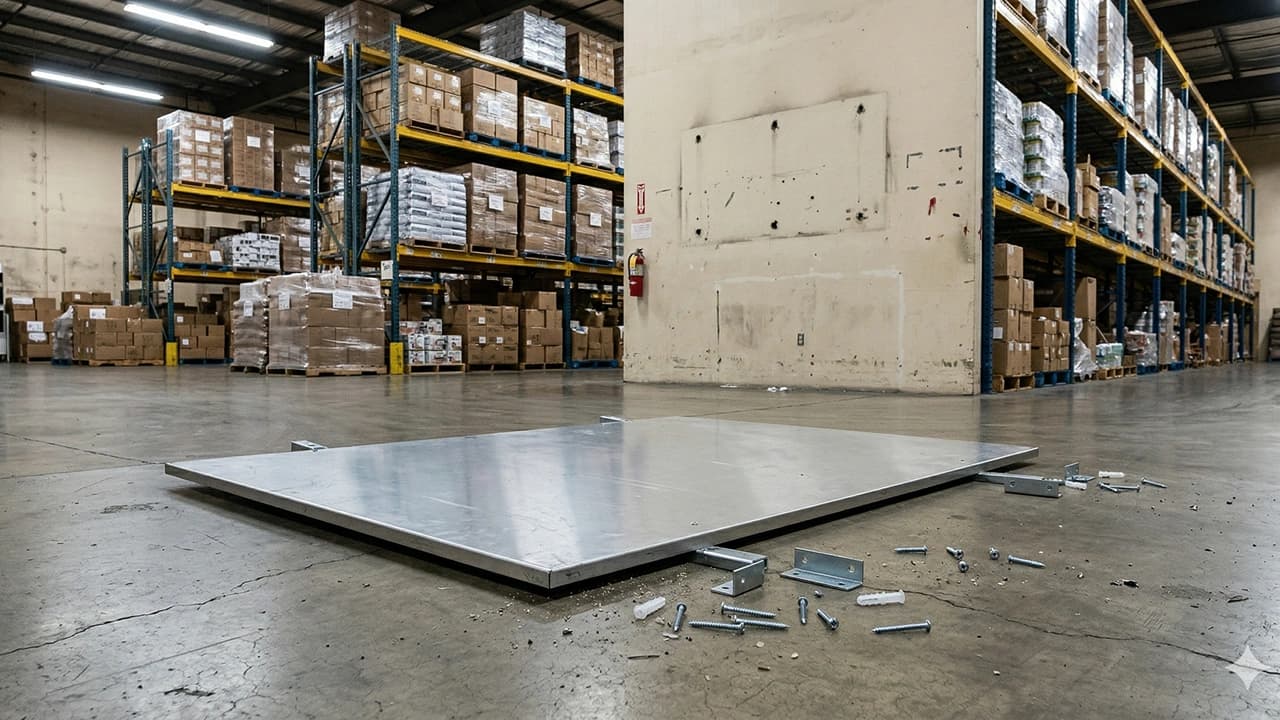
On April 3, 2023, Sidhu drove to a warehouse in Rancho Cucamonga to pick up a load for his employer, Extra Haul Express Inc. The warehouse, located at 9199 Cleveland Avenue, belonged to and was operated by Southwire. Sidhu walked inside to check in for his pickup. As he made his way back out through the building, a large sign mounted on the wall suddenly came loose and fell directly on his head.
Injury
The falling sign cut open Sidhu's face, and he started bleeding on the warehouse floor. He reported the accident to his manager, who arranged for someone to rush him to a nearby emergency room. Medical staff then sent him to Concentra Urgent Care on Fairway View Place in Rancho Cucamonga for further treatment. Sidhu later claimed the blow left him with lasting problems beyond the visible cut, including persistent pain, frequent headaches, dizziness, nausea, and ongoing fatigue that affected his ability to work as a commercial driver.
Damages Sought
Sidhu sought compensatory damages according to proof. His complaint listed wage loss, hospital and medical expenses, general damages, and loss of earning capacity as the harms he suffered because of the warehouse accident.
Key Arguments and Proceedings
Legal Representation
Plaintiff: Harpreet Sidhu
· Counsel for Plaintiff: Michael Tslvyan
Defendant: Southwire Company, LLC
· Counsel for Defendant: Sean Smith
Key Arguments or Remarks by Counsel
By the time the case reached trial in February 2026, Southwire had already conceded liability for the warehouse incident. That admission narrowed the dispute considerably, and jurors focused almost entirely on what injuries the falling sign actually caused and how much money fairly compensated Sidhu for them. Both sides built their cases around causation and the true scope of damages rather than fault.
Claims
Sidhu's lawyer argued that the accident produced far more than a simple cut on the face. Counsel told jurors that the impact triggered a cascade of symptoms that disrupted his client's life and his livelihood behind the wheel. The Plaintiff's team pushed for compensation covering medical care, pain and suffering, and lost income tied to the headaches, dizziness, and fatigue Sidhu reported in the months and years after the sign struck him. They framed the facial laceration as just the starting point of a much larger injury picture.
Defense
Southwire's lawyer took a very different view of what happened to Sidhu's body that day. The defense accepted that the sign fell and that it cut Sidhu's face, but drew a hard line there. Counsel argued that the only injury the accident actually caused was the facial laceration itself. Everything else, the defense told jurors, came from somewhere other than the warehouse incident. In particular, Southwire pointed to a severe vitamin B-12 deficiency as the real source of the headaches, dizziness, fatigue, and other neurological complaints Sidhu blamed on the falling sign. The defense also argued that Sidhu failed to take reasonable steps to mitigate his damages, suggesting he could have reduced his losses through better choices about his medical care and recovery.
Jury Verdict
On February 25, 2026, the jury sided largely with Southwire's view of the case. Jurors found that the warehouse incident caused only the facial laceration and nothing more, rejecting Sidhu's argument that the falling sign triggered his broader symptoms. They awarded him $17,000 for past medical expenses, nothing for future medical expenses, $50,000 for past pain and suffering, and $25,000 for future pain and suffering, bringing the total damages for the laceration to $92,000.
The jury also addressed Sidhu's claim for lost wages. Jurors found that the incident did cause some past loss of earnings and awarded him $4,000 on that front. They concluded he did not fail to mitigate those wage losses, so the full $4,000 stood. On the question of future lost earnings, the jury found it was not reasonably certain that Sidhu would lose income going forward because of the accident and awarded nothing in that category.
Adding the personal injury and wage loss figures together, the total verdict came to $96,000. Presiding juror Harmony Carter signed and dated the special verdict form, closing out a case that had narrowed from a sweeping personal injury claim into a tightly focused fight over which symptoms the falling sign could fairly be blamed for.
Court documents are available upon request at [email protected]