
Case Background
On September 9, 2020, Westly Horton found himself at the center of a life-altering accident in Apopka, Florida. He had just completed a trip as a passenger on a public bus operated by the Central Florida Regional Transportation Authority, more commonly known as LYNX. The incident unfolded at or near the intersection of Orange Blossom Trail and Rose Avenue.
Cause
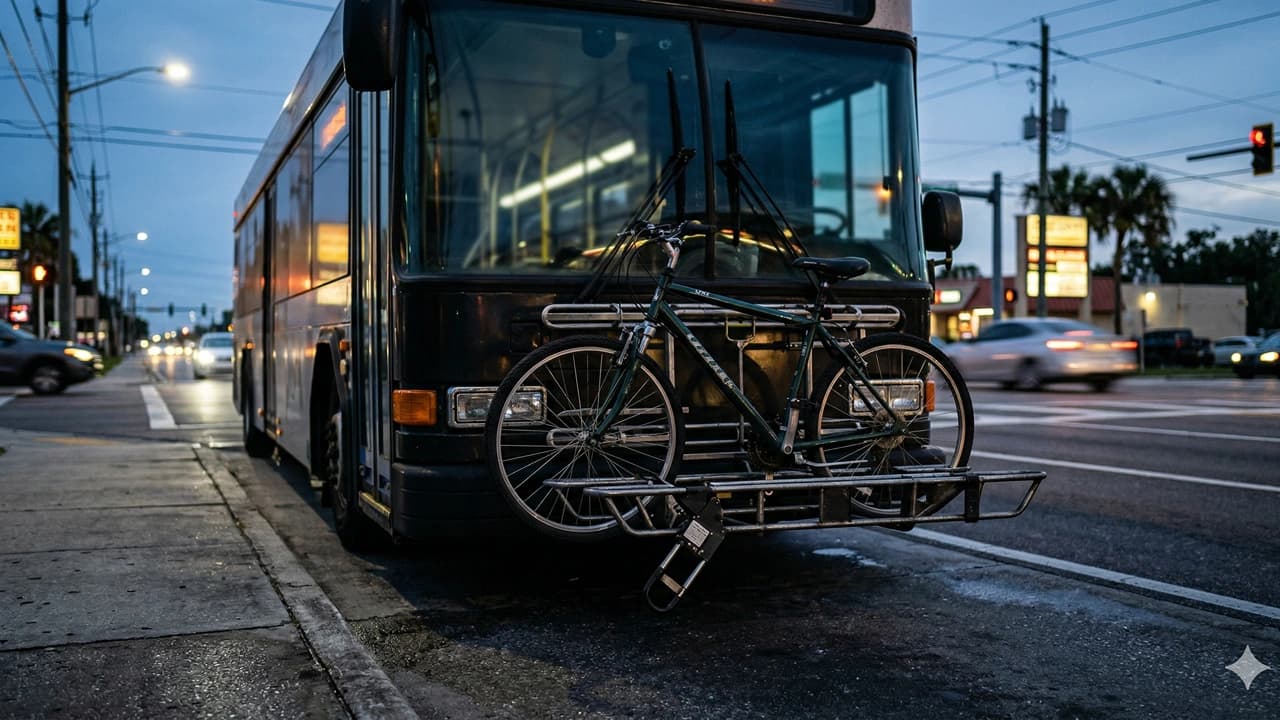
The conflict began when Westly Horton exited the bus and moved toward the bike rack located on the front of the vehicle to retrieve his bicycle. While he focused on his bike, the bus driver, Charles Alvin Osborne, failed to maintain a safe environment. Mr. Osborne, who acted within the scope of his employment for LYNX at the time, negligently operated the large vehicle. This lack of care resulted in a direct collision between the bus and Mr. Horton. The Plaintiff argued that the driver owed him a specific duty to operate the bus in a reasonably safe manner, a duty that Mr. Osborne breached when the bus struck Mr. Horton during the retrieval of his bicycle.
Injury
The physical impact of the bus caused Westly Horton to sustain serious and permanent injuries. The legal complaint detailed a range of physical and emotional damages, including the significant and permanent loss of important bodily functions and permanent scarring. Beyond the immediate trauma, Mr. Horton suffered from the activation or aggravation of existing physical defects or diseases. These injuries led to a loss of capacity for the enjoyment of life, physical impairment, and ongoing disability.
Damages Sought
Because the injuries were permanent, Mr. Horton sought compensation for a wide array of losses. He requested more than $50,000 to cover the expenses of medical care, surgery, and treatment he had already received, as well as the costs he expected to face in the future. Additionally, he sought damages for lost wages and the permanent loss of his ability to earn money in the future. The lawsuit aimed to hold LYNX vicariously liable for the driver's actions under the legal doctrine of Respondeat Superior.
Key Arguments and Proceedings
The litigation officially began on March 20, 2023, when Westly Horton filed his complaint in the Ninth Judicial Circuit Court for Orange County. The case progressed through several years of legal maneuvering before reaching a jury trial in early 2026.
Legal Representation
Plaintiff(s): Westly Horton
· Counsel for Plaintiff(s): Joseph F. Scarpa, Jr.
Defendant(s): Central Florida Regional Transportation Authority d/b/a LYNX
· Counsel for Defendant(s): Joseph L. Amos, Jr. of Fisher Rushmer, P.A.
· Experts for Defendant(s): Charles H. Bush | John A. Jenkins
Key Arguments or Remarks by Counsel
The trial centered on the specific actions of both the bus driver and the Plaintiff at the moment of the collision.
Claims
The Plaintiff’s legal team argued that Charles Osborne acted carelessly and negligently. They emphasized that LYNX, as a governmental entity operating a public bus system, bore responsibility for the actions of its employees. Mr. Scarpa argued that the driver failed to check the front bike rack or ensure the area was clear before moving the vehicle, which led directly to the injuries. The Plaintiff maintained that all conditions required to bring the lawsuit against a government entity had been satisfied, including proper notice to the state.
Defense
The defense for LYNX offered a multi-layered rebuttal. First, the defense counsel issued a blanket denial of all allegations, demanding that the Plaintiff prove every claim. More specifically, they argued that Westly Horton’s own negligence caused the accident and the resulting damages. They suggested that any award should be reduced because Mr. Horton had failed to look out for his own safety while near the bus.
The defense also claimed that "superseding" or "intervening" acts by other people—whom LYNX did not control—were the true cause of the injuries. Furthermore, LYNX asserted its rights under Florida’s sovereign immunity laws, which place limits on the amount of money a person can recover from a government agency. They also argued for "set-offs," meaning if Mr. Horton received money from insurance or other sources, those amounts should be subtracted from any Court-ordered payment.
Jury Verdict
After listening to the evidence and the arguments from both sides, the jury reached a decision on February 27, 2026. The jury first determined that the bus driver, Charles Osborne, was indeed negligent and that his negligence legally caused damage to Westly Horton.
However, the jury also agreed with the defense's argument that the Plaintiff shared some of the blame. They found that Westly Horton acted negligently as well, contributing to his own injuries. To resolve this, the jury had to assign a percentage of fault to each person involved.
The jury assigned 56% of the blame to the driver, Charles Osborne. They assigned the remaining 44% of the blame to the Plaintiff, Westly Horton.
When it came to the financial impact, the jury focused on the medical costs that Mr. Horton had already faced. They determined that the reasonable amount for his past medical expenses totaled $790,412.08.
Following the rules of "comparative negligence" in Florida, the Court would not award the full amount to the Plaintiff. Because the jury found Mr. Horton 44% responsible for the accident, the total award of $790,412.08 would be reduced by that same percentage. The final judgment, managed by the Court after the verdict, would reflect this reduction to account for Mr. Horton's own contribution to the incident.