

Case Background
The legal action began in early 2022 when Theodora Sirota filed a complaint in the Hartford Superior Court against The Crown Market, LLC. Ms. Sirota, a resident of West Hartford, visited the local grocery store as a customer (legal "invitee") on the afternoon of October 1, 2020. The lawsuit centered on the store's responsibility to maintain a safe environment for shoppers navigating the entrance area. The case eventually proceeded to a jury trial, concluding in July 2024 with a verdict that addressed both the store's negligence and the Plaintiff's own role in the accident.
Cause
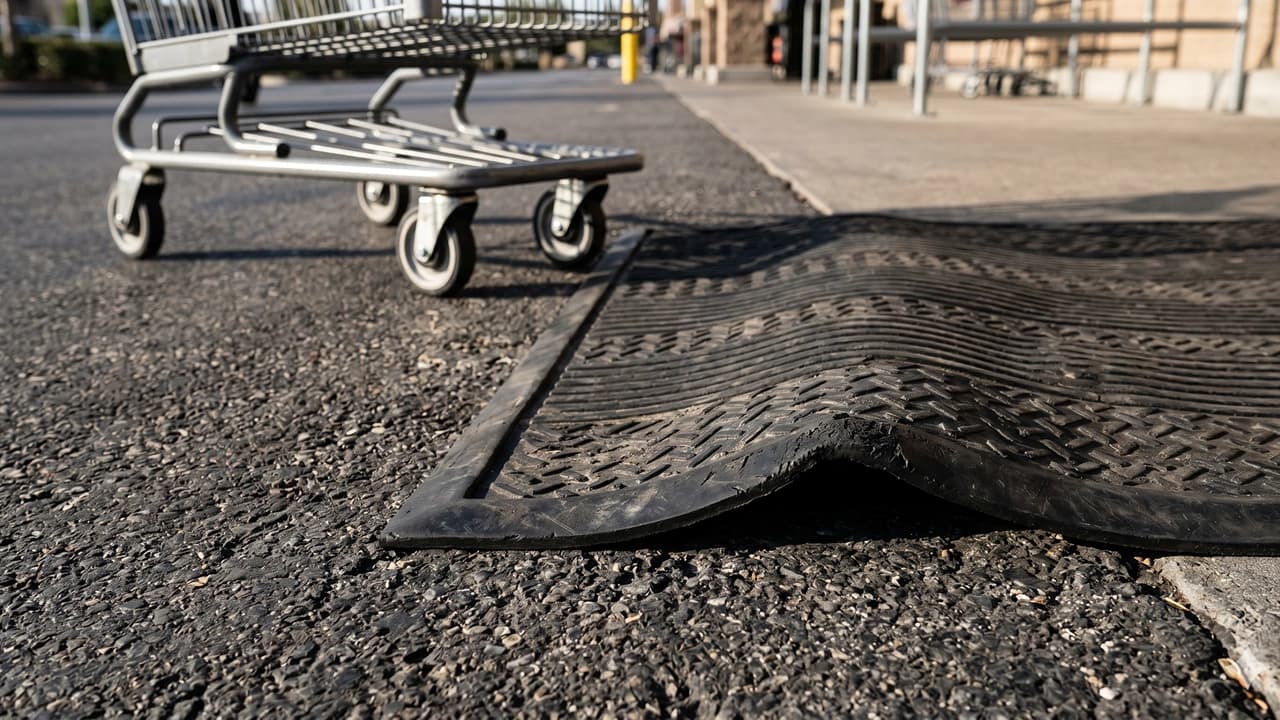
The accident occurred because of a specific hazard located at the store's only customer entrance. The Crown Market provided shopping carts located outside the building and encouraged patrons to push them over an area where the parking lot met a slight incline. On the day of the incident, the store had placed large rubber mats over this sloped asphalt. As Ms. Sirota pushed her cart toward the door, one of the cart's wheels caught on a section of the matting that was folded over or not lying flat. This "incorrectly placed" mat acted as a sudden block, causing the cart to lose balance and flip over, which threw Ms. Sirota violently to the ground.
Injury
The fall resulted in significant and permanent physical damage to Ms. Sirota. The primary injury was a severe fracture of the left femur (thigh bone) near a previous prosthetic, which required surgical hardware to fix. The trauma also caused:
Heart and Blood Issues: Acute blood loss anemia and a rapid heart rhythm known as supraventricular tachycardia.
Spinal and Nerve Damage: Left lumbar radiculopathy (pinched nerve in the lower back) and chronic spinal pain.
Physical Limitations: Permanent stiffness, bruising, and a significantly limited range of motion on her left side.
Systemic Impact: A severe shock to her entire nervous system and ongoing mental anguish.
Because of these injuries, she became unable to perform daily activities and required full-time home care.
Damages Sought
In her legal filing, Ms. Sirota sought monetary compensation for the physical and financial toll of the accident. Her claims included "special damages" to cover the mounting costs of healthcare providers, trauma specialists, surgeons, and physical therapists. She also highlighted the need for full-time home care assistance due to her inability to manage daily activities independently. Beyond medical bills, she demanded compensation for "noneconomic damages," citing the severe physical pain, mental anguish, and the permanent impairment of her ability to enjoy life’s usual activities. The initial statement of demand specified that the damages exceeded $15,000, exclusive of interest and costs, though the ultimate request presented to the jury reflected the catastrophic nature of her long-term recovery.
Key Arguments and Proceedings
Legal Representation
Plaintiff: Theodora Sirota
Counsel for Plaintiff: Caitlyn S. Malcynsky of Walsh Woodard, LLC
Defendant: The Crown Market, LLC
Counsel for Defendant: Cynthia A. Jaworski of the Law Offices of Cynthia M. Garraty
Key Arguments or Remarks by Counsel
Negligence Claims Against the Store
The Plaintiff’s legal team argued that The Crown Market failed in its "non-delegable duty" to maintain a reasonably safe environment for its customers. They contended that the store created a "trip hazard" by placing rubber mats on an incline in a high-traffic area where customers were encouraged to push heavy shopping carts. The core of their argument rested on the fact that the store knew, or should have known, that these mats could bubble, move, or distort. Counsel emphasized that the store failed to properly secure the matting to the ground or provide any warning signs to alert shoppers of the uneven surface. They characterized the entryway as a "defective and unreasonably dangerous condition" that made a violent fall almost inevitable for an unsuspecting patron.
The Defense of Comparative Negligence
The defense acknowledged that the store operated the premises and utilized the mats, but they denied any negligence or responsibility for the fall. They argued that the mat was not "incorrectly placed" and that the store had no knowledge of any dangerous condition prior to the incident. More importantly, the defense raised a "Special Defense" of comparative negligence. They claimed that Ms. Sirota was responsible for her own injuries because she had failed to keep a proper lookout. The defense suggested that she had not made reasonable use of her senses or taken necessary precautions to observe the ground where she was walking. Essentially, they argued that if she had been paying closer attention to her surroundings, she could have avoided the mat and the subsequent accident.
Jury Verdict
After hearing the evidence and the arguments from both sides, the jury reached a decision on July 17, 2024. The jury found in favor of the Plaintiff, Theodora Sirota, determining that The Crown Market, LLC was primarily responsible for the incident. However, the jury also applied the principles of comparative negligence as suggested by the defense.
The jury calculated the total liability and divided it between the two parties. They assigned 83% of the fault to the Defendant, The Crown Market, and 17% of the fault to the Plaintiff, Ms. Sirota.
The jury then assessed the total financial impact of the injuries. They awarded $92,000 in economic damages to cover medical expenses and care costs. For the intangible impact—such as physical pain, emotional distress, and loss of life’s enjoyment—they awarded a significant $1,050,000 in noneconomic damages. This brought the total gross damages to $1,142,000.
Because the jury found Ms. Sirota to be 17% responsible for the accident, the total award underwent a proportional reduction. After subtracting the percentage of her own liability, the jury rendered a final award of $947,860 for the Plaintiff. The verdict was officially accepted and recorded by the Court at 4:51 p.m. on the day of the decision.
Court documents are available upon request at [email protected]