
Case Background
Stephen Hernandez and Kristen Hernandez, as the heirs of the deceased Don Hernandez, filed a wrongful death lawsuit against the County of Los Angeles, the State of California, and several local cities in May 2020. The Plaintiffs had initiated the legal action after Don Hernandez suffered a fatal bicycle crash on April 27, 2019. The lawsuit centered on the critical assertion that a dangerous condition of public property caused the tragedy. The Plaintiffs maintained that the governmental entities knew or should have known about the hazard but fundamentally failed to fix it, leading to the death of Mr. Hernandez. Legal proceedings quickly commenced in the Superior Court of California, County of Los Angeles, before the Honorable Thomas D. Long.
Cause
The Plaintiffs filed their original complaint on May 13, 2020, asserting that the accident happened when Don Hernandez struck a fixed object, specifically a parking block, that was dangerously placed in or near a path intended for bicyclists. The filing made clear that the responsible governmental entities had an enforceable, statutory duty to maintain public property in a condition that didn't create a substantial risk of injury to users. The Plaintiffs claimed the Defendants had breached this duty when they either created the dangerous placement of the parking block or failed to take reasonable steps to guard against or warn of the known hazard. The core of the complaint hinged on the assertion that this specific defect rendered the public property unreasonably dangerous for its intended use, directly resulting in the fatal crash.
Injury
The primary injury in this lawsuit was the wrongful death of Don Hernandez. Throughout the litigation, the Plaintiffs consistently maintained that they, his family, endured severe and lasting emotional distress and economic hardship because of his sudden, preventable death. The complaint detailed that the fatal injuries Don Hernandez sustained necessitated immediate and extensive emergency medical response and subsequent funeral expenses. The lasting nature of the family's loss of love, companionship, protection, and financial support formed the foundation for the substantial damages the Plaintiffs sought.
Damages Sought
Stephen and Kristen Hernandez sought recovery for all damages allowed under California law for wrongful death. These included economic losses, covering the extensive costs associated with the funeral, burial, and related expenses, as well as the future financial support, services, and maintenance Don Hernandez would have provided to his family. They also pursued substantial non-economic damages to compensate for the significant loss of companionship, comfort, care, and society they underwent following the death of their family member. They requested that the Court award all general and special damages proven at trial.
Key Arguments and Proceedings
Legal Representation
Plaintiff(s): Stephen Hernandez | Kristen Hernandez
Counsel for Plaintiff(s): Mark S. Algorri | Sam S. Soleimany
Defendant(s): County of Los Angeles | State of California and its Departments (specifically the Department of Transportation, CalTrans) | City of Irwindale | City of Baldwin Park
Counsel for Defendant(s): Adam A. Ainslie | Germaine C. Ng | Erin E. Holbrook | Jerald M. Montoy | Steven J. Dadaian | Erick L. Solares | Christopher Hiddleson | Julie Del Rivo | David C. Rodriguez | Guterres Tomas Antonio | Nacionales-Tafoya Robert Manuel
Key Arguments or Remarks by Counsel
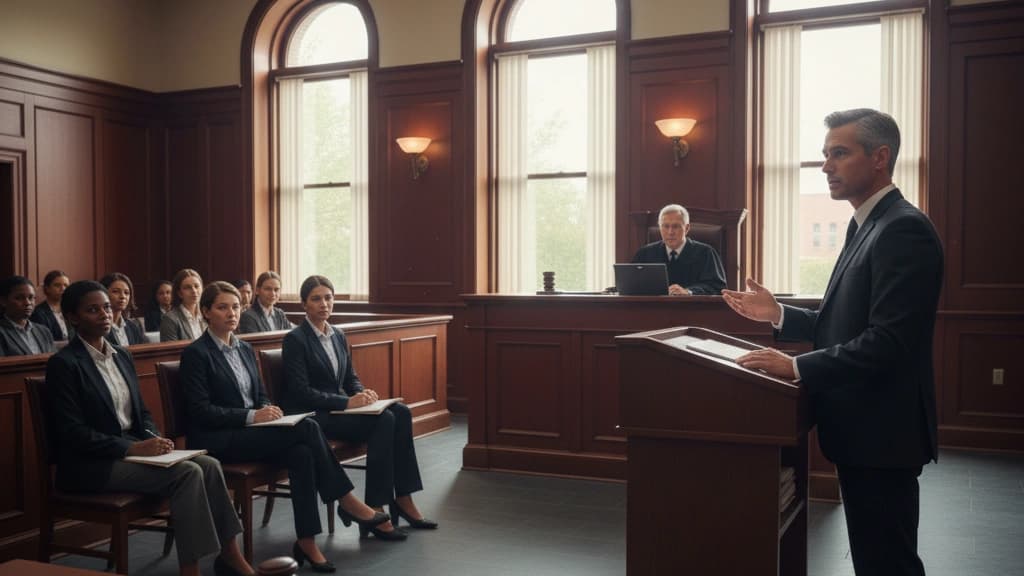
The Plaintiffs’ legal team launched a powerful case, arguing the public entities fundamentally failed in their responsibility to maintain a safe environment for recreational users. They asserted that the specific placement of the parking block constituted a dangerous trap that a reasonably careful person would not have anticipated. Plaintiffs’ counsel forcefully argued that CalTrans and the County had received previous warnings or had documentation confirming the hazard, but administrators chose to delay or ignore taking corrective measures. This negligence, they asserted, created the dangerous condition that directly caused the fatal bicycle crash.
The defense, representing the various governmental entities, vehemently countered the allegations with a strong denial of liability. The County and the State maintained that they had either not received formal notice of the alleged dangerous condition or that the condition was minor and trivial, a defense that shields public entities from liability. The defense also argued that the bicyclist’s own actions contributed to the accident, asserting that Mr. Hernandez had exceeded the scope of the property’s intended use at the time of the collision. They firmly stated that the property, as designed and maintained, did not present an unreasonable risk to the public and denied any institutional failure.
Claims
Dangerous Condition of Public Property Against Governmental Entities
The central claim against the County, State, and cities asserted that they had owned and controlled public property that contained a dangerous condition at the time of the accident. The Plaintiffs maintained that this dangerous condition the parking block placed improperly in or near the bicycle path proximately caused the decedent’s death, making the Defendants liable for their failure to protect the public.
Failure to Warn
A related claim asserted that even if the Defendants did not immediately remove the dangerous parking block, they possessed a duty to warn the public of the hazard. The Plaintiffs argued that the Defendants had failed to post adequate warnings, such as signs or barriers, in the area surrounding the dangerous condition, thereby increasing the risk of an accident like the one Don Hernandez suffered.
Defense
The Defendants officially responded to the complaint by filing a sweeping denial of the core allegations. The defense strategy focused heavily on the statutory immunities granted to governmental entities. They contended that the property condition was not "dangerous" in the legal sense or that the entities lacked timely notice of the condition before the accident happened. The Defendants maintained that the ultimate cause of the accident lay with the decedent’s own conduct and not with any actionable defect in the property itself, thus protecting the governmental bodies from legal responsibility for the tragic event.
Settlement
The complex and high-profile wrongful death case, which had been set for a contentious jury trial involving multiple public entities, concluded before a single juror was selected. Following intense, confidential mediation sessions, all involved parties reached a final, binding settlement agreement.
The collective Defendants, including the County of Los Angeles and the State of California, ultimately agreed to pay the Plaintiffs, Stephen Hernandez and Kristen Hernandez, the total sum of $1,250,000 to resolve all claims lodged in the lawsuit. This substantial settlement concluded the litigation, preventing the need for a public trial that would have involved emotionally draining testimony and potentially exposed administrative deficiencies in public works maintenance.
The final action concluding the case of Stephen Hernandez, et al. v. County of Los Angeles, et al. following the $1.25 million settlement, was the issuance of an Order of Dismissal by the Superior Court of California, County of Los Angeles, on September 18th, 2025. This order stipulated that the action is dismissed without prejudice as to the defendants listed as other City of West Covina, et al. This dismissal confirms the final resolution and closure of the legal proceedings in this matter.
Court documents are available upon request at [email protected]