
Case Background
Maurice D. Able, a state prisoner serving two consecutive life sentences at the State Correctional Institution at Greene in Waynesburg, Pennsylvania, took the Pennsylvania Department of Corrections to federal Court over what he described as a setup by prison staff. The case landed in the United States District Court for the Western District of Pennsylvania in Pittsburgh, where Able filed his complaint on November 2, 2021, under docket number 2:21-cv-00105. Judge J. Nicholas Ranjan presided over the matter, which stretched across more than four years of pretrial wrangling before reaching a jury. Although Able originally named sixteen corrections officials in his lawsuit, the case narrowed considerably over time, and only four Defendants remained when the trial finally began in early 2026.
Cause
Able brought the action under 42 U.S.C. § 1983, claiming that prison staff violated his constitutional rights during and after a routine search of his cell on August 21, 2018. According to the complaint, the Pennsylvania Department of Corrections conducted its yearly search at SCI Greene that day. Two K-9 units swept Able's cell (D-A 38) and found no narcotics. After the dogs cleared the area, members of the Corrections Emergency Response Team searched the cell and also found nothing. Able alleged that Officer Gould, who was assigned to a different cell, then entered Able's cell without authorization, asked him for candy, and grew angry when Able refused. Able claimed Gould later returned to his cell, spent a long time inside, and eventually walked out with a black glove that he handed to another officer.
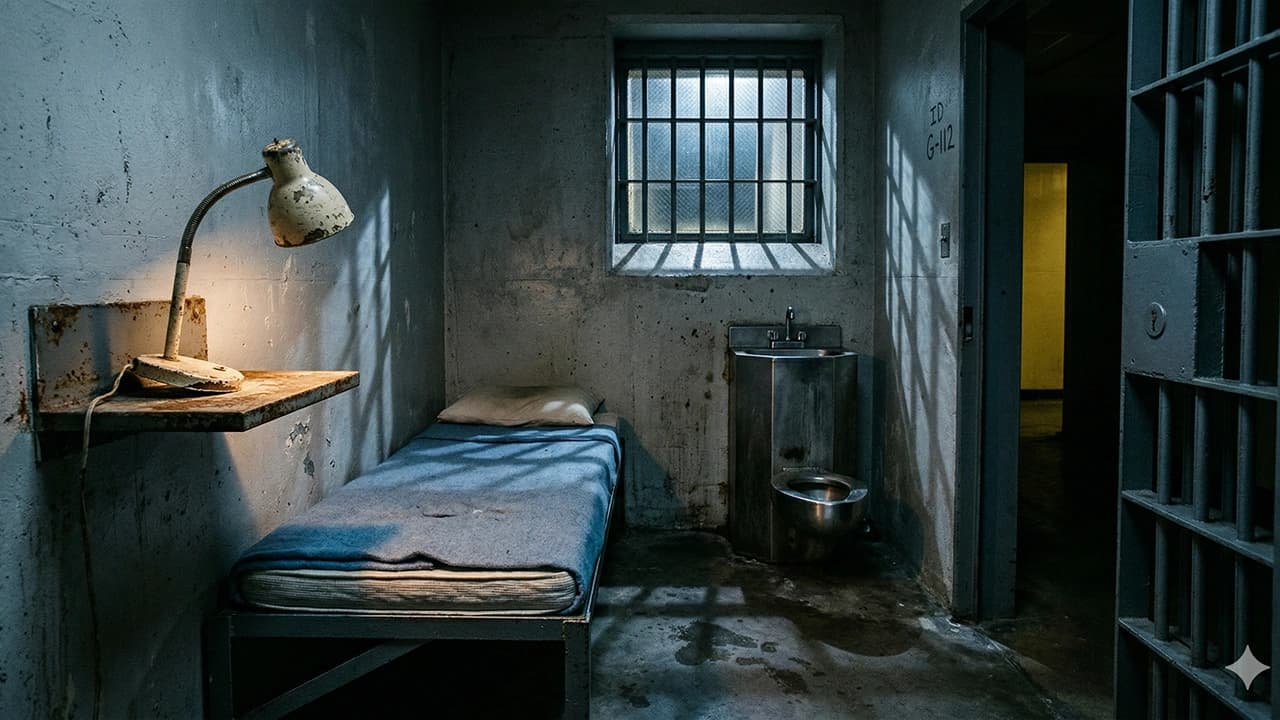
The next day, Able said, Officer Saylor falsified field test results, reporting that the glove contained synthetic cannabinoids and 67 grams of cocaine. Based on those results, prison officials charged Able with possession of a controlled substance and contraband. They moved him to G-Block's Secure Residential Treatment Unit, a Level 5 solitary confinement housing area meant for inmates with serious mental health diagnoses, even though Able carried no such designation.
Able further alleged that staff withheld his legal materials for weeks, denied him yard time, and ignored his repeated requests for clean clothing and access to the law library. Because of those delays, he claimed, he missed the deadline to file an appellate brief in his criminal case, and the Superior Court dismissed his appeal on September 5, 2018. A hearing examiner later threw out the misconduct charge on August 24, 2018, and prison officials returned Able to general population on October 10, 2018.
Injury
Able said he suffered emotional distress, sleep deprivation from the constant noise of mentally ill inmates housed nearby, and the loss of his appellate rights in a criminal case in which he was serving two consecutive life sentences. He also described being denied basic necessities such as clean underwear and meaningful exercise.
Damages Sought
Able asked the Court for declaratory and injunctive relief, $10,000 in compensatory damages from each Defendant, and $25,000 in punitive damages from each Defendant, plus costs.
Key Arguments and Proceedings
Legal Representation
Plaintiff: Maurice D. Able
· Counsel for Plaintiff: Danielle Kunkel | Elisha James Jones | Zachary Robert Zovko | Rachel L McElroy | Scott Scheinberg | Connor P. Hayes | Kelly K. Iverson
Defendants: Candice Lackey | Myron Ramirez | Michael Beers | Nicholas Rymniak | all employed at SCI Greene.
· Counsel for Defendants: Scott A. Bradley | Karen M. Romano | Chloe Clifford | Margaret Potter | Joan E. Owhe
Key Arguments by Counsel
Able's counsel told the jury that the Defendants worked together to punish Able for refusing Officer Gould's demand for candy by planting evidence, fabricating test results, and locking him away in a mental health unit where he did not belong. Counsel emphasized that two drug dogs and a full physical search by trained response officers turned up nothing in Able's cell, and that the supposed contraband appeared only after Gould spent an unusual amount of time alone inside.
The defense denied every major allegation. Defense counsel argued that Officer Gould noticed loose screws on Able's lamp, confiscated the lamp, and discovered a black glove containing white powder hidden inside. They maintained that the field tests were genuine and that staff followed proper procedures throughout. The defense also raised qualified immunity, sovereign immunity, and failure to exhaust administrative remedies under the Prison Litigation Reform Act as affirmative defenses.
Claims
Able pursued Section 1983 claims tied to the First, Fourth, Fifth, Eighth, and Fourteenth Amendments. He accused the Defendants of denying him access to the Courts, subjecting him to cruel and unusual punishment, confining him without due process, and showing deliberate indifference to his basic needs. He also pointed to violations of the Pennsylvania Constitution covering the right to liberty, freedom from cruel punishment, and protection against discrimination.
Defense
The Answering Defendants filed their answer on March 28, 2022, denying liability. They admitted only the basic employment facts about each officer and rejected the substantive allegations. They asserted fourteen affirmative defenses, including qualified immunity, good faith, sovereign immunity, failure to state a claim, and the argument that any harm Able suffered came from his own actions or from third parties beyond their control.
Jury Verdict
After hearing the evidence, the jury returned its verdict on March 2, 2026. The panel reached a split decision, finding for Able on two of his four claims and rejecting the other two.
The jurors found that Able proved his Section 1983 claim against Unit Manager Candice Lackey. They awarded him $1.00 in nominal damages and $37,500 in punitive damages against her. The jury also found in Able's favor on his claim against Sergeant Michael Beers, awarding him $1.00 in nominal damages but no punitive damages.
The jury sided with the defense on the remaining two claims. It found that Able failed to prove his case against Lieutenant Myron Ramirez and against Officer Nicholas Rymniak, awarding no damages against either of them. The jury foreperson and the other jurors signed the verdict form the same day. Able walked away with a total recovery of $37,502 from the trial, with the bulk of that amount tied to the punitive damages awarded against Lackey for her role in the events that began with the August 2018 cell search.
Court documents are available upon request at [email protected]