
Case Background
This legal dispute originated from a motor vehicle collision that occurred on July 26, 2023, in Broward County, Florida. The incident involved James Peter Walling, a resident of Fort Lauderdale, and a 2007 Chevy Tahoe owned by Seth Nathaniel Scott. While Mr. Scott resided in Alabama, his vehicle was being operated in Florida by Jonathan Jones at the time of the crash. The interaction between these three individuals set the stage for a personal injury lawsuit centered on negligence and vicarious liability.
Cause
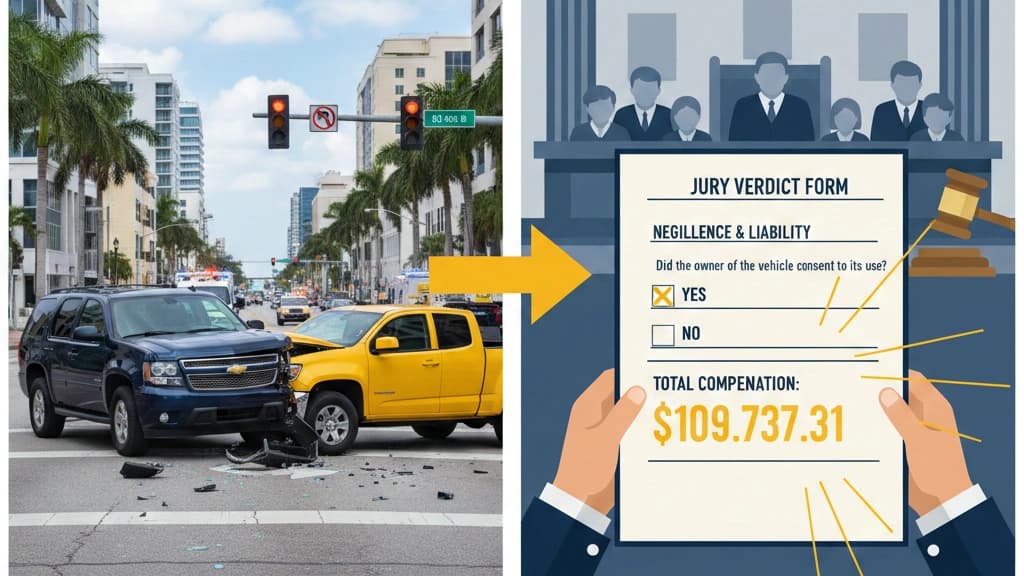
The collision took place at the intersection of W. Cypress Creek Road and NW 62nd Street in Fort Lauderdale. According to the allegations, Jonathan Jones operated the Chevy Tahoe at an unsafe speed and failed to maintain a proper lookout. Because of this lack of care, the Tahoe struck the 2017 Chevy Colorado driven by Mr. Walling. The Plaintiff contended that the crash resulted entirely from the driver’s failure to comply with state and local traffic laws.
Injury
As a direct consequence of the impact, Mr. Walling suffered various physical injuries. The legal filings detailed that he experienced pain and suffering, physical disability, and disfigurement. Beyond the immediate physical trauma, the Plaintiff reported mental anguish and a loss of capacity to enjoy life. Medical evaluations indicated that these injuries reached a level of permanency within a reasonable degree of medical probability, suggesting that the effects of the July 2023 accident would linger indefinitely.
Damages Sought
Mr. Walling initiated the lawsuit seeking compensation for a wide range of losses. His demands included recovery for past and future medical expenses required to treat his injuries. Additionally, he sought damages for lost wages and the diminished capacity to earn money in the future. The complaint formally requested an amount exceeding $50,000, though the final figure was left for a jury to determine based on the evidence of his physical and emotional distress.
Key Arguments and Proceedings
The litigation progressed through the 17th Judicial Circuit Court, where the parties debated both the cause of the accident and the extent of the owner’s responsibility. A central point of contention emerged early in the proceedings regarding whether Jonathan Jones had permission to drive the vehicle.
Legal Representation
Plaintiff(s): James Peter Walling
Counsel for Plaintiff(s): Lyle R. Long
Defendant(s): Seth Nathaniel Scott | Jonathan Jones
Counsel for Defendant(s): Hitham N. Eldaher | Alexis Catherine Upton
Key Arguments or Remarks by Counsel
The legal teams focused on the relationship between the vehicle owner and the driver. The Plaintiff’s counsel argued that as the owner of the Tahoe, Seth Nathaniel Scott bore vicarious liability for the damages caused by the driver, Jonathan Jones. They asserted that Mr. Jones had operated the vehicle with the express or implied consent of Mr. Scott.
Claims
The Plaintiff raised two primary counts of negligence. In the first count, he targeted Jonathan Jones for failing to operate the vehicle in a safe manner, which led to the crash. In the second count, he sought to hold Seth Nathaniel Scott accountable under the "dangerous instrumentality doctrine," which in Florida generally makes a vehicle owner responsible for the negligence of anyone driving the car with their permission.
Defense
Seth Nathaniel Scott mounted a robust defense through sixteen affirmative defenses . His primary argument centered on the claim that Jonathan Jones did not have consent or authority to drive the Chevy Tahoe on the day of the accident. If the jury believed that the car was taken without permission, Mr. Scott would not be liable for the Plaintiff's injuries. Furthermore, the defense argued that the accident might have been unavoidable or that Mr. Walling’s own negligence contributed to the collision. They specifically pointed to the possible failure of the Plaintiff to wear a seatbelt and suggested that any disability might have stemmed from pre-existing medical conditions rather than the crash itself.
Jury Verdict
After hearing the evidence and the arguments from both sides, the jury reached a unanimous decision on December 17, 2025. The foreperson, Yosef Kopman, delivered the verdict which addressed the critical questions of consent, negligence, and the value of the damages.
Consent and Negligence The jury first addressed the pivotal issue of whether Jonathan Jones had permission to drive the Tahoe. They found that Mr. Jones was indeed operating the vehicle with the express or implied consent of the owner, Seth Nathaniel Scott. This finding established the legal link necessary to hold Mr. Scott responsible for the driver's actions. Following this, the jury determined that the negligence of Jonathan Jones was a legal cause of the loss and injury sustained by James Peter Walling.
Findings on Medical Expenses The jury calculated the financial impact of the accident on the Plaintiff’s life. They awarded a specific sum for medical costs:
Past Medical Expenses: The jury awarded $9,737.31 to cover costs already incurred.
Future Medical Expenses: The jury allocated $50,000.00 for medical care that Mr. Walling will require in the years to come.
Permanent Injury and Pain and Suffering A major victory for the Plaintiff occurred when the jury agreed that he sustained a permanent injury as a result of the accident. This finding allowed the jury to award damages for non-economic losses, such as pain and suffering and the loss of enjoyment of life.
Past Pain and Suffering: For the difficulties endured from the date of the accident until the trial, the jury awarded $10,000.00.
Future Pain and Suffering: For the continued suffering Mr. Walling will face, the jury awarded $40,000.00.
Total Award When all the figures were combined covering medical bills and the personal toll of the injury the jury returned a total verdict of $109,737.31 in favor of James Peter Walling. This amount reflected the jury's assessment of the total damage caused by the July 2023 collision.
Court Documents