
Case Background
George Stephenson worked for years around studio lighting and staging equipment in California. In April 2025, he sued PK&P Investment Co. the company formerly known as Mole-Richardson Co., Ltd. and Mole-Richardson Rentals along with dozens of other companies, in the Superior Court of California for the County of Los Angeles. The Court handled the matter as part of the coordinated Los Angeles asbestos docket, the LAOSD Asbestos Cases.
Stephenson was born in 1945. He served in the Army from 1970 to 1973. By the time of his fact sheet, his address was in Santa Fe, New Mexico, and he had lived in California from 1958 to 1992. On that same fact sheet, he indicated he had never smoked.
Cause
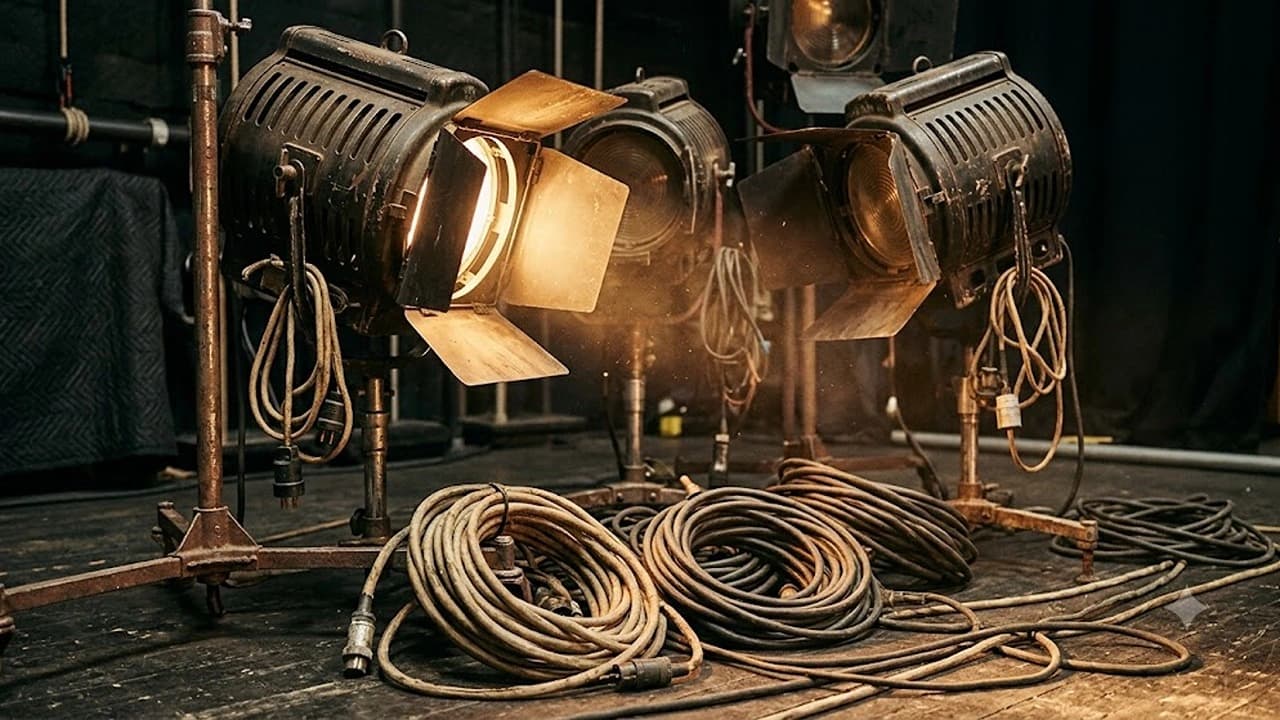
Stephenson claimed that asbestos-containing lighting wiring and equipment tied to Mole-Richardson exposed him to asbestos dust over many years, from 1968 into the 2000s. He brought four claims against the companies he sued: negligence, breach of express and implied warranties, strict liability, and premises owner/contractor liability. He alleged that the companies knew asbestos was dangerous, hid that danger, and failed to warn the people who used or worked around their products.
Injury
A doctor diagnosed Stephenson with pleural mesothelioma on December 5, 2024 — a rare and aggressive cancer linked to asbestos exposure. By the time he filed suit, he had already received that diagnosis. He described the disease as life-threatening and likely terminal, and he said he continued to suffer physical pain, mental anguish, and a loss of enjoyment of life.
Damages Sought
Stephenson asked for general and special damages, medical expenses, lost income and earning capacity, punitive damages, costs of suit, and prejudgment interest. He left the specific dollar figures to be proven at trial.
Key Arguments and Proceedings
Legal Representation
Plaintiff: George Stephenson
· Counsel for Plaintiff: Benno Ashrafi | Rett Bergmark | Jamie Mattera | Sara Merrill | Tyler Stock
Defendant (at trial): PK&P Investment Co., formerly Mole-Richardson Co., Ltd. / Mole-Richardson Rentals
· Counsel for Defendant: John P. Katerndahl | Brandon S. Sanchez | Farah S. Nicol | Joseph L. Greenslade | Erin Matthew Carpenter | Diana A. Chang | Stephanie C. Chang | Justin F. Cronin | Tina Van Dam | Patrick J. Foley | Lee Joshua | Lopez Morgan Kelley | Nicolas P. Martin | Leah K. Mckechnie | Suzanna L. Minasian | Nicol Farah Sohaili | James C. Parker | Timothy C. Pieper | Williams Jeffrey Reed
Key Arguments or Remarks by Counsel
Claims
In his complaint, Stephenson alleged that the Defendants knew about the dangers of asbestos on or before 1932 and kept selling asbestos products anyway to protect their profits. He argued that the companies failed to test their products, failed to warn users, and failed to recall or retrofit the products once the dangers became clear. Against Mole-Richardson specifically, he tied his exposure to asbestos-containing lighting wiring and equipment used on film and television sets. He also claimed the companies acted with malice and a conscious disregard for the safety of the workers and consumers who came into contact with their products.
Defense
The four documents in this record include only one formal answer, and it came from Union Carbide Corporation — a separate company named in the complaint for supplying asbestos fibers, not the company that went to trial. Union Carbide, represented by Farah S. Nicol and Joseph L. Greenslade of Polsinelli LLP, denied every allegation and raised dozens of affirmative defenses. The company argued, among other points, that others altered its products after they left its hands, that Stephenson's employers bore responsibility for workplace safety, that sophisticated buyers received any warnings that were needed, and that the claims fell outside the statute of limitations. PK&P Investment Co.'s own answer does not appear in the documents provided, so its specific trial defenses are not part of this record.
Jury Verdict
The case went to trial before the Honorable J. Stephen Czuleger in Department 16 of the Spring Street Courthouse. On February 27, 2026, the jury returned a special verdict that favored Stephenson on every question.
The jury found that Mole-Richardson was negligent and that its negligence was a substantial factor in increasing Stephenson's risk of developing mesothelioma. It also found that the company knew or should have known its products were dangerous, that it became aware of a defect after the sale, and that it failed to recall, retrofit, or warn. A reasonable manufacturer, the jury concluded, would have recalled or retrofitted the product.
On the product claims, the jury decided that the product failed to perform as safely as an ordinary consumer would expect and that the risks of its design outweighed its benefits. The jury found that the use of the product was a substantial factor in Stephenson's risk of disease. On the failure-to-warn claim, the jury agreed that the risks were known or knowable, that they posed a substantial danger, that ordinary consumers would not have recognized them, and that the company failed to give an adequate warning.
The jury then weighed the conduct of two other companies. It considered whether Kaiser Gypsum and United States Gypsum were negligent and decided that neither was. When it divided up responsibility, the jury placed 100 percent of the fault on Mole-Richardson and zero on the other two.
For damages, the jury awarded Stephenson $3,640,000 for past non-economic harm — pain, suffering, and loss of enjoyment of life — and $29,744,400 for future non-economic harm. The two figures added up to $33,384,400.
The jury also answered the punitive damages questions. It found, by clear and convincing evidence, that Mole-Richardson acted with malice, oppression, or fraud, and that one or more of its officers, directors, or managing agents carried out that conduct. The presiding juror, Todd Sammann, signed and dated the verdict form.
Judgment
On March 2, 2026, Judge Czuleger entered judgment for Stephenson against PK&P Investment Co. for $33,384,400, with all of the fault assigned to the company. The Court named Stephenson the prevailing party and allowed him to recover his costs. The Court also stayed enforcement of the judgment until ten days after the last date for filing a notice of appeal. Although the jury found the basis for punitive damages, the special verdict form and the judgment in this record do not list a separate punitive damages amount.
Court documents are available upon request at [email protected]