
Case Background
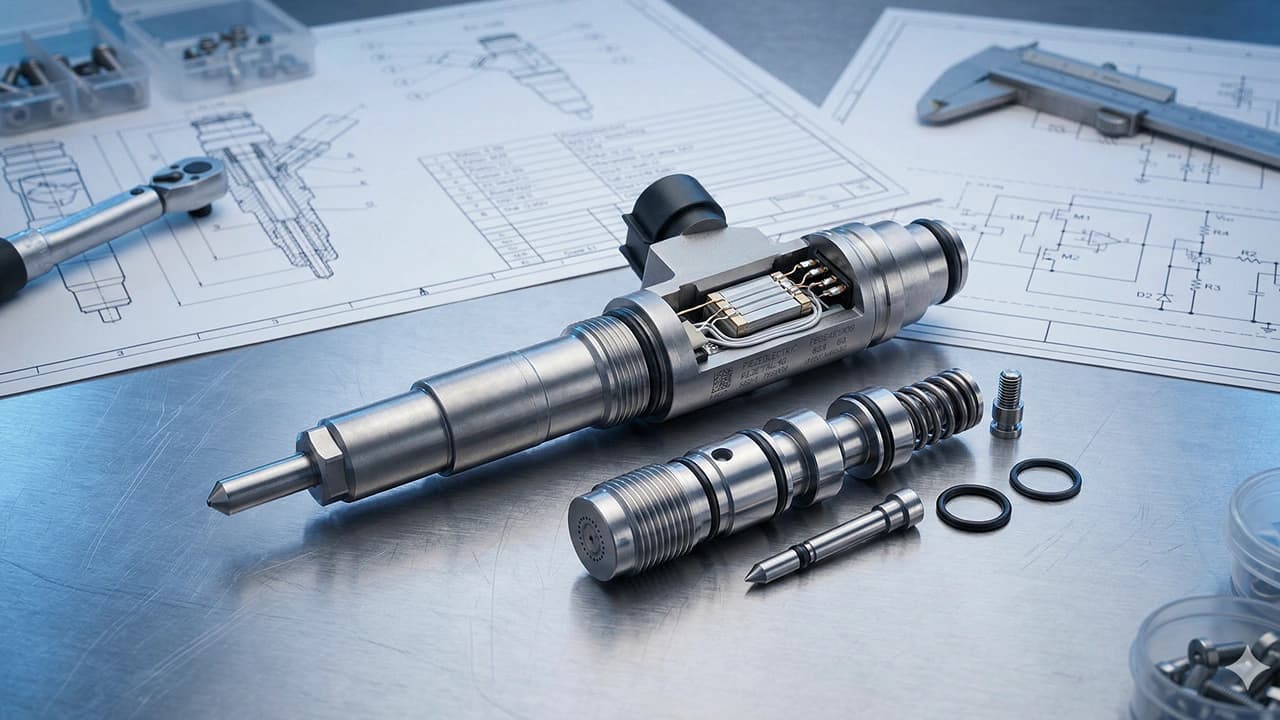
This patent infringement dispute arose from a fight over fuel injection technology used in modern automobile engines. Westport Fuel Systems Canada, Inc., a British Columbia-based company, owned two U.S. patents covering directly actuated injection valves with a "passive hydraulic link" designed for high-pressure fuel delivery. The patents grew out of research Westport conducted in the late 1990s to develop natural gas fuel systems for light and medium duty engines. Robert Bosch, LLC, a Delaware-based subsidiary of the global auto parts giant, manufactured and sold piezo fuel injectors to several of the world’s largest automakers. After Westport sued five of those automakers in late 2021 for using Bosch’s injectors, Bosch stepped in as the real party in interest and filed this declaratory judgment action to clear its products of any infringement claim. The case went to a jury trial in March 2026 in Marshall, Texas, before U.S. District Judge Rodney Gilstrap.
Cause
Robert Bosch, LLC ("Bosch") filed a declaratory judgment action against Westport Fuel Systems Canada, Inc. ("Westport") on April 4, 2022, in the U.S. District Court for the Eastern District of Virginia. The case was later transferred to the Eastern District of Texas, Marshall Division. Bosch asked the Court to declare that its CRI 3.0 Piezo Injectors did not infringe two Westport patents: U.S. Patent No. 6,298,829 (the "'829 Patent") and U.S. Patent No. 6,575,138 (the "'138 Patent"). Both patents, which covered high-pressure fuel injection valve technology for automobile engines, expired in 2020. Westport responded by filing counterclaims asserting that Bosch directly and indirectly infringed both patents through its manufacture, sale, and importation of the accused fuel injectors into the United States.
Injury
Westport claimed that Bosch's CRI 3.0 Piezo Injectors incorporated a "passive hydraulic link" that transmitted opening and closing forces in the same manner described in its patented designs. Westport alleged that Bosch sold these injectors to major automakers including Ford, General Motors, Mercedes-Benz, Nissan, and FCA (now Stellantis), and that Bosch knew about the Westport patents as early as December 2016. Westport also brought five related lawsuits against these automakers in December 2021, alleging that their vehicles contained the infringing Bosch fuel injectors.
Damages Sought
Westport sought compensatory damages no less than a reasonable royalty under 35 U.S.C. § 284, along with a finding that the case was exceptional under 35 U.S.C. § 285, which would have entitled Westport to recover attorneys' fees. Westport also requested pre-judgment and post-judgment interest. Bosch, for its part, sought a declaratory judgment of non-infringement and asked the Court to award costs and attorneys' fees under the same exceptional case provision.
Key Arguments and Proceedings
Legal Representation
Plaintiff: Robert Bosch, LLC
· Counsel for Plaintiff: Sten Jensen | Bas de Blank | Harrison Geron | Angela Colt | Elizabeth Moulton | Erin Marie Boyd Leach | Joseph Raymond Kolker | Michael Ching-Yue Chow | Eric Hugh Findlay | Roger Brian Craft
Defendant: Westport Fuel Systems Canada, Inc.
· Counsel for Defendant: Miranda Y. Jones | Eric D. Wade | Sarah J. Ring | Claire Abernathy Henry | Cody MacJackson Carter | David Higer | David Neal | Hardeman Grant Tucker | Jamie H McDole | Jessi Maupin | Matthew William Cornelia | Matthew Lawrence Vitale | Michael Daley Karson | Patrick Ryan Short | Phillip Brett Philbin | Ray Thomas Torgerson | Eugene Massad
Key Arguments or Remarks by Counsel
The dispute centered on whether Bosch's piezo fuel injectors contained the specific "passive hydraulic link" feature described in the Westport patents. Both patents claimed a hydraulic link assembly where a hydraulic fluid transmitted opening and closing forces while acting "substantially as a solid" during actuator activation, then auto adjusted its thickness between injection events to compensate for thermal expansion and wear. Bosch acknowledged it sold the accused injectors in the United States but maintained that its products did not practice the claimed inventions.
Claims
Infringement of the '829 Patent: Westport asserted that Bosch infringed claims 1, 6, and 18 of the '829 Patent, which covered a directly actuated injection valve with a passive hydraulic link. Bosch argued that its injectors did not transmit opening and closing forces through the identified hydraulic fluid thickness.
Infringement of the '138 Patent: Westport asserted that Bosch infringed claims 1, 13, and 26 of the '138 Patent, a continuation-in-part of the '829 Patent that broadened the valve design to include outward-opening configurations. Bosch raised the same non-infringement defense and additionally asserted an implied license defense.
Defense
Bosch's primary defense was non-infringement. The company argued that its CRI 3.0 Piezo Injectors did not include a passive hydraulic link that transmitted both opening and closing forces through a hydraulic fluid thickness, as the patents required. Bosch contended that its injector design operated differently from the claimed invention, and that Westport mischaracterized how forces moved through the accused product. Bosch also raised an implied license defense specific to the '138 Patent, though the Court held a separate bench trial on this issue after the close of evidence on March 20, 2026. Westport countered with affirmative defenses of equitable estoppel and unclean hands against Bosch's declaratory judgment claims.
Jury Verdict
A jury trial began on March 16, 2026, before Judge Rodney Gilstrap. On March 23, 2026, the jury returned a unanimous verdict in favor of Bosch. The jury found that Bosch did not infringe claims 1, 6, and 18 of the '829 Patent. The jury also found that Bosch did not infringe claims 1, 13, and 26 of the '138 Patent. Because the jury determined there was no infringement on any asserted claim, it did not reach questions on damages or invalidity.
The Court separately addressed Bosch's implied license defense, which was the subject of a bench trial held on March 20, 2026. Both parties agreed before trial that this defense would only matter if the jury found infringement of at least one claim of the '138 Patent while also finding all asserted claims of the '829 Patent either not infringed or invalid. Since the jury found no infringement on any claim, the Court denied the implied license defense as moot.
On March 24, 2026, Judge Gilstrap entered final judgment declaring that Bosch did not infringe any of the asserted claims. The Court designated Bosch as the prevailing party and ordered that Bosch shall recover costs from Westport under Federal Rule of Civil Procedure 54(d), Local Rule CV-54, and 28 U.S.C. § 1920. All other pending requests for relief between the parties were denied, and the Court directed the Clerk to close the case.
Court documents are available upon request at [email protected]