
Case Background
A rear-end collision on a private school driveway in Glendale, California, led to a personal injury lawsuit that ended with a defense verdict after trial. Yvette Gulesserian filed the complaint on September 22, 2020, roughly two years after the crash. The case went to trial more than five years later, in January 2026.
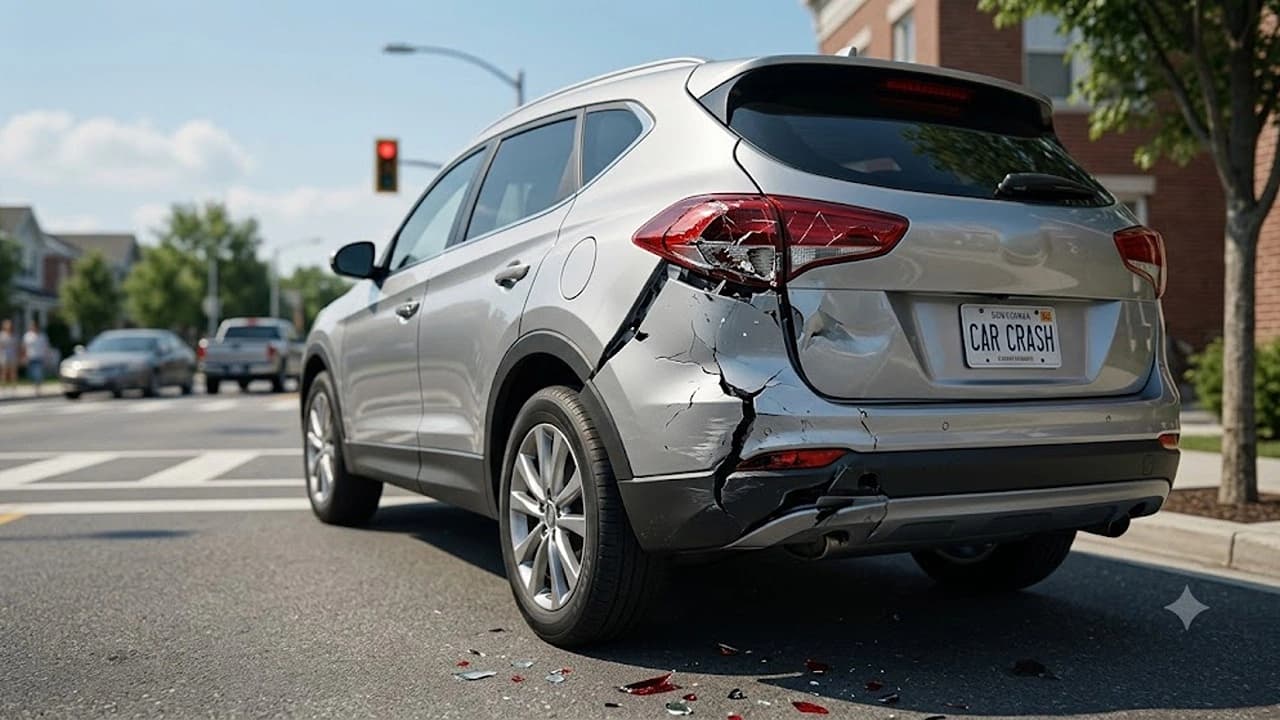
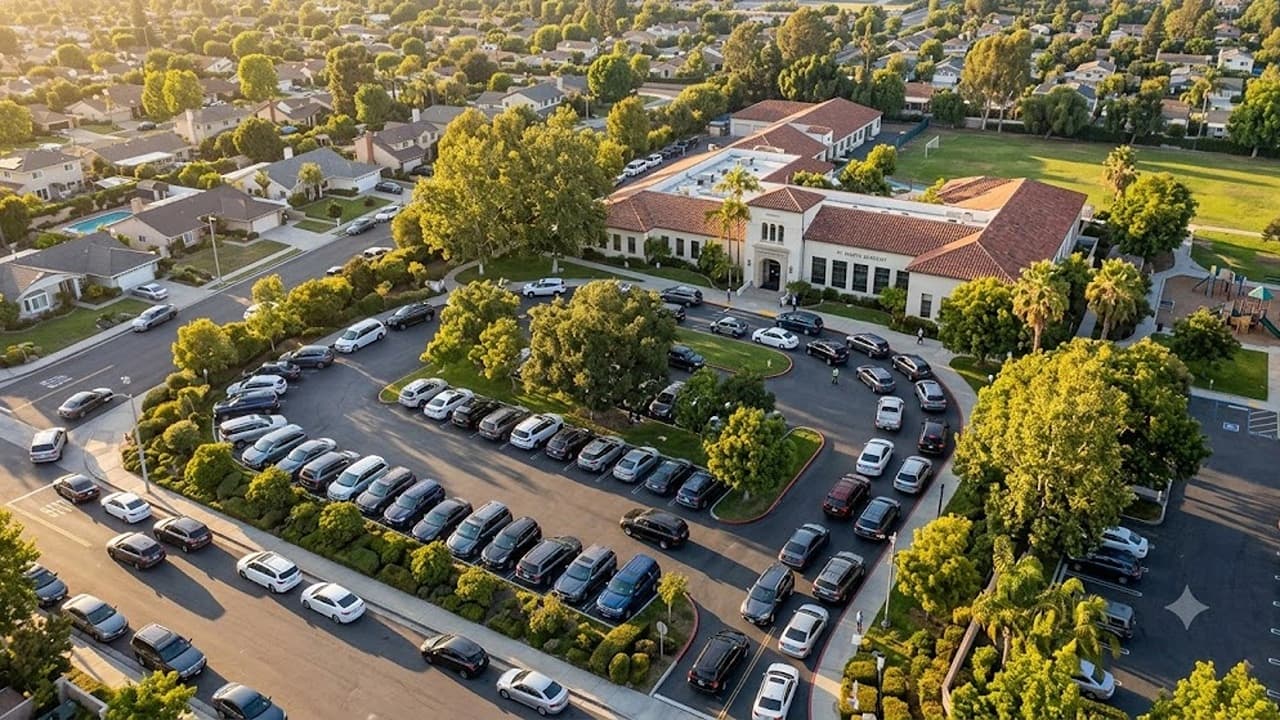
The collision happened on September 27, 2018, at approximately 4:00 p.m. at the Vahan & Anoush Chamlian Armenian School, a private school located at 4444 Lowell Avenue in the City of Glendale, Los Angeles County, California 91214. The school had a private driveway adjacent to its entrance for parents to pick up and drop off children. Gulesserian was driving and operating a 2017 Maserati Ghibli on the driveway and was stopped behind other vehicles. Nina Margarian Akopian was driving and operating a 2011 Honda Odyssey on the same driveway. Gulesserian alleged that Akopian drove the Honda at an excessive speed, violently collided with the rear of the Maserati, and shoved the Maserati into another vehicle stopped ahead. According to the complaint, the Honda belonged to the Defendants, and Nina Akopian was using, driving, and operating it with the express or implied permission of Gabriel Akopian while performing an errand for and on his behalf.
Cause
Gulesserian brought two causes of action, both against all Defendants. The first cause of action alleged negligence, claiming that the Defendants owed a duty to drive with due care, keep a proper lookout, obey traffic laws, control the Honda's speed and movement, and avoid colliding with other vehicles, and that they breached that duty. The second cause of action alleged negligence per se, citing California Vehicle Code Section 21703, which provides that a driver shall not follow another vehicle more closely than is reasonable and prudent having due regard for speed and traffic conditions, and Section 22350, which provides that no person shall drive at a speed greater than is reasonable or prudent for weather, visibility, traffic, and roadway conditions. Gulesserian argued the Defendants violated both statutes, and that their failure to exercise due care was presumed under California Evidence Code Section 669. She also sought to hold Gabriel Akopian liable as the Honda's registered owner under California Vehicle Code Section 17150.
Injury
The complaint stated that the collision seriously damaged the Maserati and seriously injured Gulesserian, causing her to sustain and continue to sustain special and general damages.
Damages Sought
Gulesserian filed the case as an unlimited civil matter, meaning she sought damages in excess of the Court's minimum jurisdictional limits. She asked for general damages according to proof, special damages according to proof, costs of suit, and pre- and post-judgment interest as allowed by law. The special verdict form the jury later received divided potential damages into four categories: past economic loss (lost earnings or income), future economic loss (medical expenses and loss of earnings or income), past noneconomic loss including physical pain and mental suffering, and future noneconomic loss including physical pain and mental suffering.
Key Arguments and Proceedings
Legal Representation
Plaintiff(s): Yvette Gulesserian
· Counsel for Plaintiff(s): Arthur Ilangesyan of Arthur & Associates Law Offices, A PLC (Glendale) filed the complaint. At trial, Armen M. Tashjian of the Law Offices of Armen M. Tashjian appeared for Gulesserian.
Defendant(s): Nina Margarian Akopian.
· Counsel for Defendant(s): Gina Y. Kandarian-Stein | K. Robert Gonter, Jr | Melika Shafouri
Key Arguments or Remarks by Counsel
Claims
Gulesserian's first cause of action, negligence, rested on the allegation that Nina Akopian drove the Honda carelessly and caused the collision and her injuries. Her second cause of action, negligence per se, tied the same conduct to California Vehicle Code Sections 21703 and 22350, arguing that violating those statutes created a presumption of negligence under Evidence Code Section 669. Through Vehicle Code Section 17150, she sought to hold Gabriel Akopian responsible as the registered owner of the Honda who gave Nina Akopian permission to drive it.
Defense
The Defendants denied, generally and specifically, each and every allegation in the complaint under Code of Civil Procedure Section 431.30 and denied that Gulesserian sustained any damages by reason of any act, breach, or omission on their part. They raised ten affirmative defenses. The first asserted that the complaint failed to state facts sufficient to constitute a cause of action. The second raised the statute of limitations under Code of Civil Procedure Section 335.1. The third and fourth alleged failure to mitigate damages, with the fourth specifically alleging that Gulesserian failed to wear a seatbelt although the vehicle was equipped with them, and that she would have sustained no injuries or less severe injuries had she worn one. The fifth alleged that Gulesserian failed to exercise ordinary care for her own safety, and the sixth invoked Civil Code Section 1431.2, known as Proposition 51, to limit each Defendant's liability for noneconomic damages to that Defendant's proportional share of fault. The seventh alleged that Gulesserian caused or contributed to the collision by stopping, braking, or slowing suddenly without adequate justification. The eighth alleged comparative fault, and the ninth alleged comparative fault of persons, entities, or parties other than the Defendants. The tenth alleged assumption of the risk.
Jury Verdict
The case proceeded to trial on January 26, 2026, in Department 4 of the Spring Street Courthouse, Los Angeles Superior Court, with the Honorable Mary Ann Murphy presiding. Armen M. Tashjian appeared for Gulesserian. Gina Y. Kandarian-Stein, K. Robert Gonter, Jr., and Melika Shafouri of Gates, Gonter, Guy, Proudfoot & Muench, LLP appeared for Nina Margarian Akopian. The Court impaneled and swore a jury of twelve persons and five alternates, and the jury agreed to try the case on January 30, 2026. Witnesses were sworn and testified. After hearing the evidence and arguments of counsel, the jury received the Court's instructions and a special verdict form.
The special verdict posed a single threshold question: Was Defendant Nina Margarian Akopian's negligence a substantial factor in causing harm to Yvette Gulesserian? The jury answered no. The verdict form instructed the jurors that if they answered no, they should stop, answer no further questions, and have the presiding juror sign and date the form. Because the jury found that Akopian's negligence was not a substantial factor in causing harm, it never reached the damages questions, and all four damages categories on the form remained blank. Presiding juror Graeson McMahon signed and dated the special verdict on February 19, 2026.
On February 19, 2026, the Court entered judgment on the special verdict in accordance with the jury's findings. The Court entered judgment in favor of Nina Margarian Akopian and against Yvette Gulesserian. Gulesserian was to have and recover nothing from Akopian. Akopian was to have and recover costs from Gulesserian, with costs to be determined by memorandum of costs and/or post-trial motions and entered in the abstract of judgment.
Court documents are available upon request at [email protected]