
Case Background
In the fall of 2019, a social visit to a residence in West Covina took a disastrous turn when a hidden property defect caused a visitor to suffer a life-altering fall. Dennis Brown had traveled to the home of Victoria and Frank Fusaro, located at 1440 South Meeker Avenue, for a routine afternoon visit. At the time of the incident, the homeowners had recently completed a significant renovation on their outdoor patio. While the new stone pavers appeared aesthetically pleasing, the legal dispute revealed that the construction had taken place without the necessary safety oversight from the city. The lack of building permits meant that no official had inspected the work to ensure it met standard safety codes. This negligence resulted in a structural hazard that remained invisible to unsuspecting guests. When Brown attempted to transition from the interior of the house to the outdoor space, he encountered a property that was far more dangerous than it appeared. The resulting lawsuit highlighted the serious responsibilities homeowners bear when they choose to modify their property without professional or legal guidance.
Cause
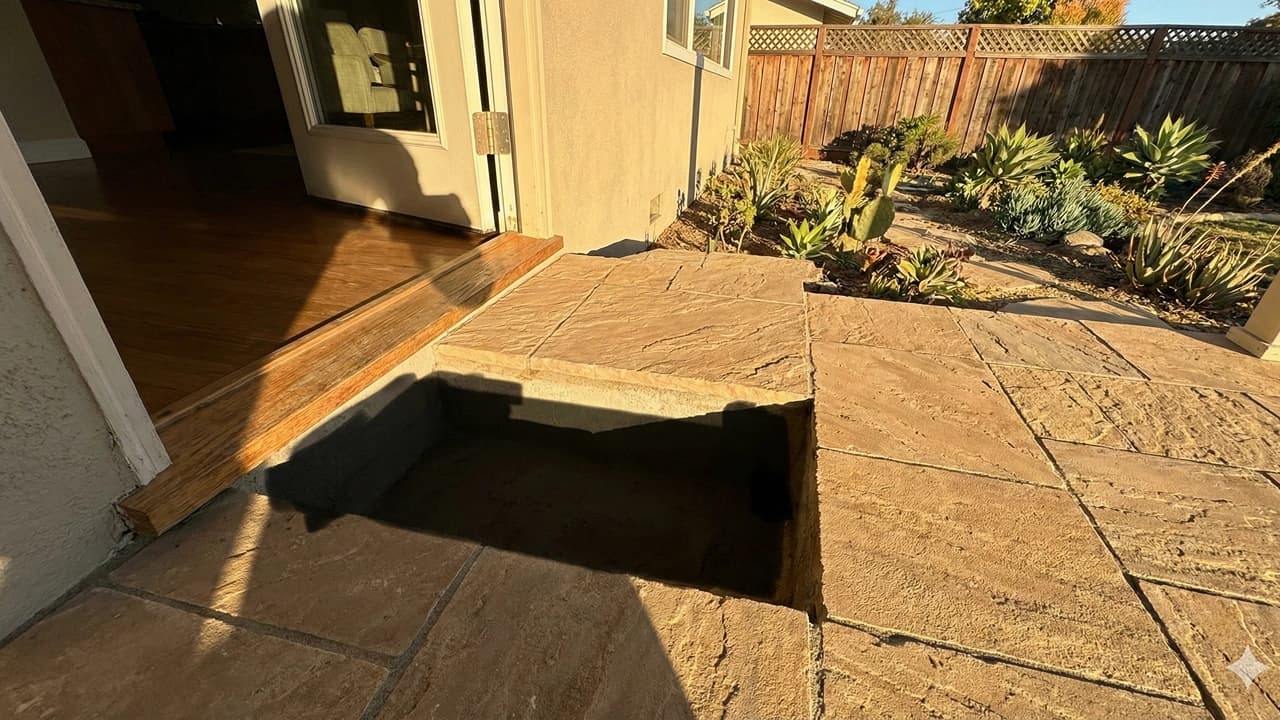
The primary cause of the accident was a significant and uncorrected height discrepancy between the home's interior floor and the newly installed patio surface. Before the accident happened, the Fusaros had hired contractors to lay down stone pavers, but the project had finished with a dangerously high step. In most residential buildings, a standard step measures about seven inches, yet the renovation at the Meeker Avenue home resulted in a nine-inch vertical drop. Because the homeowners had neglected to install handrails or clear visual markers to distinguish the change in floor height, the transition looked level to someone walking through the doorway. As Brown stepped forward, his foot failed to find solid ground at the expected depth. He overextended his leg and lost his balance entirely, which caused him to pitch forward with great force. The absence of a building permit proved critical in the legal analysis, as it showed that the defendants had bypassed the very safety regulations designed to prevent such a trip-and-fall hazard.
Injury
The violent fall onto the hard stone pavers caused immediate and severe trauma to Dennis Brown’s body. He sustained significant physical injuries that required urgent medical intervention at a nearby hospital. The impact resulted in long-term damage to his physical health, leading to a permanent decrease in his mobility and physical stability. Beyond the initial fractures and soft tissue damage, Brown suffered from chronic pain that affected his ability to carry out his daily responsibilities. The medical records indicated that the trauma was not a temporary setback but a condition that would require ongoing physical therapy and potential future surgeries. The physical toll of the accident also had a psychological impact, as Brown struggled to adjust to a life limited by the physical impairments he sustained during that single afternoon in West Covina.
Damages Sought
In response to the incident, Brown filed a legal action seeking comprehensive compensation for the various ways the accident damaged his life. He requested recovery for all hospital and medical expenses he had already paid, along with the costs of the specialized care he will likely need in the future. Furthermore, Brown pursued damages for the wages he lost while he was unable to work during his recovery and for the permanent loss of his future earning capacity. He also asked the Court for general damages to address the physical pain, mental suffering, and emotional distress he endured because of the homeowners' negligence. Because the total financial impact of these losses exceeded $25,000, Brown initiated the case as an unlimited civil action in the Los Angeles Superior Court.
Key Arguments and Proceedings
Legal Representation
Plaintiff(s): Dennis Brown.
Counsel for Plaintiff(s): Steven L. Mazza | Edward A. Cherkezian
Defendant(s): Victoria Fusaro | Frank Fusaro.
Counsel for Defendant(s): John K. Flock
Key Arguments or Remarks by Counsel
The legal teams focused their arguments on whether the nine-inch step was a hidden trap or an obvious feature that a guest should have noticed. Steven Mazza, representing Brown, argued that the Fusaros had essentially built a hazard into their home by bypassing the city's permit process. He contended that the homeowners bore the responsibility for ensuring their property met safety standards and that their failure to warn guests about the unusually large drop constituted a clear breach of duty. On the other side, John Flock argued that the property was reasonably safe and that any person paying attention to their surroundings would have seen the step. The defense suggested that Brown simply failed to look where he was walking, making the accident a result of his own lack of care.
Claims
General Negligence Brown’s primary claim asserted that the Fusaros acted carelessly in how they managed and supervised the installation of the stone pavers. He alleged that they negligently hired or monitored the people who performed the work and failed to ensure the final product provided a safe walking surface. This negligence directly led to the dangerous nine-inch drop that caused the fall.
Premises Liability The second claim focused on the homeowners' duty to keep their premises safe for guests. Brown argued that the Defendants created an unreasonable risk of harm by allowing the unpermitted construction to remain in a dangerous state. Since the homeowners had overseen the project, they had actual knowledge of the condition yet failed to correct it or warn Brown of the danger.
Defense
Comparative Fault
The Fusaros raised the defense of comparative fault, claiming that Brown's own negligence caused his injuries. They argued that if a jury found them liable, the final award should be reduced because Brown supposedly failed to use ordinary care while walking on the patio.
Open and Obvious Condition
The Defendants also argued that the step was "open and obvious," meaning it was so clearly visible that any reasonable person would have seen it. According to this defense, Brown had a responsibility to avoid a hazard that was out in the open, and the homeowners should not be held liable for an accident that a careful visitor could have prevented.
Lack of Notice and Reasonably Safe Condition Finally, the defense maintained that the patio remained in a reasonably safe condition. They formally stated that they did not have notice—either actual or constructive—that the nine-inch step qualified as a "dangerous condition" under the law. They argued the incident was an unavoidable accident rather than a result of their own wrongdoing.
Settlement
In the case of Dennis Brown versus Victoria Fusaro and others, filed in the Los Angeles Superior Court back on July 12, 2021, the parties reached a settlement that wrapped up the entire matter. On May 29, 2025, Plaintiff Dennis Brown's attorney filed a Notice of Settlement letting the Court know the case had been resolved. The settlement came with conditions, meaning the dismissal depended on the parties completing certain agreed-upon terms rather than wrapping things up immediately.
A few months later, on September 5, 2025, the Court took another important step. Judge Lisa R. Jaskol, sitting in for Judge Steven A. Ellis in Department 29, signed an order granting Victoria Fusaro's application for a determination of good faith settlement. This meant the Court officially recognized that the deal Fusaro struck with cross-Defendant Ocean Exteriors, Inc. was fair and made in good faith under California Code of Civil Procedure section 877.6(a).
The order carried real weight for Fusaro. By granting it, the Court shut the door on any future claims against her tied to this case. Any pending or future lawsuits, cross-complaints, or demands for things like indemnity, contribution, or apportionment, whether known or unknown at the time, were barred from being brought against her. In plain terms, Fusaro walked away from the case protected, with no lingering legal exposure from the other parties involved in the dispute.
Court documents are available upon request at [email protected]