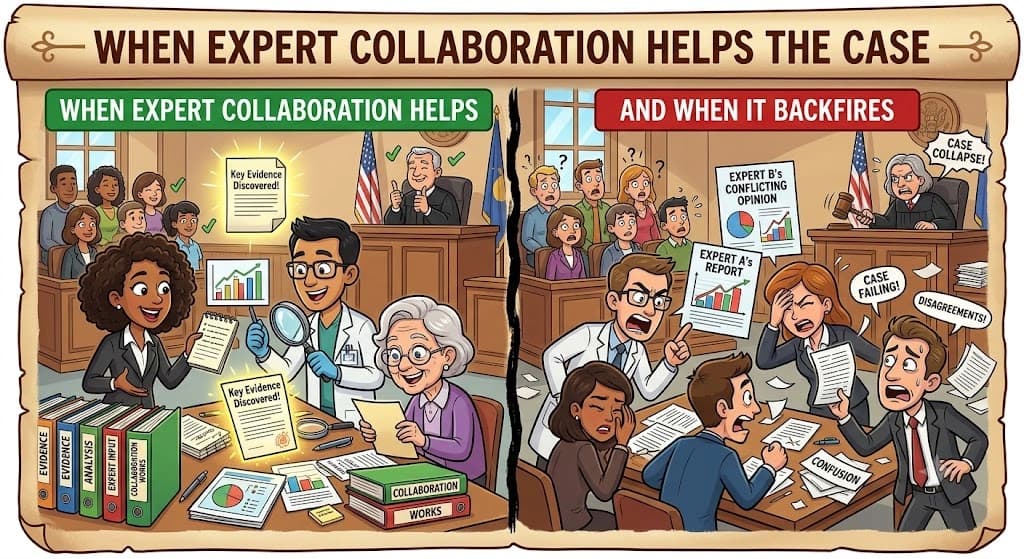

Two experts testify, one after the other, sometimes separated by days or even weeks depending on the hearing schedule. Each gives a detailed, coherent account of why their methodology is the right one. Each account, heard on its own, sounds entirely persuasive. The tribunal is then left to reconstruct, from two separate performances that never directly engaged with each other, exactly where the two experts actually diverge and why one approach should be preferred over the other. This is the default format for expert testimony in most adversarial proceedings, and for many kinds of disagreement it works reasonably well. For a specific and fairly common kind of dispute, genuine methodological deadlock, where two experts fundamentally disagree not on facts but on which analytical approach is correct, it is often close to the worst possible format available.
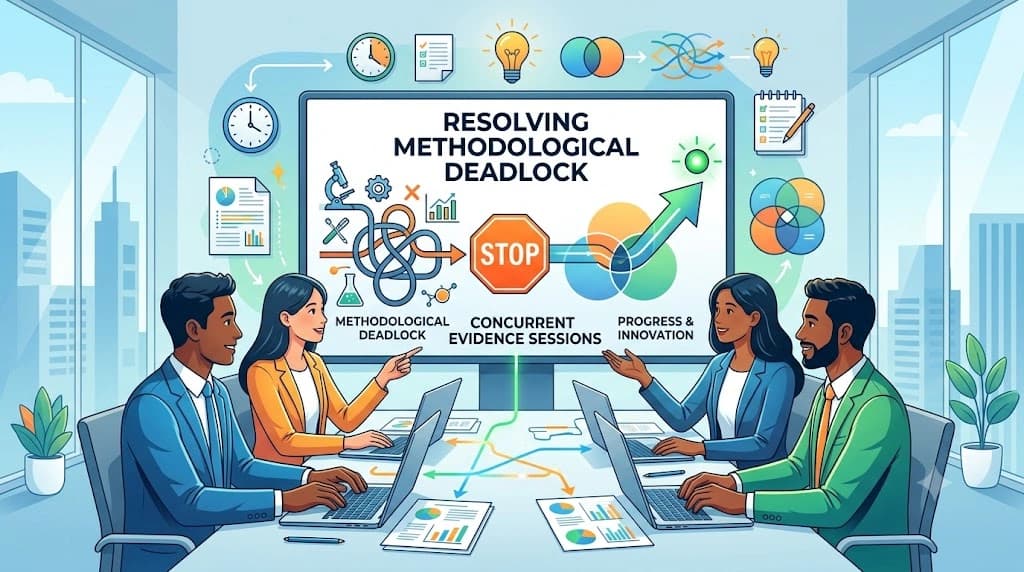
Concurrent evidence, more commonly known by its informal name, hot-tubbing, addresses this specific problem directly. Rather than testifying separately, the opposing experts are examined together, in the same session, responding to each other's points in real time, often with a structure that lets the tribunal ask questions directly and lets the experts respond to and challenge one another under the tribunal's active management. It is not a universal fix for every kind of expert disagreement, but for methodological deadlock specifically, it solves a problem the traditional sequential format is structurally poor at solving.
What Concurrent Evidence Sessions Actually Are
A concurrent evidence session brings both opposing experts into the hearing room at the same time, typically after their written reports and any joint statement have already been produced, and has them address the tribunal's questions and each other's points in a single, continuous session rather than in separate, sequential blocks of testimony. The tribunal usually plays a considerably more active role than in traditional cross-examination, framing the specific issues to be addressed and directing questions to both experts simultaneously, inviting direct response and challenge between them.
Counsel for both sides typically retains some role in the process, whether through an initial period of traditional cross-examination before the concurrent session begins, targeted questions during the session itself, or a closing round after the tribunal-led exchange concludes. The specific structure varies considerably between institutions and individual tribunals, but the defining feature that distinguishes concurrent evidence from every variant of sequential testimony is the same: both experts are present and responsive to each other in real time, rather than each addressing the tribunal in isolation.
This format did not emerge from nowhere. It developed specifically because experienced tribunal members and practitioners, over many years of watching sequential expert testimony handle certain kinds of disputes poorly, identified a specific gap the traditional format was not well equipped to close, and concurrent evidence was designed directly to close it.
The format is now well established across a range of institutional settings, though the extent to which it is used varies considerably by jurisdiction and by the individual preferences of tribunal members. Some tribunals adopt it as a matter of routine practice for any dispute involving significant methodological disagreement between experts; others use it more sparingly, reserving it for cases where the parties specifically request it or where the tribunal, having reviewed the written expert reports, identifies a clear methodological divide that the format seems well suited to address.
Why Traditional Sequential Testimony Struggles With Methodological Deadlock
Sequential testimony works reasonably well when the underlying disagreement is factual, whether a specific input value is correct, whether a particular document supports a particular conclusion, because these are questions a tribunal can evaluate by comparing each expert's account against the same underlying evidence, even without the experts being in the room together. Methodological deadlock is a different kind of problem entirely. When two experts fundamentally disagree about which analytical framework is the correct one to apply, the tribunal is not comparing two accounts of the same evidence; it is trying to evaluate two entirely different lenses for interpreting that evidence, often without the technical background to independently judge which lens is more appropriate.
Sequential testimony makes this harder rather than easier, because each expert's defense of their own methodology, heard in isolation, is optimized to sound complete and self-contained. An expert defending methodology A, testifying alone, has every incentive and every opportunity to present that methodology as the obviously correct choice, without directly confronting the strongest specific objections methodology B's proponent would raise, because that proponent is not in the room to raise them. The tribunal hears two well-constructed, internally coherent cases for two different approaches, separated in time, and has to do the difficult work of identifying exactly where and why they diverge almost entirely on its own, often relying on cross-examination that may or may not have actually targeted the real crux of the methodological disagreement.
There is also a memory and continuity problem specific to sequential testimony on methodological questions. By the time the second expert testifies, particularly if there has been a gap of days or weeks, the tribunal's precise recollection of the first expert's specific reasoning has typically faded into a general impression, making genuine side-by-side comparison considerably harder than it would be if both experts' reasoning were fresh and directly juxtaposed in the same session.
A further difficulty specific to methodological disputes involves the framing power that comes with testifying first or in isolation. An expert whose methodology is presented to the tribunal before the opposing view has been heard has a structural advantage simply in setting the terms of the discussion, an advantage that has nothing to do with which methodology is actually more sound. The order of witnesses in sequential testimony is typically driven by procedural convention rather than any judgment about the substance of the dispute, which means this framing advantage, when it exists, is essentially arbitrary rather than earned.
What Changes When Experts Testify Together
The most immediate change is that each expert now has to defend their methodology directly against the specific objections the opposing expert actually raises, in real time, rather than against objections counsel anticipates during cross-examination preparation. This tends to surface the genuine crux of a methodological disagreement far more efficiently than sequential testimony, because the experts themselves, who understand the technical terrain far better than counsel typically does, are the ones identifying exactly where and why their approaches diverge.
Concurrent evidence also makes it considerably harder for an expert to present their methodology as more uncontroversial or more obviously correct than it actually is, simply because the opposing expert is present to challenge that framing immediately rather than through a delayed, secondhand cross-examination. A tribunal watching two experts respond to each other directly gets a much clearer, more immediate sense of which specific points each expert concedes readily, which they defend with genuine conviction, and which they seem less confident about under direct challenge, information that is considerably harder to extract from sequential testimony alone.
There is a further benefit specific to tribunals with less deep technical background in the specific discipline at issue. Watching two experts actually engage with each other's reasoning, in real time, often communicates more about the relative strength of two competing methodologies than either expert's isolated presentation could on its own, since the tribunal gets to observe not just what each expert says but how convincingly they handle direct, expert-level challenge to it.
Concurrent evidence can also compress the overall time needed to address a methodological dispute considerably, compared with separate blocks of direct examination and cross-examination for each expert individually. Issues that might otherwise require extended, repetitive questioning across two separate sequential appearances can often be addressed more efficiently in a single, well-focused concurrent session, since the tribunal is not spending time reconstructing, secondhand, points the experts can now simply address to each other directly.
What Concurrent Evidence Does Not Fix
Concurrent evidence is not well suited to every kind of expert disagreement, and applying it indiscriminately can create problems of its own. Where the underlying disagreement is genuinely factual rather than methodological, whether a specific data point is accurate, whether a document should be read a particular way, concurrent evidence adds relatively little value over sequential testimony and can sometimes make the session harder to manage, since factual disputes often benefit more from focused, sequential examination of the specific evidence at issue than from a broader, more free-flowing exchange.
The format also depends heavily on both experts being reasonably comparable in confidence and verbal fluency, a concern related to the asymmetric persuasive skill risk discussed elsewhere in this content series regarding joint conferences. A concurrent evidence session between a highly articulate, quick-thinking expert and an equally competent but less naturally fluent one under real-time pressure risks producing an outcome that reflects performance skill as much as underlying technical merit, a risk that a well-managed tribunal needs to actively guard against through careful, even-handed questioning.
Concurrent evidence also requires more active, skilled management from the tribunal than sequential testimony does. A poorly managed session can become unfocused, can allow a more assertive expert to dominate the exchange, or can drift away from the specific methodological questions that justified using the format in the first place. The format's benefits depend considerably on the tribunal's own skill in running it well, which is not automatic or guaranteed simply by adopting the format.
There is a further limitation worth naming: concurrent evidence generally works best when both experts' written reports and any prior joint statement have already clearly identified the specific points of disagreement in advance. A concurrent session convened without that groundwork, where the tribunal and both experts are still working out what the actual points of divergence even are, tends to be considerably less productive than one building on a clear, pre-identified list of methodological questions. This is one reason the format tends to pair particularly well with the kind of early scoping and structured joint conferencing discussed elsewhere in this content series, rather than functioning as a standalone substitute for that earlier groundwork.
Preparing for a Concurrent Evidence Session
Experts preparing for concurrent evidence need a somewhat different kind of preparation than preparing for traditional sequential testimony. Rather than focusing primarily on presenting their own analysis as clearly and persuasively as possible in isolation, the more valuable preparation involves anticipating the specific points the opposing expert is likely to raise directly, and preparing clear, direct responses to those specific points rather than a general defense of methodology delivered in the abstract.
Reviewing the opposing expert's report with this specific goal in mind, identifying exactly where and why the two methodologies diverge, and preparing a precise, technically grounded explanation for why the expert's own approach is preferable at each specific point of divergence, tends to produce considerably stronger performance in a concurrent session than preparation focused mainly on rehearsing one's own analysis. Experts who have participated in joint conferences with the opposing expert earlier in the case, discussed elsewhere in this content series, often arrive at the concurrent evidence session with a real head start, since much of this anticipatory work has already happened through that earlier direct engagement.
It is also worth preparing specifically for the different rhythm of a concurrent session compared with sequential testimony. Rather than the more predictable pattern of direct examination followed by cross-examination, a concurrent session often moves more quickly between topics, involves being addressed alongside the opposing expert rather than alone, and requires genuine real-time listening to what the opposing expert has just said rather than simply delivering prepared material. Experts unfamiliar with the format benefit considerably from at least one practice run structured to simulate this specific dynamic.
A further practical point worth preparing for is the shift in how an expert should think about answering. In sequential testimony, an expert answering a question is primarily addressing the tribunal. In a concurrent session, a genuinely responsive answer often needs to acknowledge and engage directly with what the opposing expert has just said, rather than simply restating a prepared position as though the other expert had not spoken. Experts who adjust naturally to this shift tend to come across as more genuinely engaged with the substantive disagreement, which itself tends to read well to a tribunal evaluating which expert's reasoning is more sound.
How Tribunals Run These Sessions Well
Tribunals that manage concurrent evidence effectively tend to prepare a clear, focused list of the specific methodological questions to be addressed before the session begins, rather than allowing the format to substitute for the scoping work discussed elsewhere in this content series regarding early case management. A concurrent session addressing five sharply defined points of methodological divergence tends to be considerably more productive than one attempting to cover the entire scope of both experts' reports without a clear structure.
Active, even-handed facilitation matters enormously. A tribunal member skilled at concurrent evidence directs questions fairly between both experts, ensures a more reticent expert gets genuine opportunity to respond fully before the session moves on, and keeps the discussion focused on the specific methodological questions at issue rather than allowing it to drift into either advocacy or an unfocused general discussion. This active facilitation role is considerably more demanding than the largely passive role a tribunal typically plays during traditional sequential cross-examination.
Many tribunals experienced with the format also find it useful to circulate, in advance, the specific list of questions or issues the session will address, giving both experts and counsel a clear, shared understanding of the session's scope before it begins. This advance clarity tends to produce a more focused, more substantive exchange than a session where the specific agenda only becomes clear as the discussion unfolds, and it reduces the risk of the session drifting toward whichever topic the more assertive participant happens to raise first.
Frequently Asked Questions
Is concurrent evidence appropriate for every case involving expert testimony? No. It is best suited specifically to genuine methodological disagreement, and adds less value, and can sometimes complicate matters, for disputes that are primarily factual rather than methodological in nature.
Does concurrent evidence reduce the role of counsel in questioning experts? It changes the role rather than eliminating it. Counsel typically retains opportunities for traditional cross-examination before or after the concurrent session, though the tribunal generally takes a more active questioning role during the concurrent portion itself.
How can an expert prepare for the different dynamic of testifying alongside the opposing expert? Preparation should focus specifically on anticipating the opposing expert's likely points of challenge and preparing direct, technically grounded responses, rather than only rehearsing a self-contained presentation of one's own analysis.
Does a more confident or articulate expert have an unfair advantage in a concurrent session? There is a genuine risk of this, which is why skilled, even-handed facilitation from the tribunal matters considerably in ensuring the format tests methodological merit rather than performance confidence alone.
Conclusion
Concurrent evidence exists to solve a specific, well-recognized limitation of traditional sequential testimony: its structural difficulty in helping a tribunal evaluate genuine methodological deadlock between two experts who fundamentally disagree on analytical approach rather than on underlying facts. Used for the right kind of dispute, and managed well by a tribunal skilled at active, even-handed facilitation, it surfaces the real crux of a methodological disagreement more efficiently and more clearly than sequential testimony typically can. Used indiscriminately, or managed poorly, it risks rewarding performance confidence over technical merit. The format is a genuinely valuable tool, not a universal replacement for traditional testimony, and using it well requires matching it deliberately to the specific kind of disagreement it was actually designed to address.
Key Takeaways
● Concurrent evidence, or hot-tubbing, is specifically well suited to genuine methodological deadlock, where two experts disagree on analytical approach rather than on underlying facts.
● Sequential testimony struggles with methodological disagreement because each expert's isolated defense of their own approach is never directly tested against the opposing expert's strongest specific objections in real time.
● The format depends heavily on skilled, even-handed tribunal facilitation; a poorly managed session risks rewarding verbal confidence over genuine technical merit.
● Experts preparing for concurrent evidence should focus on anticipating the opposing expert's specific points of challenge rather than only rehearsing a self-contained presentation of their own analysis.
Position yourself where the legal industry looks for expertise - sign up on exlitem.com to get discovered by leading lawyers and high-value clients.