
The interim relief gap arbitration was built to avoid
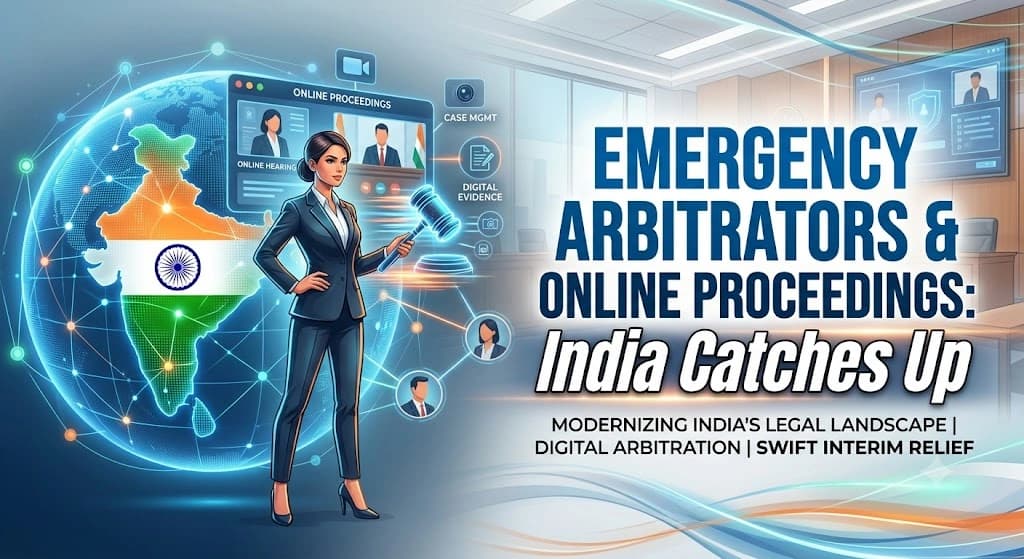
An arbitration clause promises a private, specialist, and reasonably fast forum. That promise breaks down in the first weeks of a dispute, before a tribunal exists to hear anything. If a counterparty is about to dissipate assets, terminate a concession, or use confidential information in breach of a non-compete, a party cannot wait the four to twelve weeks it typically takes to constitute a three-member tribunal. For decades, the only fix available under Indian law was Section 9, a court application for interim measures, filed in the ordinary judicial system, subject to that court's docket, and often contested with the same intensity as a full trial. That defeated two of the reasons parties choose arbitration in the first place: confidentiality, since court filings are public, and speed, since interim applications compete with a full civil docket. The emergency arbitrator mechanism, pioneered internationally in the early 2010s, was designed to close exactly this gap by letting institutions appoint a sole arbitrator within hours or days, purely to decide urgent interim relief, before the regular tribunal is formed.
Where India stood next to the global arbitration hubs
By the time Indian courts and institutions began taking emergency arbitration seriously, the mechanism was already mainstream elsewhere. The Singapore International Arbitration Centre (SIAC) introduced emergency arbitrator provisions in 2010; the International Chamber of Commerce (ICC) and the London Court of International Arbitration (LCIA) followed within a few years, and the Hong Kong International Arbitration Centre (HKIAC) added its own procedure in 2013. Usage has grown steadily rather than explosively, a sign that the mechanism is reserved for genuinely urgent cases rather than routine tactics. SIAC's emergency arbitrator applications rose from 11 in 2023 to 21 in 2024, according to institutional statistics reported by Herbert Smith Freehills Kramer, while HKIAC received five applications in 2024, up from three in 2023, taking its cumulative total to 40 since the procedure was introduced in 2013. For Indian parties, this comparison mattered commercially: for years, choosing an India seat over Singapore or London meant giving up a real, rules-based route to urgent relief. That was a genuine cost when negotiating dispute-resolution clauses with foreign counterparties, and it fed a broader argument, one India's policymakers have taken seriously, that court intervention, not institutional gaps, was pushing sophisticated parties away from seating arbitrations in India altogether.
The Indian judicial journey: three cases in five years
India's courts did not arrive at today's position in one step. Three decisions, each responding to a different fact pattern, built the current framework piece by piece.
Raffles Design International v. Educomp Professional Education (2016). The starting point was scepticism. In Raffles Design International India Pvt. Ltd. v. Educomp Professional Education Ltd., the Delhi High Court considered a SIAC emergency arbitrator's order made in a Singapore-seated arbitration. The Court held that because the arbitration was seated outside India, the emergency arbitrator's order could not be enforced in India as an order under the Act, the emergency arbitrator was not, at that time, recognised as part of the statutory tribunal machinery. The Court did, however, allow the applicant to seek independent relief under Section 9 covering the same ground, effectively treating the foreign emergency order as persuasive background rather than a binding instruction. Commentary at the time, including analysis on the Kluwer Arbitration Blog, flagged this as leaving India out of step with the arbitral mainstream: a party could get emergency relief abroad, but would effectively have to re-argue the case from scratch to make it stick in India.
Ashwani Minda v. U-Shin Ltd. (2020). The next milestone cut the other way, and answered a different question: what happens when a party loses before the emergency arbitrator and then tries the court anyway? In Ashwani Minda v. U-Shin Ltd., the underlying arbitration was seated in Japan under JCAA rules. The emergency arbitrator rejected the applicant's request for interim relief on both jurisdiction and merits. The Delhi High Court held that the applicant could not then approach an Indian court under Section 9 for the same relief, having already pursued and lost before the emergency arbitrator, an efficacious alternative remedy had already been exhausted, and Section 9 was not a second bite at the apple. The Supreme Court declined to interfere with that reasoning. Read together with Raffles, the message was clear: foreign-seated emergency orders are not directly enforceable in India, but parties cannot use that gap to relitigate a loss either. Section 9 is a parallel track, not an automatic appeal.
Amazon.com NV Investment Holdings LLC v. Future Retail Ltd. (2021). The decisive shift came in the Supreme Court's ruling in Amazon.com NV Investment Holdings LLC v. Future Retail Ltd., arising from a SIAC emergency award restraining Future Retail's asset-sale transaction with Reliance Retail. Because that arbitration was seated in India, the Supreme Court held that the emergency arbitrator's order was an order of the tribunal for the purposes of Section 17 of the Act, and was therefore enforceable by an Indian court under Section 17(2) exactly as if it had come from a fully constituted three-member tribunal. The Court also held that no appeal lies under Section 37 against an order enforcing an emergency arbitrator's award. This was the case that finally gave India-seated parties a genuine, judicially confirmed emergency-relief mechanism, not a workaround through Section 9, but direct enforcement. The distinction between Amazon and the earlier cases comes down entirely to seat: an India-seated emergency order now has real teeth; a foreign-seated one still does not, and Section 9 remains the parallel, persuasive-only route for those cases.
Institutions built the plumbing Amazon assumed
A Supreme Court ruling only matters if institutions actually offer an emergency arbitrator to appoint. India's own institutions spent the years after Amazon building exactly that infrastructure. Under Rule 19.1 of the MCIA Rules, 2025, the Mumbai Centre for International Arbitration allows a party to apply for the appointment of an emergency arbitrator in cases of exceptional urgency, before a tribunal is constituted. Appointment follows within one business day of the request and payment of the requisite fee, and the emergency arbitrator must decide the application within 14 days of appointment, a timeline built for genuine urgency rather than routine procedural skirmishing. The Indian Council of Arbitration's International Commercial Arbitration Rules similarly provide for emergency arbitrator appointments, with the applicant required to deposit the prescribed fee within seven days of demand. Other Indian institutions, including IAMC Hyderabad and IIAC, have moved in a broadly similar direction as part of the wider push toward institutional, rather than ad hoc, arbitration in India. GIFT City is the one hub still catching up on this specific point: the International Financial Services Centres Authority (IFSCA) constituted a committee in May 2023 to design a dedicated dispute-resolution and arbitration centre for GIFT City, but that framework, including any emergency-arbitrator mechanism, is still being built out and is not yet operating at the same maturity as MCIA or ICA. For India-first practice, the significance of the MCIA and ICA rules is straightforward: they remove the standard objection to seating arbitration in India, that urgent relief meant a court application rather than a tribunal-level remedy. An India-seated arbitration under institutional rules with a built-in emergency-arbitrator mechanism now offers the same speed as a Singapore- or London-seated clause, with the added benefit of a clean, Supreme-Court-confirmed enforcement path under Section 17(2).
From pandemic stopgap to standing practice: online proceedings
Emergency relief is only useful if it can actually be heard within days, and that requirement has pushed virtual hearings from a pandemic-era workaround into standing practice across Indian arbitration. Courts and tribunals turned to video-conference hearings out of necessity during the COVID-19 lockdowns, when in-person hearings were simply not possible; the practice proved efficient enough, for procedural and interim matters especially, that it continued well after courtrooms reopened. Institutional rules have since caught up with what practice had already normalised. The MCIA Rules, 2025 expressly permit an emergency arbitrator to conduct proceedings by telephone or video conference, or on a documents-only basis, as alternatives to an oral hearing, and MCIA actively facilitates virtual hearings by default given the time pressure inherent in emergency applications. That matters beyond emergency arbitration too: for full tribunal hearings involving witnesses or counsel spread across time zones, common in India-linked disputes given the number of NRI parties, multinational counterparties, and cross-border joint ventures, virtual hearing capability is no longer something parties must negotiate case by case under a tribunal's general procedural discretion. It is written into the rulebook, which gives parties certainty when drafting clauses and cost savings when actually running the case, particularly relevant for smaller and mid-sized disputes where travel and venue costs can otherwise be disproportionate to the amount in issue.
The draft 2024 Bill: codifying what practice has already built
The most significant near-term development is legislative. The Ministry of Law and Justice released the draft Arbitration and Conciliation (Amendment) Bill, 2024 for public consultation on 18 October 2024, building on the work of an expert committee chaired by Dr. T.K. Viswanathan. The draft pursues three stated objectives: promoting institutional arbitration, reducing unnecessary court intervention, and speeding up the arbitral process generally, all three of which bear directly on emergency relief and hearing format. Its central proposal for this discussion is a new Section 9A, which would let arbitral institutions appoint an emergency arbitrator before a tribunal is constituted, with any order enforceable in the same manner as a tribunal order under Section 17(2). In effect, Section 9A would write the Amazon holding directly into the statute, rather than leaving emergency arbitration as a court-developed doctrine that depends on which institution's rules a party happened to choose. A companion proposal, a new Section 17(da), would let the constituted tribunal confirm, modify or vacate interim measures granted earlier, whether under Section 9 by a court, or by an emergency arbitrator under the proposed Section 9A, once the tribunal takes over the case. That creates a clear, single point of oversight for interim relief granted before the tribunal existed, addressing a gap in the current framework where emergency orders and court orders can otherwise sit in an unclear relationship with the tribunal's eventual authority. The Bill also proposes express provision for audio-visual hearings, matching the direction institutions and courts have already taken in practice.
A necessary caveat: as of July 2026, this remains a draft bill out for public consultation. It has not been introduced in Parliament and is not law. Attorneys should treat Section 9A and Section 17(da) as a strong signal of where the legislature is heading, not as provisions they can rely on in a live matter today.
What critics and commentators are still asking
Not every commentator treats the current framework as settled. Some practitioner analysis, including a piece on Cyril Amarchand Mangaldas's dispute resolution blog provocatively titled a legal lifeline or a paper tiger, has pointed out that even after Amazon, enforceability for foreign-seated emergency orders remains second-class: a Section 9 application can borrow the foreign emergency arbitrator's reasoning, but the Indian court is deciding the matter afresh, not enforcing the foreign order itself. That means outcomes can, in principle, diverge, and parties in foreign-seated arbitrations cannot treat an emergency order as self-executing in India the way an India-seated one now is. A second open question concerns the interaction between the proposed Section 9A and the existing Section 9: once emergency arbitration is statutorily recognised, will courts require parties to exhaust the institutional emergency-arbitrator route before entertaining a Section 9 application, or will the two routes continue to run in parallel, at the applicant's choice? The draft Bill does not fully resolve this, and it is likely to be one of the first questions courts are asked to answer if and when Section 9A is enacted. A third, more practical concern is uneven institutional capacity: MCIA's rules and infrastructure for emergency arbitration are relatively mature, but smaller or newer institutions may not yet have the roster of available emergency arbitrators, or the administrative speed, to make a 24-to-72-hour appointment a reality rather than a rule on paper. None of this undermines the overall direction of travel, but it is a reminder that the framework is still maturing, not finished.
What this means for the practice
• Specify an India seat and an institution with an established, tested emergency-arbitrator mechanism, MCIA or ICA are currently the most mature options, wherever urgent interim relief is a realistic possibility for the client's business. This now gives a faster, more certain, and directly enforceable path under Section 17(2) than an ad hoc clause or a foreign seat.
• Do not assume a foreign-seated emergency arbitrator's order will be enforced in India the way an India-seated one is. Budget time and cost for a parallel or follow-on Section 9 application, and advise clients that the Indian court will treat the foreign order as persuasive, not binding, on the merits.
• Once an emergency arbitrator has ruled, the correct next step, per Ashwani Minda, is usually to carry the same relief forward to the constituted tribunal once it is formed, not to relitigate the same application before a court under Section 9.
• For construction, infrastructure and long-term supply contracts, where urgent relief often concerns performance bonds, termination notices or possession of a site, check that the chosen institution's emergency-arbitrator timeline actually matches the commercial urgency involved before relying on it in the contract's dispute clause.
• For M&A, private equity and joint-venture agreements, the fact pattern in Amazon itself, treat the emergency-arbitrator mechanism as a live tool for restraining closing or completion steps, not a theoretical backstop, and draft notice and evidence requirements into the contract so a same-week application is realistic.
• Track the draft 2024 Bill through consultation and, if introduced, through Parliament. If Section 9A and Section 17(da) are enacted, expect institutions to update their rules again and a fresh body of case law to develop around how the statutory emergency-arbitrator route interacts with Section 9.
• Build virtual-hearing logistics into the arbitration agreement itself, including which platform, which time zone conventions, and how documents will be shared, rather than leaving it to be negotiated under the tribunal's general discretion once a dispute is already live.
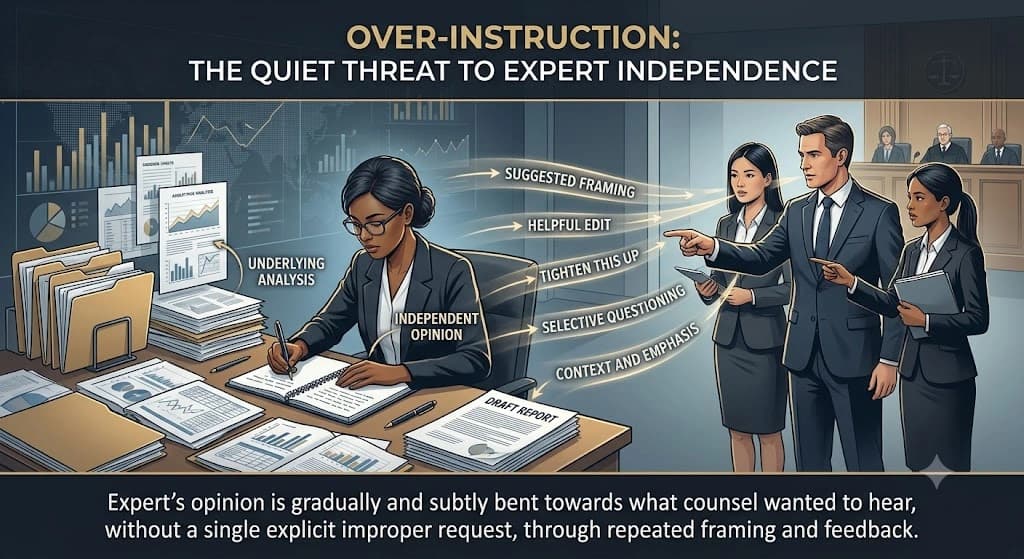
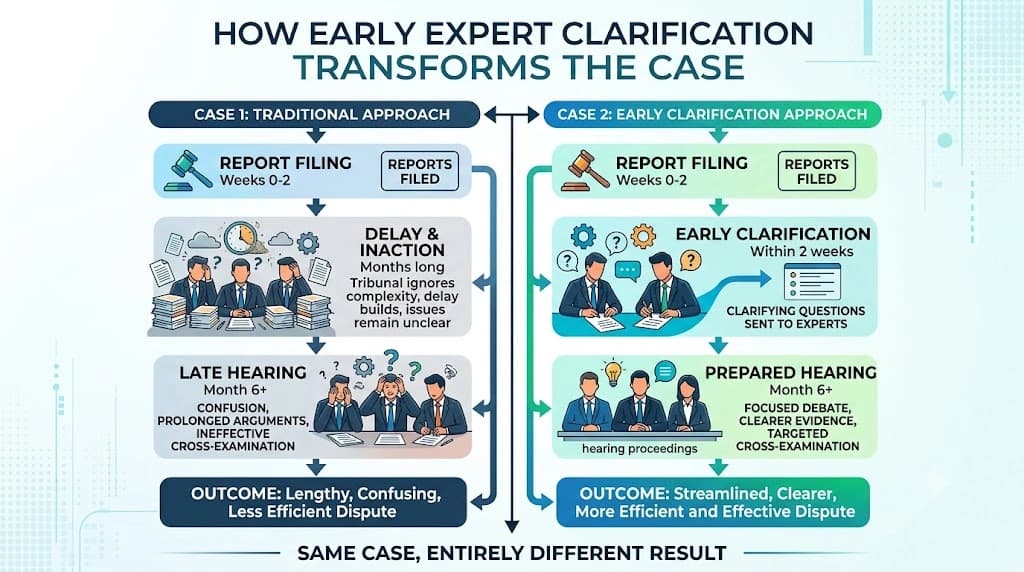
Structuring an emergency-relief strategy often means bringing in an independent expert early, on quantum, asset tracing or technical evidence, well before the interim application is filed, since the strength of the supporting evidence can determine whether an emergency arbitrator grants relief within days.
Takeaways
• India's leading arbitral institutions have closed much of the gap with Singapore, Hong Kong and London on emergency relief since the Supreme Court's 2021 ruling in Amazon v. Future Retail, though usage volumes in India still trail SIAC's 21 and HKIAC's 5 emergency-arbitrator applications in 2024.
• Enforceability still turns on the seat: an India-seated emergency arbitrator's order is directly enforceable under Section 17(2); a foreign-seated one is not, and Section 9 runs alongside it only as a persuasive, not binding, route, a distinction that traces back through Raffles Design (2016) and Ashwani Minda (2020).
• The draft 2024 Amendment Bill would statutorily codify emergency arbitration (Section 9A), give tribunals oversight of pre-constitution interim relief (Section 17(da)), and formalise audio-visual hearings, but it remains a draft as of July 2026, not yet law.
• Attorneys drafting arbitration clauses should specify an institution with an established emergency-arbitrator mechanism and an India seat wherever urgent interim relief is a realistic priority, and should build virtual-hearing logistics into the clause itself rather than leaving it to be negotiated later.
Position yourself where the legal industry looks for expertise - sign up on exlitem.com to get discovered by leading lawyers and high-value clients.