
Why the brief matters more than the CV
Litigators default to treating expert selection as the hard part and briefing as an administrative afterthought. That ordering is backwards. A distinguished forensic accountant or structural engineer handed a vague mandate - “please review these documents and give your opinion” - will produce a report that a cross-examiner can dismantle in twenty minutes, regardless of how eminent the expert is.
Indian courts have been explicit that an expert's opinion is not binding proof; it is one strand of evidence that must be tested, reasoned and independently verifiable. The Supreme Court, in Ramesh Chandra Agrawal v. Regency Hospital Ltd. (2009) 9 SCC 709, held that the value of expert evidence lies in furnishing the court with the scientific or technical criteria needed to test the accuracy of the expert's conclusions, so that the judge can form an independent view by applying those criteria to the proven facts. An expert's credibility, the Court noted, rests on the reasons given for the conclusion and the data underlying it - not on reputation alone. A poorly briefed expert cannot supply that reasoning convincingly, because the attorney never gave the expert a clear question to answer.
The legal framework governing expert evidence in India
Attorneys briefing an expert should start from the statutory and procedural rules that will govern how that evidence is received, because the brief has to be built around them.
In civil and criminal proceedings, expert opinion is governed by the Bharatiya Sakshya Adhiniyam, 2023 (BSA), which replaced the Indian Evidence Act, 1872 with effect from 1 July 2024. Section 39 of the BSA carries forward the substance of the erstwhile Section 45 of the Evidence Act - opinions of persons specially skilled in a relevant field of science, art, or “any other field” are relevant facts - but widens the language beyond the older, narrower list of subjects. Section 45 of the BSA (corresponding to the erstwhile Section 51) makes clear that whenever an expert's opinion is relevant, the grounds on which that opinion is based are equally relevant, including any experiments the expert conducted to form the opinion. Put together, these provisions mean an expert's report is only as strong as the reasoning and methodology disclosed in it - a bare conclusion, however senior the signatory, carries little weight.
In civil litigation, Order XXVI of the Code of Civil Procedure, 1908 gives courts the power to appoint commissioners for scientific investigation, local investigation, or examination of accounts, which is the route by which many courts bring in a court-appointed expert independent of either party's own witness.
In arbitration, Section 26 of the Arbitration and Conciliation Act, 1996 gives the tribunal the power - unless the parties agree otherwise - to appoint its own expert to report on specific issues, to require a party to furnish that expert with relevant information or access to property, and to have the expert participate in a hearing where both sides can put questions once the report is delivered. This sits alongside each side's own party-appointed experts, and attorneys need to brief their own expert with an eye to how that evidence will be tested against, or alongside, any tribunal-appointed expert.
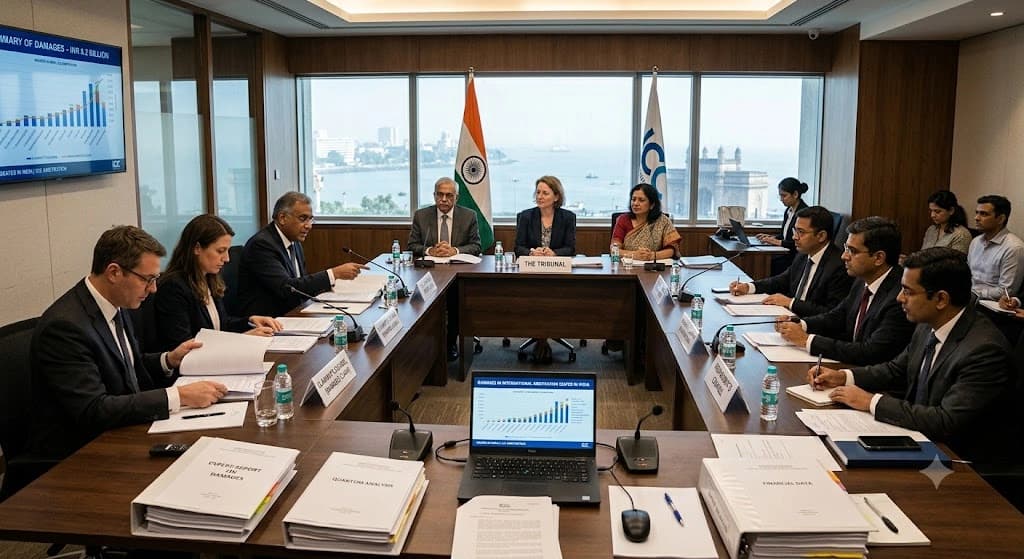
Institutional rules add a further layer. Tribunals administered by the Mumbai Centre for International Arbitration, the India International Arbitration Centre, and the arbitration centre at GIFT City increasingly draw on international practice for the taking of expert evidence, including the sequencing of expert reports, joint conferencing between opposing experts, and the use of a single joint expert on narrow technical issues to save time and cost. While Indian-seated tribunals are not bound to follow international soft-law instruments on evidence and retain full discretion over procedure, attorneys briefing an expert for an India-seated arbitration should assume the tribunal may direct a similar process, and should prepare the expert for it from the outset rather than retrofitting the mandate later.
Across all these forums, one duty is constant: the expert's overriding obligation is to the court or tribunal, not to the party paying the fee. Any brief that does not make this explicit - in writing, at the outset - is already a liability.
Before the brief: choosing an expert the brief can actually work with
Briefing quality and expert selection are not separate problems - they compound each other. An expert chosen purely on seniority or a well-known name, without regard to whether their specific technical background matches the precise issue in dispute, forces the attorney to write a broader, vaguer brief simply because the expert cannot be tested too closely on the narrow point that actually matters. Conversely, an expert selected for a tightly matched skill set - a quantity surveyor with specific experience in the relevant construction sector, or a forensic accountant who has previously handled the specific fraud typology in question - allows the attorney to write a precise, narrow mandate that plays to genuine expertise rather than general credibility.
Attorneys should also confirm, before instruction, that the prospective expert has no conflict of interest and no prior relationship with the opposing party, and should ask directly whether the expert has given evidence before in a similar matter and whether that evidence was ever successfully challenged on grounds of independence. These questions belong at the selection stage, not after a report has already been drafted.
Step one: define the mandate in writing, before any documents change hands
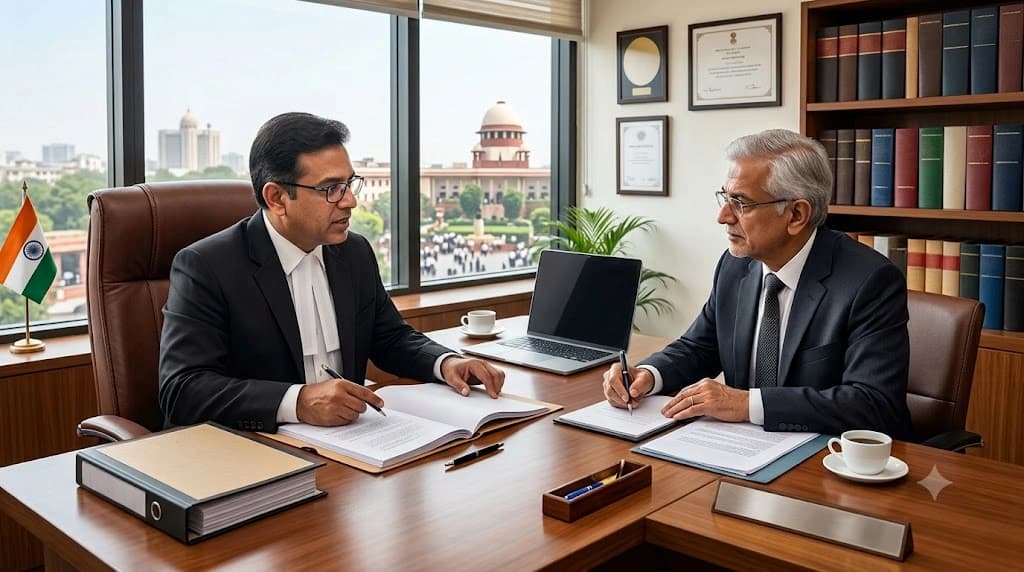
The single most consequential document in the entire expert-evidence process is the letter of instruction, and it should exist before the expert opens a single file. A proper letter of instruction should set out, precisely: the specific question or questions the expert is being asked to answer; the scope of the dispute and the expert's role within it, including which issues are outside the mandate; the standard the expert is being asked to apply (for example, industry practice at a given date, a specific accounting standard, or a named engineering code); the forum the report is destined for and the procedural rules that will apply to it; the documents being provided, and confirmation of what the expert is expected to independently verify rather than accept on instruction; and the timeline, including dates for a draft report, a final report, any joint expert conferencing, and the hearing itself.
Ambiguity in the mandate does not disappear - it resurfaces in cross-examination, when opposing counsel asks the expert to explain why the report answered a different question than the one actually in dispute. Attorneys should treat the letter of instruction as a document that will itself be disclosed and read out in a hearing, because in most Indian proceedings, it will be.
Step two: separate assumed facts from expert opinion
A recurring flaw in Indian expert reports - across forensic accounting, quantum, and construction delay evidence alike - is the blending of factual narrative with technical opinion, so that it becomes impossible to tell whether the expert is reporting a fact given by the client or forming an independent judgment. Attorneys should require the report to state explicitly which facts and documents the expert has been asked to assume as true (and on whose instruction), and which conclusions are the expert's own independent analysis based on those facts. Where the expert disagrees with an instructed assumption, or considers it needs qualification, that should be recorded rather than smoothed over.
This separation protects the expert's independence and gives the tribunal a clear basis to test the opinion: if the underlying assumption is later disproved, the expert's methodology can still stand or fall on its own terms, rather than the entire report being discredited as advocacy dressed up as analysis.
Step three: brief the expert on the case, not on the answer
There is a firm line between properly informing an expert about the dispute and steering the expert toward a conclusion, and attorneys who cross it - even unintentionally - create the single easiest opening for cross-examination. The brief should explain the commercial and factual background of the dispute, the positions taken by both sides, and the specific issues the tribunal or court will need to decide. It should not suggest, directly or by emphasis, what the answer ought to be.
Practically, this means: sharing the pleadings and the other side's expert report (once available) in full, not curated excerpts; allowing the expert to request further documents rather than pre-selecting only supportive material; and keeping drafting input to matters of clarity and structure, not substance. Where a jurisdiction's disclosure rules require draft reports or instructions to be produced, attorneys should assume they will be, and brief accordingly from the first communication.
Step four: prepare the expert for cross-examination without coaching the answers
Preparation for hearing is not the same as scripting testimony, and Indian tribunals and courts are alert to the difference. Effective preparation covers the process, not the content: explaining how cross-examination works procedurally, the difference between examination-in-chief, cross-examination and re-examination, and how to answer directly without volunteering unrequested material. A mock session - where the expert is questioned by someone other than the instructing attorney, ideally another lawyer within the firm or an independent colleague - is the most effective way to expose weak points in the report before the other side finds them.
Experts should be reminded, repeatedly, that their duty is to answer honestly and stick to their expertise, including saying “that is outside my report” or “I would need to verify that” where appropriate, rather than defending a position beyond what the evidence supports. A witness who concedes a reasonable point under cross-examination is far more credible to a tribunal than one who will not move from a position regardless of what is put to them.
Attorneys should also prepare the expert for procedural formats increasingly used in India-seated arbitration, including expert conferencing (sometimes called “hot-tubbing”), where opposing experts are questioned together and asked to identify precisely where and why they disagree. This format rewards experts who can articulate the basis of their opinion clearly and concisely, and penalises those who have only ever rehearsed answering questions from their own counsel.
Managing privilege around draft reports and expert communications
One area attorneys in India routinely underestimate is how exposed their communications with an expert can become once the expert is put forward as a witness. Draft reports, marked-up versions, and correspondence between the attorney and the expert are frequently sought by the opposing side, either through disclosure directions from a tribunal or through pointed cross-examination about how the final report came to be written. Attorneys should assume, from the first email, that any written exchange with the expert on the substance of the opinion may eventually be read by the tribunal.
The practical response is not to avoid all substantive contact with the expert — that would be unworkable - but to keep the exchange focused on scope, structure, and factual accuracy rather than argument or outcome. Where genuinely privileged legal advice needs to be exchanged separately from the expert's own reasoning, it should be kept in a distinct communication channel, clearly marked, and attorneys should take legal advice on the specific privilege position in the relevant forum, since the treatment of expert communications differs between Indian court litigation and India-seated arbitration, and between domestic and cross-border matters. What should never happen is a late-stage rewrite of an expert's conclusion at the attorney's initiative — if it happened, it will surface, and it will do far more damage than the original weaker conclusion would have.
Building a hearing-ready record from day one
Attorneys should maintain a running file, from the date of appointment, of every version of the expert's report, every document provided to the expert and when, and every instruction given. This is not bureaucratic caution - it is the record that allows the attorney to answer, credibly and immediately, any suggestion during cross-examination that the expert was fed selective material or steered toward a conclusion. Tribunals and courts in India are increasingly willing to draw adverse inferences where a party cannot produce a clear paper trail showing how an expert's opinion was formed. A well-kept record turns what could be a damaging line of cross-examination into a non-issue, answered in a single sentence with a document reference.
Where attorneys most often go wrong
The pattern of failure across construction, forensic, and quantum disputes in India is consistent. Attorneys instruct an expert too late in the process, often after the pleadings are largely settled, leaving no time for the expert to shape the factual record the report will need to rely on. Instructions are given verbally or informally, with the formal letter of instruction drafted retrospectively to justify what has already been done - a sequence that is easy for opposing counsel to expose through document requests. Reports are drafted collaboratively with too much attorney input on substantive conclusions, blurring the line between advocacy and independent opinion. And preparation for hearing is compressed into the days immediately before testimony, rather than built into the timeline from the point of appointment.
Each of these is preventable with earlier planning, and each is now a standard line of attack for opposing counsel who understand how thin most Indian expert briefs actually are.
Sector-specific considerations
In construction disputes, where delay and disruption claims dominate, the expert brief needs to specify the analysis methodology expected - for instance, whether a time-impact analysis, windows analysis, or as-planned versus as-built comparison is required - because tribunals increasingly expect experts to justify their choice of method rather than simply present a conclusion.
In forensic and financial crime matters, the brief should address the standard of investigation expected (civil evidentiary standard versus a forensic audit standard) and any regulatory reporting obligations that may attach to the expert's findings, particularly where a matter may also be of interest to the Enforcement Directorate, SEBI or the Reserve Bank of India.
In damages and quantum work, the brief should fix the valuation date, the standard being applied (fair market value, loss of profits, or another basis) and whether the expert is expected to opine jointly with, or independently of, the opposing quantum expert at any stage.
In each of these areas, the quality of the underlying brief - not the credentials on the expert's CV - is what determines whether the resulting opinion survives scrutiny at hearing.
The takeaway
A strong expert witness is built long before the hearing, in the quality of the instructions the attorney gives at the outset. The mandate should be defined in writing before documents are shared, assumed facts should be separated clearly from the expert's own analysis, the expert should be briefed on the dispute rather than steered toward an outcome, and preparation for cross-examination should test the expert's reasoning rather than script the expert's answers. Attorneys who treat the letter of instruction as a document that will be read aloud in a hearing - because in most Indian proceedings, it eventually is - give their expert evidence the best chance of holding up when it is tested.
Position yourself where the legal industry looks for expertise - sign up on exlitem.com to get discovered by leading lawyers and high-value clients.