
The Nurse as a Distinct Category of Expert
The legal definition of standard of care is narrower than most people assume: what a reasonably prudent professional, in the same field, would have done under the same or similar circumstances. That definition is also the reason a highly credentialed physician cannot simply step in and evaluate nursing conduct.
Dr. Stephen Cohen is direct about the limits of his own lane, even after decades of reviewing malpractice cases from both the plaintiff and defense sides. "I can't opine on standard of care of an ER doctor, I'm not an ER doctor," he says. "I can't opine on the standard of care of a nurse, I'm not a nurse." His own review work stays within general and colorectal surgery for exactly this reason: the standard he is qualified to measure is the one he has spent his career practicing, and nothing broader. That discipline, applied consistently across medicine, is precisely what has forced nursing malpractice cases to be evaluated by nurses rather than by the physicians who happened to be on the chart.
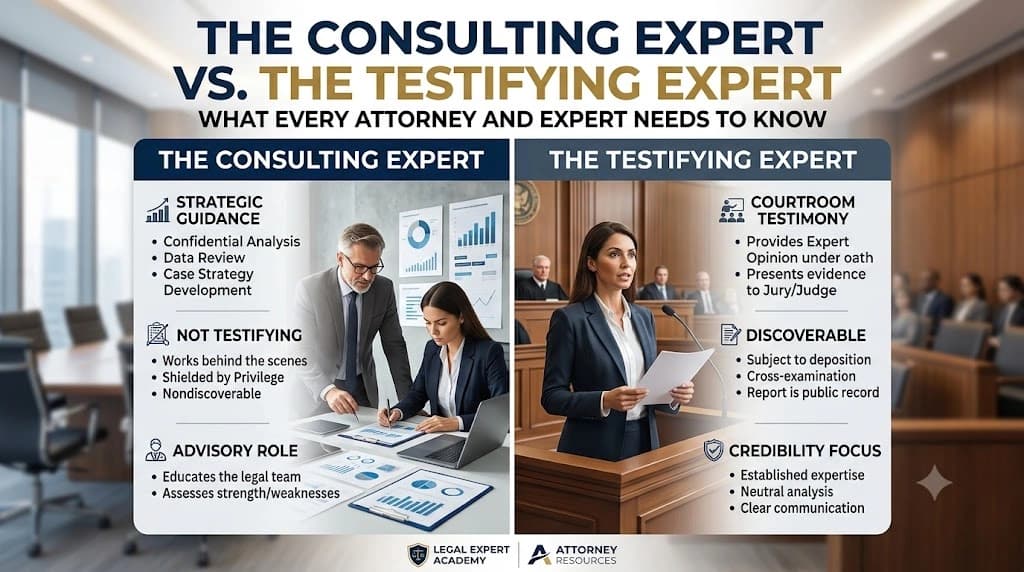
Marilyn McCullum embodies what that shift looks like from the inside. McCullum holds three national certifications that put her in rare company: the Certified Emergency Nurse credential, the Certified Pediatric Emergency Nurse credential, and the Trauma Certified Registered Nurse credential. She estimates that only a small number of nurses nationally hold all three. "When you see a nurse that has a board certification, that should signify to the person viewing this nurse that this nurse takes their job very seriously," she explains. "They've got above and beyond just learning their department." That distinction matters in court, where a nurse expert's credibility depends on demonstrating a depth of specialized nursing knowledge that a general practice background cannot substitute for, in the same way a colorectal surgeon's credibility depends on colorectal, not general, expertise. McCullum also draws a line within nursing itself, between legal nurse consultants who handle pre-litigation record review and the smaller group, like her, who are retained specifically as testifying experts. "So a lot of LNCs would also only do pre-litigation medical record review and they would not do testifying work," she notes - a distinction attorneys need to understand before they hire, since the two roles require different skill sets and different comfort with cross-examination.
McCullum still works clinically more than thirty hours a week in the emergency department, a fact she leads with in every deposition. "What I always say in depositions is I'm first and foremost an emergency room nurse," she says. "The expert stuff is something that I do on the side." That framing does more than establish credibility; it forecloses one of the most common attacks opposing counsel can make against any expert witness, which brings the discussion to where nursing malpractice cases are actually won and lost: the chart.
Where the Nursing Standard of Care Actually Lives: Documentation
Physician malpractice cases often turn on a single clinical decision. Nursing malpractice cases more often turn on a timeline, reconstructed minute by minute from an electronic health record, and the credibility of that timeline is where nurse experts do their most technical work.
McCullum points to something as routine as a hospital fall-risk screening. Every emergency department patient is supposed to receive one, and the screening itself takes only moments to document. The problem, she says, is not whether the box gets checked but whether it reflects reality. "It's very easy for someone like me or an attorney to look at that charting and say, did you actually do that at four or did you just sit at the end of your shift and complete all of the required type of documentation," she explains, describing a pattern she calls clustered charting - a block of entries all logged at once, at the end of a shift, that create the appearance of contemporaneous care without the substance of it. "I recommend to all nurses to document as contemporaneously as they can," she says, because a documented timestamp that does not match the actual sequence of care is often more damaging to a nursing defendant than the underlying clinical decision itself.
That same forensic instinct extends to the audit trail buried inside every electronic health record, which logs not just what was entered but when, and by whom, down to the keystroke. Dr. Steven Brown describes a case that turned entirely on one. A chiropractic defendant, after receiving a subpoena, went back into his software and altered his own notes 172 times before the case ever reached a courtroom. "There's no telling what happened with that note," Brown says. "Apparently he just didn't know that audit trail was a thing." The case settled the week before Brown's deposition, once the alteration came to light. Brown adds an observation that reaches well beyond his own field: "A lot of it is done by nursing experts I've seen on LinkedIn... there are a couple of audit report experts who do training, who also teach nurses how to do audit reports." Nursing experts, in other words, have become authorities on electronic documentation forensics that extend into malpractice litigation well outside nursing itself.
That documentation is not incidental paperwork; in modern hospitals it is often the mechanism that triggers care in the first place. Dr. Robert Belfer describes how pediatric sepsis protocols, now embedded directly in electronic health records, depend almost entirely on the emergency department triage nurse. "The emergency department triage nurse" is, in his words, the first medical professional to evaluate a febrile child, and it is that nurse's documented assessment - vital signs, a brief exam, a look at comorbid conditions - that determines whether a "sepsis huddle" is called and the clock starts on the one-hour and three-hour treatment windows that pediatric sepsis litigation is built around. "The nurse had a concern for sepsis," Belfer says of how the process unfolds, describing a system in which nursing judgment, filtered through a documented protocol, functions as the actual trigger for escalation. When those windows are missed, the documented nursing assessment - not just the eventual physician order - becomes one of the first things a nursing expert is asked to evaluate.
When a Nursing Error Becomes a Crime: The RaDonda Vaught Turning Point
No case has shaped nursing expert testimony over the past several years more than Vaught's. McCullum had a personal window into it: she met Vaught in person at a conference in Louisville, Kentucky, not long after the case became public. "She's wonderful," McCullum says. "It's a terrible teaching lesson that happened to her in Tennessee."
The mechanics of the error, as McCullum explains them, are almost mundane by hospital standards - which is exactly what made the verdict so alarming to nurses nationally. Vaught pulled the wrong medication from an automated dispensing cabinet that had been placed on override, a workaround nurses use routinely under time pressure. "We all want to trust that that's the right medication," McCullum says, "but look at it, confirm it, breathe the bottle. Just go back to the basics." Vaught, by McCullum's account, believed she was practicing what nursing calls "just culture" by self-reporting the error the moment she recognized it. Just culture, McCullum explains, is "that culture or the ability to recognize that this mistake has been made and then be able to talk about it and discuss it, figure out what contributed to making that mistake and how we can work as a group... to prevent that mistake from happening again," rather than treating every error as grounds for punishment. McCullum has used the case in her own department's meetings as exactly that kind of teaching moment. "Ms. Vaught just didn't get her chance, unfortunately, to do that," she says.
McCullum wrote about the case directly, in a piece examining criminal nursing liability that she says grew out of confusion within the legal nurse consulting community about how a civil-looking medication error had become a criminal prosecution. "Your world isn't as small as you think it is," she says of the message she wanted nurses to take from it - that a nurse's legal exposure no longer ends at the hospital's internal review process. The deeper shift, in her view, is that the line between an ordinary medical error and a criminal one is no longer being drawn primarily by clinical peer consensus. It is increasingly being drawn by prosecutors and juries with no clinical background, applying a criminal standard of culpability to decisions made inside the compressed, high-pressure environment of frontline nursing care.
That shift has changed what nursing experts are actually being asked to do in these cases. It is no longer enough to explain whether a nursing action met the documented standard of care. Increasingly, nursing experts must also explain the systemic and cognitive realities of bedside nursing - the volume of patients, the design of hospital technology, the time pressure - clearly enough that a jury applying a criminal framework can distinguish an understandable human error from genuine, culpable recklessness. That is a different, and considerably higher-stakes, kind of testimony than nursing experts were routinely asked to give a decade ago.
Inside the Legal Nurse Consulting Ecosystem
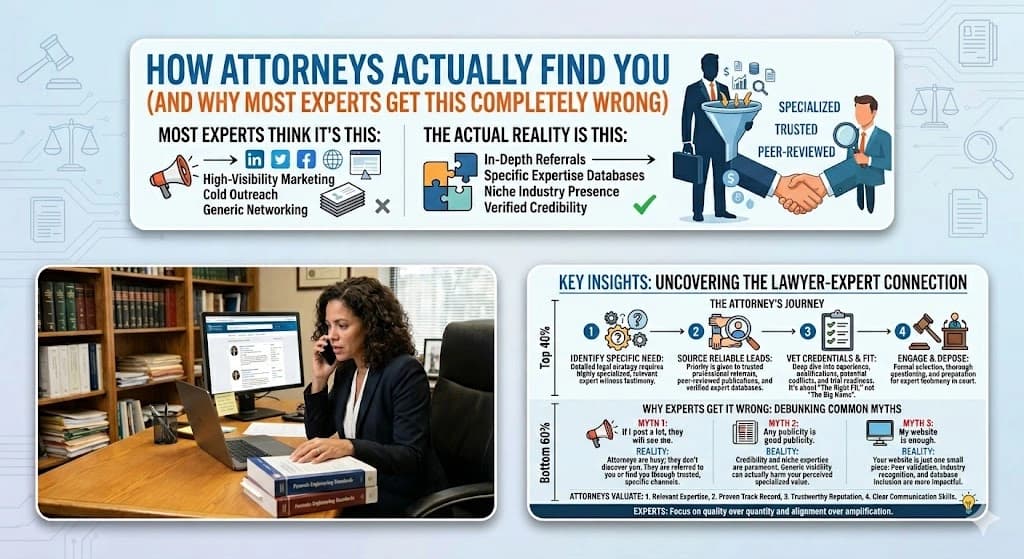
Behind every nurse who testifies sits a larger and less visible infrastructure of legal nurse consultants, referral networks, and support professionals that has grown specifically to serve this kind of litigation - and it operates under real time pressure.
Dr. Jordan Romano recalls a case that illustrates the pressure vividly. A law firm needed a certificate of merit - the formal statement, required in many states before a malpractice suit can even be filed, attesting that a qualified professional believes the claim has merit - on a nursing home malpractice case. They wanted it signed by a nurse with specific experience, after reviewing one hundred pages of records, by the next day. "It's always a tricky situation," Romano says of requests like this one, which are common enough that they have helped create what he describes as a whole "expert referral industry" built around connecting attorneys to qualified clinicians, including nurses, fast enough to meet filing deadlines. That scarcity cuts both ways: it drives up the value of nurses willing to take on rush assignments, and it puts real pressure on attorneys to vet those rushed opinions carefully once a case moves past the filing deadline and toward discovery.
Not every attorney is uncritical of what that ecosystem produces, however. Alvin Wolff has spent nearly four decades trying more than one hundred personal injury and medical malpractice cases, often relying on a legal nursing consultant for an initial record review before deciding whether a full physician expert is worth the cost. But he is candid about a pattern he has noticed. "What I found with nurses is they are really aggressive in criticizing doctors," Wolff says, speculating that it may stem from the fact that "when they're in practice they're not allowed to do that as much." His own practice is to weigh that tendency carefully rather than take an aggressive nursing opinion at face value - a reminder that the rise of nurse consultants as a first-pass, cost-efficient filter for malpractice screening comes with its own dynamics that experienced attorneys have learned to account for, not simply defer to.
The research burden behind a nursing opinion is also increasingly outsourced to specialists who never appear in court at all. Michael Graham has spent two decades meeting the information needs of "clinicians and pharmacists and nurses," and now does the same work for legal nurse consultants directly, running systematic literature searches so that consultants "who are in their clinic seeing patients" do not have to "sit on PubMed for six or seven hours" while deciding whether a case has merit. Graham stays neutral, he says, handing over the full range of literature rather than the studies that support a predetermined conclusion, then lets the nurse or physician evaluating the case decide what it means. It is a small, largely invisible piece of infrastructure, but it reflects how much specialized support now exists around the legal nurse consulting field specifically, a sign of how central that role has become to the malpractice litigation pipeline.
The Credibility Advantage of Staying at the Bedside
Every expert witness eventually faces some version of the "hired gun" accusation - the suggestion that an opinion follows the fee rather than the facts. Nurse experts, McCullum argues, are unusually well positioned to defuse it, precisely because nursing is a hands-on clinical profession in a way that makes ongoing bedside practice easy to verify and hard to fake.
McCullum treats her active clinical schedule as her primary defense against that line of attack. "Some attorneys try to bring in the hired gun angle," she says, "and for me that's very easy to circumvent because my primary job is being an ED nurse. That's what I do. It's what I know. It's what I'm comfortable with and it's what I love." Her clinical work also feeds her expert work in the other direction: cases she has reviewed become teaching material for the newer nurses she mentors in her own department, a loop she describes as valuable "not only for other people, but also for myself." Even after relocating internationally and continuing her expert practice remotely, she has kept clinical hours a non-negotiable requirement, because attorneys retaining her consistently ask the same question first: are you still working in an emergency department. For a profession built on hands-on, time-pressured judgment, a credential earned once and never revisited carries far less weight in a deposition than a shift worked the week before.
Conclusion
The RaDonda Vaught verdict did not create the demand for qualified nursing experts; it exposed how much was already resting on their shoulders and how unprepared much of the legal system was to evaluate nursing conduct on its own terms. As hospitals embed more of their clinical decision-making in protocols and electronic documentation, as prosecutors continue testing the boundary between medical error and criminal negligence, and as attorneys increasingly rely on legal nurse consultants as the first, cost-efficient screen on whether a malpractice case has merit, the profession's own experts are being asked to do more, in higher-stakes settings, than at almost any point before. What emerges from these conversations is not a single specialty finding its moment, but an entire support system - nurse experts, legal nurse consultants, medical librarians, referral networks, and the attorneys who rely on all of them - maturing around a simple, hard-won recognition: nursing care can only be fairly judged by people who have actually delivered it.
Experts Featured in This Article
Marilyn McCullum — Season 3, Episode 14 | Triple Board-Certified Emergency & Trauma Nurse Expert Witness
Dr. Stephen Cohen — Season 3, Episode 1 | Colorectal Surgeon & Medico-Legal Consultant
Dr. Robert Belfer — Season 3, Episode 5 | Pediatric Emergency Medicine Physician
Dr. Jordan Romano — Season 2, Episode 12 | Physician & Medical Expert Witness
Alvin Wolff — Season 2, Episode 5 | Personal Injury Attorney
Michael Graham — Season 3, Episode 4 | Medical Librarian
Dr. Steven Brown — Season 3, Episode 8 | Doctor of Chiropractic & Chiropractic Expert Witness