
The Path In - How Medical Professionals Become Expert Witnesses
For most medical professionals, the transition into expert witness work does not begin with a deliberate career decision. It begins with a recognition - usually delivered by someone else - that a particular clinical mind has something the legal system urgently needs.
After more than a decade practicing as a treating pain management physician, a pattern began to emerge. Attorneys who deposed him as a fact witness kept giving him the same feedback. Dr. Simon Dardashti, a double board-certified pain management and anesthesiology physician who appeared on Season 2, Episode 13 of On The Stand, recalls that attorneys repeatedly told him he explained difficult medical concepts with unusual clarity. One attorney eventually said something more direct: "You should consider going into the legal field - we could really use somebody who can explain these concepts the way you do." That conversation marked the beginning of a gradual transition into expert witness work that has since grown into a full parallel practice alongside his clinical career.
A similar pattern runs through the story of a nurse who stumbled into legal consulting entirely by accident. Marilyn McCullum, a triple board-certified emergency and trauma nurse who appeared on Season 3, Episode 14 of On The Stand, was attending a conference in Louisville - without any prior knowledge of legal nurse consulting - when she found herself seated next to the president and vice president of the American Association of Legal Nurse Consultants. The conversation that followed opened a professional world she had never considered. A mentor gave her her first case, told her she had the judgment and clinical skills to succeed, and sent her off. What has developed since is a practice she deliberately maintains as an adjunct to her primary work. "I am first and foremost an emergency room nurse," McCullum says. "The expert stuff is something I do on the side." That framing, as she has discovered, is one of her most powerful professional assets.
For a physician who has spent more than three decades leading clinical care in one of medicine's most litigated specialties, the path into expert work was shaped by institutional change as much as individual choice. Dr. Robert Belfer, a pediatric emergency medicine physician with over thirty years of experience who appeared on Season 3, Episode 5 of On The Stand, was present for the shift from individual physician judgment to protocol-driven, evidence-based care at children's hospitals across the country. As those clinical pathways became embedded in medical practice - and as attorneys and their experts began scrutinizing them in litigation - Belfer's expertise in how they work, when they apply, and when deviation from them is or is not a breach of the standard of care placed him at the center of pediatric medical malpractice cases.
What these three paths share is a common mechanism: clinical credibility, built over years of patient care, attracts legal attention. The legal system needs medical experts who genuinely know their fields. The problem is that far too few of them are willing to step forward.
Standard of Care - The Concept That Decides Everything
At the center of almost every medical malpractice case is a single question: was the standard of care met? The answer determines whether negligence occurred - and yet what standard of care actually means is frequently misunderstood by attorneys, juries, and even the medical professionals themselves.
Legally, the standard of care refers to what a reasonably competent physician in the same specialty would have done in the same or similar circumstances. It is not a question of what the best physician in the country would have done. It is not a question of whether the outcome was good or bad. It is a question of whether the conduct - the clinical decisions, the procedures, the follow-up - matched what a reasonable peer would consider appropriate given what was known at the time.
Belfer illustrates this complexity with what he describes as the 80-20 rule. Clinical pathways and protocols, he explains, are designed to guide care for the majority of patients - roughly 80 percent of cases in which the presentation is typical, the laboratory results are clear, and the progression follows an expected course. For those patients, the pathway functions as designed. But the 20 percent who fall outside it require something more: what Belfer calls slow thinking - the willingness to step back from the protocol, examine the individual patient, and ask whether the pathway actually fits. In those cases, deviation from the published protocol is not negligence. It is clinical judgment, and it is still within the standard of care. The irony, Belfer notes, is that the cases most likely to end up in litigation tend to come from that 20 percent - the patients whose conditions did not follow the expected course, and whose outcomes were therefore harder to anticipate and harder to defend.
Dardashti encountered this same distinction from the pain management side, where treatment standards are evolving rapidly and different physicians can have genuinely different but professionally defensible approaches to the same condition. When reviewing cases for attorneys, one of the first things he looks for is the line between a deviation from the standard of care and an outcome that was unfavorable despite appropriate care. "Sometimes the doctor does appropriate standard of care but the outcome is still unfavorable," he explains. Infections happen. Sometimes they occur due to the patient's own medical conditions rather than any failure of care. When that is the case, there was no malpractice - regardless of how the family feels, and regardless of the pressure an attorney may apply. For Dardashti, the ability to make this distinction clearly, and to articulate it in a way that a judge or jury can understand, is the core value of the medical expert.
McCullum approaches the standard of care from the nursing side, where it is most visibly enforced through the documentation trail. In nursing malpractice cases, she explains, one of the first things she examines is whether required screenings and clinical protocols were not just completed but documented contemporaneously. Timestamps are revealing. A fall risk screening documented at 4 a.m. when the nursing shift ended at 7 a.m. raises questions that no amount of defensive charting can easily answer. The legal system's reliance on documentation means that nurses who provide excellent care but document it poorly can face the same liability as nurses who actually failed their patients - while nurses who document everything carefully have a far stronger position in litigation, regardless of the quality of care they delivered. This gap between clinical reality and legal evidence is one of the most consistent sources of nursing malpractice exposure.
What Attorneys Actually Need from Medical Experts
From the attorney's side of the equation, the value of a medical expert is measured against specific requirements that formal credentials alone cannot satisfy.
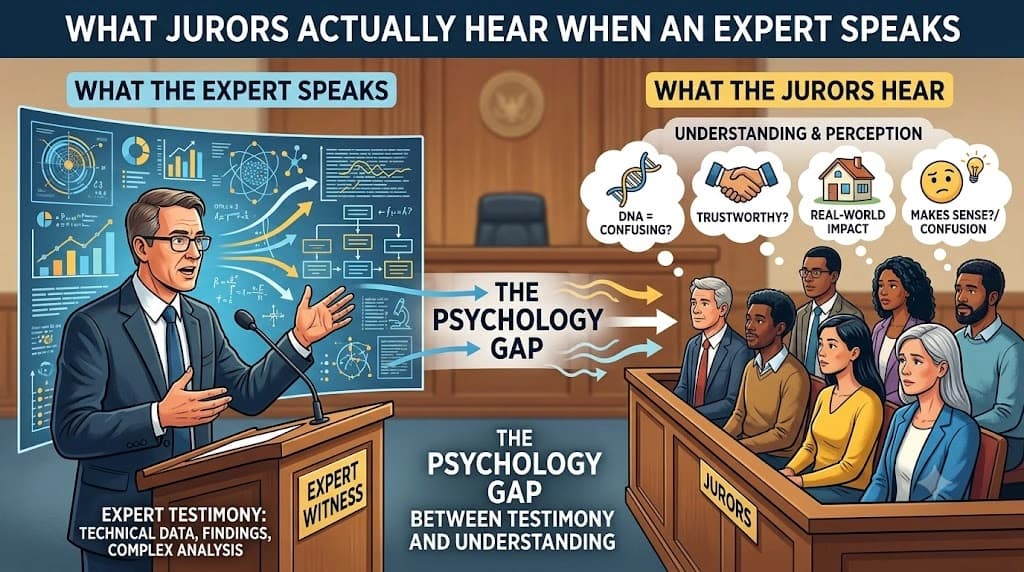
Few attorneys are more direct about this than one who has spent over two decades building complex personal injury and vaccine injury cases. Jon Groth, founder of Groth Law Firm and a personal injury and vaccine litigation attorney who appeared on Season 2, Episode 14 of On The Stand, says that credentials are a threshold, not a differentiator. What separates a useful expert from a transformative one is the ability to explain medicine to a jury without losing them. "Somebody who has a teaching background and can explain things to a jury without using words that have about 35 syllables - that's a big difference," Groth says. When he sees a defense firm using an expert with that capability, he takes it seriously.
The cost of getting this wrong is not abstract. Groth tells a story from early in his career: a treating orthopedic surgeon agreed to serve as an expert witness, provided a report, and then - as trial approached - refused to testify. The surgeon was near retirement and decided that the stress of a courtroom was not worth it, even though he had committed to the case months earlier. The result was a settlement for less than the case was worth. The lesson was unambiguous: finding a medical expert who is experienced in litigation, who enjoys the process, and who will follow through regardless of how uncomfortable the cross-examination becomes, is worth more than the most credentialed physician who will not show up.
Groth's practice has extended into vaccine injury litigation, one of the most challenging frontiers in medical-legal work. These cases require experts who can navigate genuinely contested scientific terrain, engage with regulatory frameworks that most practitioners have never encountered, and communicate clearly in the context of family grief. The attorney's ability to build the case depends almost entirely on finding medical experts who will engage with the science honestly and explain it in terms a judge or jury can follow.
The professional liability insurance dimension of medical malpractice adds another layer of complexity that many practitioners do not fully understand until they are in the middle of a claim. Frederick Fisher, a professional liability insurance expert with over fifty years of experience managing complex claims who appeared on Season 3, Episode 13 of On The Stand, has spent his career at the intersection of medicine, liability, and insurance coverage. As the author of the definitive text on claims-made insurance policies and a former president of the Professional Liability Underwriting Society, Fisher has seen how the structure of malpractice insurance policies - and the coverage gaps that exist in them - shapes the litigation landscape in ways that physicians, nurses, and the experts who work on their cases often do not anticipate. His core philosophy - that insurance should be a safety net, not a trap - applies with particular force in medicine, where malpractice coverage is a professional necessity and where the details of that coverage can determine the outcome of a lawsuit as decisively as the clinical facts.
The High-Stakes Cases - Sepsis, Wrongful Death, and the Criminalization of Medical Error
There is a category of medical case that sits at the far end of the consequence spectrum: cases involving children, cases involving wrongful death, and - increasingly - cases where the medical error crosses the line from civil liability into criminal prosecution.
Belfer has spent his career at one of these fault lines: pediatric emergency medicine, where the conditions most likely to result in litigation are also the ones most likely to have catastrophic outcomes if mismanaged. He identifies three conditions that account for a disproportionate share of pediatric malpractice litigation - febrile infants, appendicitis, and sepsis - and notes that they share a defining characteristic. In each case, the child may appear relatively well in the early stages and then deteriorate rapidly. The immune system's response to serious infection does not always make itself visible in the first hours of a presentation. Children who look fine in the emergency department can fall off a cliff six to eight hours later as the infection overwhelms their defenses. This clinical reality creates the legal problem: decisions made when the child looked well are scrutinized in hindsight, after the outcome is known to be bad.
Pediatric sepsis, Belfer explains, is rare in otherwise healthy children but disproportionately seen in those with underlying conditions - immune deficiencies, cardiac disease, oncologic illness. The sepsis pathway, now embedded in the electronic medical records of most children's hospitals, is designed to identify at-risk children during triage before they reach a physician. The one-hour and three-hour windows for IV antibiotics - the "golden hour" framework - are not just clinical guidelines. In litigation, they become a timeline that attorneys examine down to the minute, comparing what was ordered, what was administered, and when, against the standard that the evidence-based protocol defines. Cases where those windows were missed, and where the outcome was catastrophic, are among the most legally significant in pediatric medicine.
McCullum works in a territory that has recently shifted from civil to criminal. The case of RaDonda Vaught - a Tennessee nurse convicted of criminally negligent homicide after administering the wrong medication to a patient - sent a shockwave through the nursing profession when the verdict came in. McCullum has written and spoken about the implications of criminal nursing cases for how nurses practice, document, and understand their own legal exposure. What the Vaught case made clear, she observes, is that the boundary between a medical error and criminal liability is no longer governed by professional consensus alone. It is being drawn by prosecutors and juries who may have limited clinical background and who apply criminal standards of culpability to decisions made in the compressed, high-stakes environment of clinical care. For nursing experts who work on these cases, the challenge is not only explaining what went wrong - it is explaining why the clinical environment itself shapes the risk of error in ways that a criminal standard of proof was not designed to accommodate.
Groth's vaccine injury practice confronts a different kind of high-stakes case: one where the grief is real, the science is genuinely contested, and the legal framework - the National Childhood Vaccine Injury Act and the Vaccine Injury Compensation Program - creates a procedural landscape unlike any other area of personal injury law. Medical experts in these cases must not only understand the clinical science but navigate a regulatory framework that most physicians and nurses have never encountered in their clinical training. Cases involving serious injury or death following vaccination require experts who can engage honestly with what the evidence shows, communicate it clearly, and withstand the cross-examination that will inevitably follow in cases where the stakes are this high.
Credibility and the Hired Gun Problem
No challenge shadows medical expert witness work more persistently than the accusation of advocacy. The expert who testifies exclusively for plaintiffs or exclusively for defendants becomes a target in every cross-examination, and the accusation that a physician has become a "hired gun" - someone whose opinions follow their fees - is among the most damaging that can be made in court.
Groth is candid about how this appears from the attorney's side of the table. When an expert's financial history reveals that they have earned millions of dollars testifying exclusively for one side, he says, their credibility is substantially diminished in the eyes of a jury - regardless of their credentials. The 50-50 plaintiff-defense ratio that many experts aspire to is not merely an ethical posture. It is a practical defense against a line of attack that opposing counsel will pursue without hesitation, and it is an indicator that the expert's opinions are genuinely driven by the facts rather than by who is writing the check.
Dardashti has built his practice around exactly this balance. Working both plaintiff and defense sides, he explains, is not a credibility strategy - it reflects the actual nature of the cases he reviews. The facts determine the opinion. In pain management, he has reviewed cases where the physician clearly deviated from the standard of care and cases where everything was done correctly and the outcome was still unfavorable. His job is to identify which is which, explain it clearly, and let the record speak. When he tells an attorney that there was no malpractice - even when that attorney was hoping for a different answer - his ability to justify his position based on the facts of the record is what makes the opinion defensible and, ultimately, credible.
McCullum's approach to the hired gun problem is the one that most directly defuses it. Because her primary professional identity is as an active emergency room nurse - practicing more than thirty hours a week, teaching new nurses, working in the same clinical environment she testifies about - opposing counsel cannot credibly argue that she has been captured by the legal system. Her clinical work is not in the past. It is happening now. The credibility she carries into a deposition is earned in the emergency department every week, not constructed for the courtroom. When attorneys attempt to frame her as a full-time expert witness whose opinions are for sale, the simple fact of her ongoing clinical practice undermines the argument before she needs to address it directly.
Breaking In - Why More Medical Professionals Should Consider This Work
The demand for qualified medical expert witnesses substantially exceeds the supply. Every medical malpractice case requires expert testimony. Every personal injury case involving medical causation requires someone who can explain, to a jury without clinical training, what the medicine says happened and why it matters. And yet the pool of physicians, nurses, and allied health professionals willing to step into that role remains far smaller than the demand for their knowledge requires.
The barriers are real. Clinical practice is time-consuming. The fear of peer judgment - the concern that testifying against a colleague, or even being seen as someone who profits from malpractice litigation, will damage one's professional standing - keeps many qualified practitioners on the sidelines. The uncertainty about the legal process itself discourages many who have never been involved in litigation. And the marketing challenge of becoming visible to the attorneys who need experts creates a practical obstacle for professionals who have built their careers in clinical settings rather than legal ones.
Dardashti's path through these barriers is instructive. He did not seek out legal work. The legal system approached him, because attorneys who deposed him as a treating physician recognized something valuable and told him about it. The feedback loop from those depositions - attorneys explaining what worked, what a jury could follow, what needed to be simplified - was itself an education in expert witness communication that most medical professionals never receive. The lesson is that clinical practitioners who explain medicine clearly are already doing a version of what expert witnesses do. The step from treating physician to testifying expert is smaller than it appears from the outside.
McCullum's model - maintaining active clinical practice while building a part-time expert witness business - offers another entry point. The infrastructure that supports this transition is more developed than it was a decade ago. The legal nurse consulting community is, as she describes it, genuinely supportive of practitioners who are new to the field. Professional organizations, mentorship networks, and educational resources exist for nurses who want to explore this work. What is needed is the recognition that clinical knowledge has legal value - and the confidence to act on it.
The integration of AI into clinical documentation is beginning to change the landscape in other ways. Dardashti notes that AI-assisted recording tools are freeing physicians from the burden of note-taking during patient visits, allowing more direct clinical engagement and, in turn, more thorough documentation. The records that will be examined in malpractice litigation five years from now will be created differently than those reviewed today. For medical experts who understand both clinical practice and the legal uses of medical records, this shift will create both new challenges and new opportunities.
Conclusion
Medicine and law share a fundamental preoccupation: the truth about what happened to a human being. In the courtroom, establishing that truth depends on experts who have spent careers learning to see clearly - to look at a clinical protocol, a documentation timestamp, or a treatment decision made under pressure and render an opinion that reflects not advocacy but understanding.
The physicians, nurses, and attorneys who work at this intersection describe it as demanding, ethically complex, and professionally consequential. They also describe it as work that matters in ways few professional roles match. For the families seeking accountability, for the medical profession seeking to maintain standards of care, and for the legal system seeking competent guidance on the most technical cases it handles, the medical expert witness is not a peripheral figure. They are essential. The question facing the field is whether enough qualified clinical practitioners will recognize what they have to offer - and choose to step forward.
Experts Featured in This Article
Dr. Simon Dardashti - Season 2, Episode 13 | Double Board-Certified Pain Management & Anesthesiology Physician
Dr. Robert Belfer - Season 3, Episode 5 | Pediatric Emergency Medicine Physician
Marilyn McCullum - Season 3, Episode 14 | Triple Board-Certified Emergency & Trauma Nurse Expert Witness
Jon Groth - Season 2, Episode 14 | Personal Injury & Vaccine Litigation Attorney
Frederick Fisher - Season 3, Episode 13 | Professional Liability Insurance Expert & Author