Wyoming Rules Governing Expert Witness Disclosures and Testimony
The expert disclosure framework of Wyoming reflects a carefully engineered system that balances transparency, reliability, and procedural fairness across multiple dimensions.
Expert insights, legal technology trends, and best practices for working with expert witnesses

The expert disclosure framework of Wyoming reflects a carefully engineered system that balances transparency, reliability, and procedural fairness across multiple dimensions.

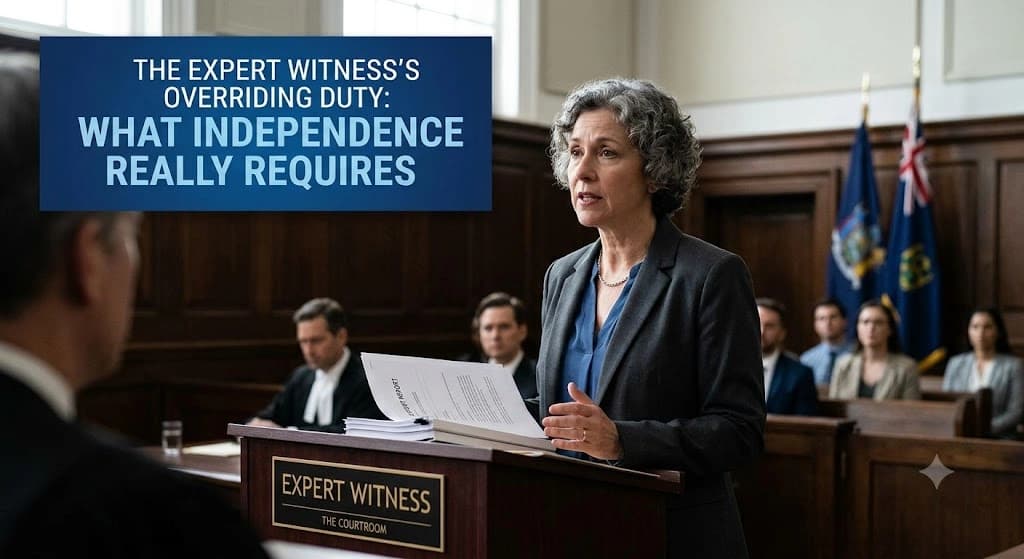
Category: Big-Picture Perspectives on Expert Witness Practice - The expert witness is paid by one side and obligated to another entirely, the tribunal or court that will rely on the opinion. This piece unpacks what independence actually requires beyond "no coaching," how it gets tested in cross-examination and joint expert processes, and exactly where legitimate assistance to a legal team ends and advocacy quietly begins.

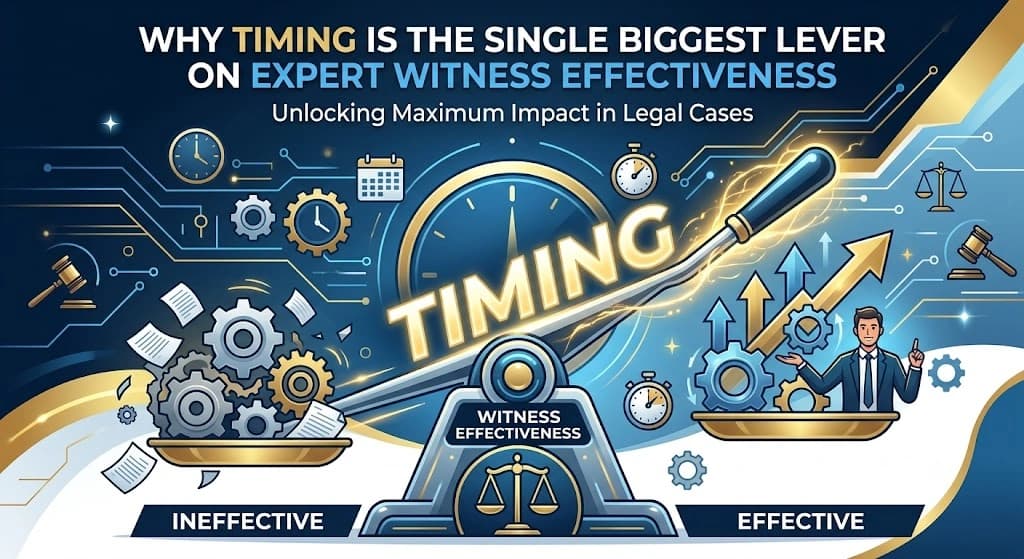
Category: Big-Picture Perspectives on Expert Witness Practice - Most legal teams treat the timing of expert engagement as a scheduling detail, something that "depends on the case." It isn't. This piece breaks down the three windows in which an expert can be brought onto a matter, pre-dispute, post-filing, and late-stage, what each one actually costs in practice, and why timing is one of the few levers a case team can control from day one.

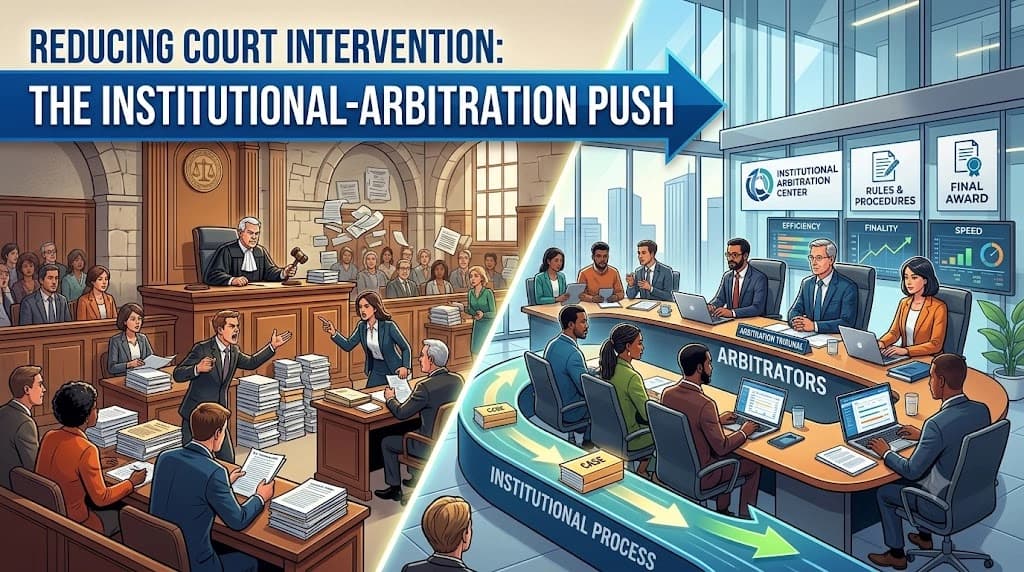
India's arbitration regime was built on a promise: disputes resolved by a chosen tribunal, on a compressed timeline, largely outside the reach of an overburdened court system. How much of that promise survives depends on how much control courts retain once a dispute enters arbitration. Reducing that court intervention has become the organising idea behind nearly every recent reform to Indian arbitration law - from a string of Supreme Court judgments between 2023 and 2025, to the still-pending Arbitration and Conciliation (Amendment) Bill, 2024, to the steady institutionalisation of Indian arbitration through centres such as the Mumbai Centre for International Arbitration (MCIA) and the arbitration centres in Hyderabad and New Delhi. The stakes are concrete. As of December 2025, more than 5.39 crore cases were pending across Indian courts, according to figures published on the National Judicial Data Grid. Pendency in district courts alone grew by nearly six per cent over three years. A commercial dispute that ends up back in court - through a Section 34 challenge to an award, a Section 9 application for interim relief, or a Section 11 fight over who gets to appoint the arbitrator - does not escape that backlog. It joins it. Every point in the Arbitration and Conciliation Act, 1996 at which a court can be approached is a point at which a dispute risks being pulled back into the queue that arbitration was meant to let parties bypass.

An expert witness rarely loses a case in the witness box. Most experts who fail do so months earlier, in a hurried phone call or a two-line email that passed for a brief. By the time cross-examination exposes the gap between what the expert was asked to do and what the expert actually did, the damage to the party's case is already done. In arbitration and litigation across India, this is now one of the most common — and most avoidable — reasons expert evidence gets discounted or rejected outright. The stakes have risen sharply. Construction disputes, financial fraud investigations, valuation disagreements and cross-border arbitrations increasingly turn on technical opinion rather than pure legal argument. Tribunals seated in Mumbai, Delhi and at GIFT City, and courts from the Bombay and Delhi High Courts to the Supreme Court, are being asked to weigh competing expert accounts on questions no judge or arbitrator was trained to answer unaided. How well that expert opinion survives scrutiny depends less on the expert's qualifications and more on how the instructing attorney set the assignment up in the first place. This explainer sets out what a proper brief looks like, what the law in India requires of an expert once appointed, and where attorneys most often go wrong in preparing a witness for hearing.

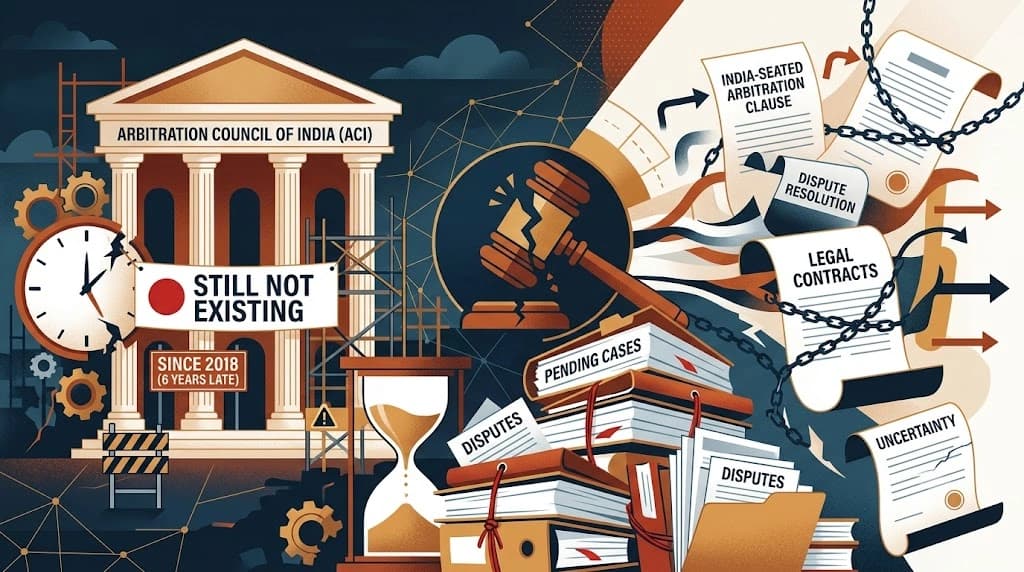
Speaking at the Indian Institute of Arbitration and Mediation's Silver Jubilee summit in New Delhi on 11 July, Chief Justice of India Surya Kant said out loud what arbitration lawyers in India have been saying to each other for years: the Arbitration Council of India, created by Parliament in 2019 to grade institutions and accredit arbitrators, still does not exist. Six years on, it remains a body on the statute book and nowhere else. Exlitem India examines what that gap has cost, what the pending Draft Arbitration and Conciliation (Amendment) Bill, 2024 proposes to do about it, and — more usefully — what attorneys advising on India-seated arbitration should actually do while they wait for Parliament to act.

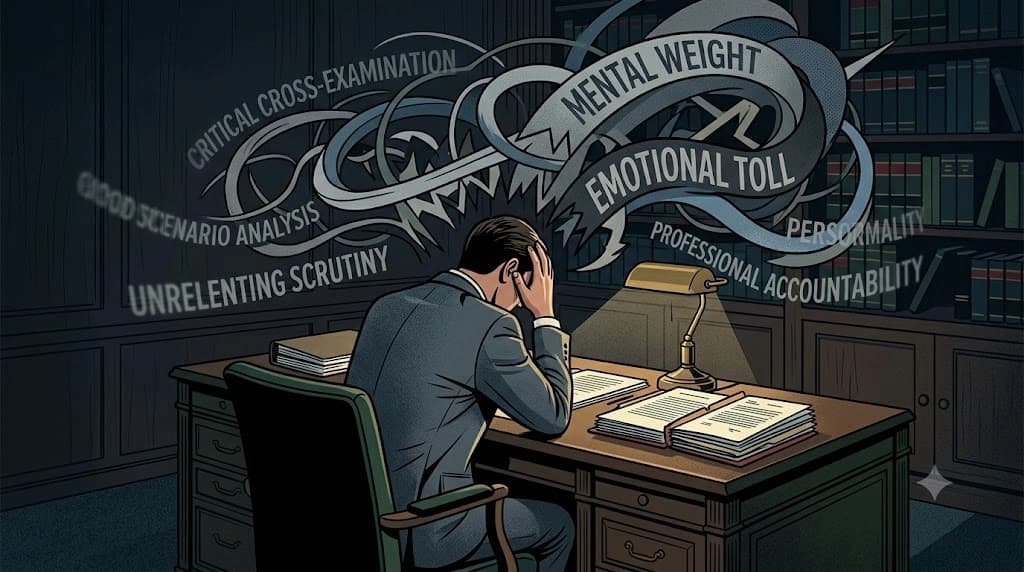
No credentialing board tests for this. The organizations that certify physicians, engineers, forensic accountants, and vocational counselors evaluate methodology, subject-matter mastery, and ethics. None of them ask whether a candidate can sit across from an attorney whose entire professional purpose, for the next thirty or ninety minutes, is to make them look incompetent in front of twelve strangers, absorb that attempt without visibly flinching, and then do it again the following week on an unrelated case in an unrelated courtroom. Expert witness work carries a psychological weight that appears nowhere on a CV: the adversarial pressure of cross-examination, the discipline of staying composed while your ethics are being questioned, the quiet toll of telling a client the outcome they feared, the whiplash of a court calendar that can turn a quiet month into three overlapping trials without warning. Nobody trains for this. Everyone who does this work for more than a few years learns to manage it, mostly through trial, error, and a fair amount of personal cost along the way. Ask most experts how they prepared for the psychological side of this profession and the honest answer is that they did not, at least not deliberately. They prepared for the substance: the methodology, the standards their opinions had to satisfy, the rules of evidence that would determine whether a court even let them speak. The emotional and mental preparation came later, usually after a bad experience made clear that it was necessary, and usually without any template to follow. This article draws on conversations from On The Stand with Ashish Arun, featuring an insurance claims expert, a cybersecurity expert, a plaintiff trial attorney, a colorectal surgeon, a forensic imaging analyst, a vocational rehabilitation expert, a securities and damages expert, and an insurance coverage specialist. Their fields have almost nothing in common. One spends his days analyzing pixels for courtroom video evidence; another has spent five decades untangling professional liability insurance disputes; another operates on colons for a living and only occasionally sets foot in a courtroom. Yet their accounts of what this work actually costs, and what it takes to sustain a decades-long practice without burning out, converge with striking consistency, which is itself a finding worth taking seriously. When people with nothing else in common independently describe the same pressures and build strikingly similar coping systems, that convergence suggests something structural about the profession itself, not just something particular to any one of them.


Florida strikes a balance between rigorous expert admissibility standards and practical discovery procedures, ensuring reliable testimony without unnecessary rigidity

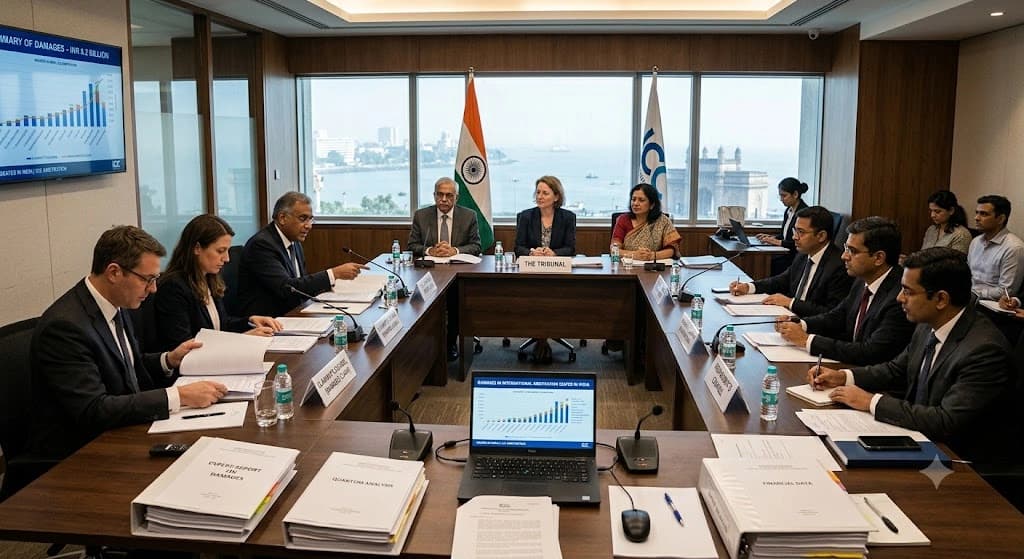
Liability is rarely where a high-value international arbitration seated in India is decided anymore — it is decided on quantum: whether a tribunal accepts a discounted cash flow, how it prices interest across three separate clocks, and how much a court can still touch once the number is signed. This analysis maps the law and the practice behind that number.