

Expert insights, legal technology trends, and best practices for working with expert witnesses


The expert witness framework of Nevada emphasizes flexibility and judicial discretion, allowing courts to assess qualifications and reliability on a case-by-case basis

Imagine you are a board-certified colorectal surgeon in Richmond, Virginia, with decades of clinical experience and the credentials to serve as a powerful expert witness. Somewhere across the country, an attorney in Omaha, Nebraska is working a medical malpractice case and desperately needs exactly your expertise. They are making calls, searching online, and asking colleagues. Do they find you? Dr. Stephen Cohen—a board-certified colorectal surgeon and expert witness featured in Season 3, Episode 1 of On The Stand with Ashish Arun—has posed this exact question to colleagues eager to enter the medico-legal space: “If I’m a new surgeon in private practice and I want to do expert witness work and I live in Richmond, Virginia, and a patient who thinks they’re harmed walks into an attorney in Omaha, Nebraska… how do you link those two?” For most experts, the honest answer is: there is no link. Not yet. The most qualified expert in the room is often invisible to the attorneys who need them most—not because of any lack of credentials, but because they have fundamentally misunderstood how the attorney search process actually works. This article draws on in-depth conversations with attorneys and expert witnesses across multiple disciplines and seasons of On The Stand with Ashish Arun to reveal the real pipeline: how attorneys actually find experts, what channels they use, why some search approaches frustrate them, and what the most in-demand experts do differently.

North Carolina favors early disclosure of expert testimony, allowing opposing parties a meaningful opportunity to evaluate and challenge expert opinions before trial

Indiana follows a relatively lean, interrogatory-driven approach to expert disclosure. The rule therefore places emphasis on targeted discovery rather than broad automatic disclosure.

There is a question that sits at the center of every expert witness career, and it is almost never asked out loud. How much should I charge? It sounds like a business question. A spreadsheet question. The kind of thing you decide once, put in a fee schedule, and file away. It is not. It is one of the most strategically complex and professionally consequential decisions an expert witness makes - and most experts get it wrong, not because they are greedy or naive, but because nobody ever teaches them to think about fees in the right way. The fee question is not really about money. It is about positioning, credibility, professional identity, and the long-term architecture of a practice that can survive decades of adversarial scrutiny. The experts who get it right are not necessarily the ones who charge the most or the least. They are the ones who understand exactly what their fee communicates - and who have built the rest of their professional life to support that communication. I have studied the careers of expert witnesses across medicine, law, finance, insurance, and the sciences - practitioners with careers spanning twenty, thirty, and fifty years. The most successful among them share a surprisingly consistent philosophy about the business side of their work. It is more nuanced than most billing guides suggest, and more important than most new experts realize. Here is what they have taught me.

The expert disclosure rules of Virginia are comparatively lean and interrogatory driven, giving parties flexibility but requiring meaningful, case specific summaries rather than vague topic descriptions

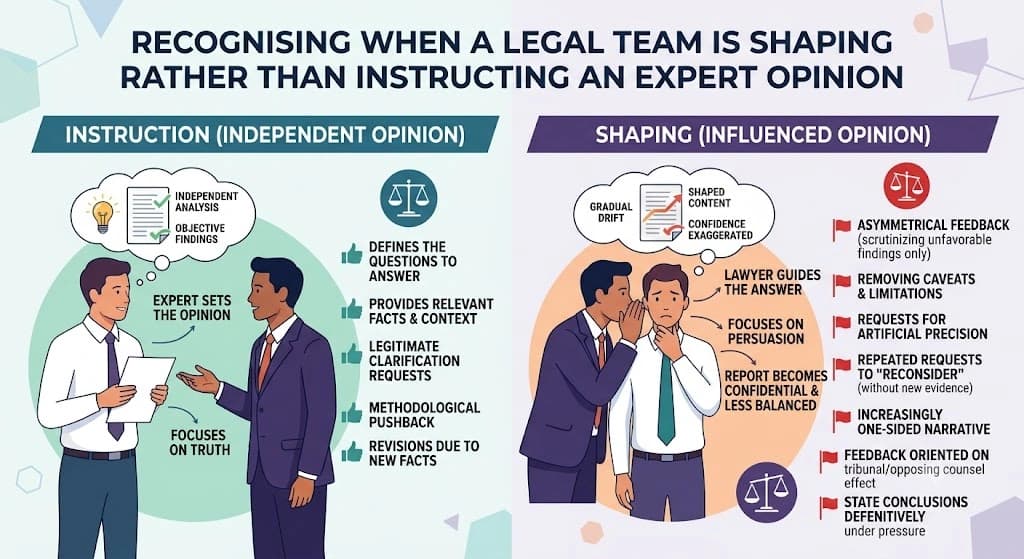
There is a paradox at the heart of expert witness work that no professional school teaches you how to resolve: you are retained and paid by one side of a dispute, but your entire professional value depends on behaving as though you were hired by neither. The moment an expert's opinion bends toward the interests of the party writing their check, they cease to be an expert in any meaningful sense. They become an advocate with credentials. And in a legal system built on the premise that truth can be found through adversarial process, a credentialed advocate is not just ethically problematic - they are professionally useless. The experts who have built the longest, most respected careers in this field have all passed versions of what might be called the integrity test - moments when the easier path was to shade an opinion, accept a case that didn't fit their expertise, or stay silent about a finding that undermined the retaining attorney's theory. The ones who passed those moments consistently are the ones still working decades later. The ones who did not found their credibility narrowing, their reputations challenged, and their names appearing in Daubert decisions they would rather not discuss. This article draws on conversations from On The Stand with Ashish Arun with experts across corporate law, finance, industrial hygiene, nursing, and financial crime investigation - fields that share nothing except the fundamental challenge of maintaining intellectual honesty in a system that rewards advocacy. Their insights, taken together, form something close to a field manual for expert integrity.

In Conservation Law Foundation v. Shell Oil Co., Civil No. 3:21-cv-00933 (D. Conn. May 18, 2026), Magistrate Judge Thomas O. Farrish ruled that AI prompts used by historian Dr. Naomi Oreskes to cull Shell's document production into a workable subset were part of her methodology — and therefore discoverable under Rule 26(b).