Indiana Rules Governing Expert Witness Disclosures and Testimony
Indiana follows a relatively lean, interrogatory-driven approach to expert disclosure. The rule therefore places emphasis on targeted discovery rather than broad automatic disclosure.
Expert insights, legal technology trends, and best practices for working with expert witnesses

Indiana follows a relatively lean, interrogatory-driven approach to expert disclosure. The rule therefore places emphasis on targeted discovery rather than broad automatic disclosure.

There is a question that sits at the center of every expert witness career, and it is almost never asked out loud. How much should I charge? It sounds like a business question. A spreadsheet question. The kind of thing you decide once, put in a fee schedule, and file away. It is not. It is one of the most strategically complex and professionally consequential decisions an expert witness makes - and most experts get it wrong, not because they are greedy or naive, but because nobody ever teaches them to think about fees in the right way. The fee question is not really about money. It is about positioning, credibility, professional identity, and the long-term architecture of a practice that can survive decades of adversarial scrutiny. The experts who get it right are not necessarily the ones who charge the most or the least. They are the ones who understand exactly what their fee communicates - and who have built the rest of their professional life to support that communication. I have studied the careers of expert witnesses across medicine, law, finance, insurance, and the sciences - practitioners with careers spanning twenty, thirty, and fifty years. The most successful among them share a surprisingly consistent philosophy about the business side of their work. It is more nuanced than most billing guides suggest, and more important than most new experts realize. Here is what they have taught me.

The expert disclosure rules of Virginia are comparatively lean and interrogatory driven, giving parties flexibility but requiring meaningful, case specific summaries rather than vague topic descriptions

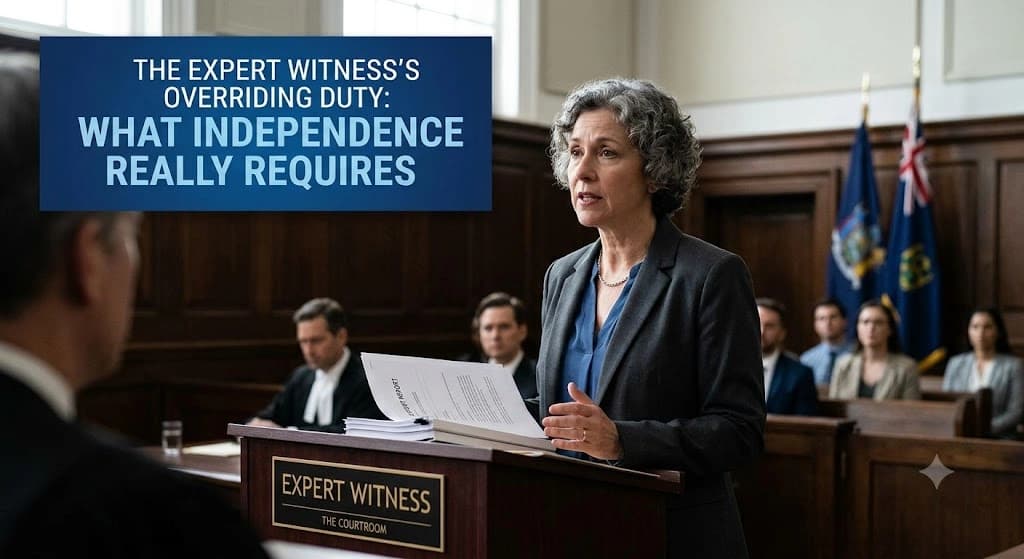
There is a paradox at the heart of expert witness work that no professional school teaches you how to resolve: you are retained and paid by one side of a dispute, but your entire professional value depends on behaving as though you were hired by neither. The moment an expert's opinion bends toward the interests of the party writing their check, they cease to be an expert in any meaningful sense. They become an advocate with credentials. And in a legal system built on the premise that truth can be found through adversarial process, a credentialed advocate is not just ethically problematic - they are professionally useless. The experts who have built the longest, most respected careers in this field have all passed versions of what might be called the integrity test - moments when the easier path was to shade an opinion, accept a case that didn't fit their expertise, or stay silent about a finding that undermined the retaining attorney's theory. The ones who passed those moments consistently are the ones still working decades later. The ones who did not found their credibility narrowing, their reputations challenged, and their names appearing in Daubert decisions they would rather not discuss. This article draws on conversations from On The Stand with Ashish Arun with experts across corporate law, finance, industrial hygiene, nursing, and financial crime investigation - fields that share nothing except the fundamental challenge of maintaining intellectual honesty in a system that rewards advocacy. Their insights, taken together, form something close to a field manual for expert integrity.

In Conservation Law Foundation v. Shell Oil Co., Civil No. 3:21-cv-00933 (D. Conn. May 18, 2026), Magistrate Judge Thomas O. Farrish ruled that AI prompts used by historian Dr. Naomi Oreskes to cull Shell's document production into a workable subset were part of her methodology — and therefore discoverable under Rule 26(b).

Arizona tries to balance fairness and efficiency by requiring meaningful expert disclosure while leaving room for judicial discretion

Every physician knows the moment. A patient was harmed. The care may have been substandard. A family is seeking justice. But to bring that case to court, an attorney needs a physician willing to examine what another physician did, measure it against the standard of care, and testify truthfully about what they find - even when that means testifying against a colleague. This is the work of the medical expert witness. And it is among the most demanding, most meaningful, and most misunderstood roles in the American legal system. Medical expert witnesses occupy a position that no other category of expert quite matches. Unlike supply chain analysts or forensic accountants, they testify about decisions that affected human health - about pain that persisted, conditions that were missed, children who did not recover as they should have. Their testimony carries emotional weight that can move a jury, and their credibility can determine whether families receive accountability or whether substandard care remains invisible. And yet, to be effective, they must deliver opinions with the clinical detachment and intellectual rigor that distinguishes a credible expert from an advocate. This article draws on conversations from On The Stand with Ashish Arun with physicians, nurses, attorneys, and professional liability experts who have spent their careers at this intersection. Their insights reveal an ecosystem that is more complex - and more consequential - than most people outside the courtroom ever recognize.

Somewhere in the American West, a tribe is negotiating access to water that treaty law reserved for them over a century ago. The legal question at the center of the dispute is not scientific or medical - it is historical. What did this land mean to this people before a federal reservation was created? How did they use these waterways from time immemorial? And what did the federal government intend when it signed a document that a generation of lawyers is now trying to interpret in an era of climate change and diminishing water supply? To answer those questions in a courtroom, you need a historian. The idea that a historian could be an indispensable expert witness in a major federal court proceeding is, for most people, entirely unexpected. And that is precisely the point. The most urgent expert witness demand in modern litigation is not always in the places where demand has traditionally concentrated - medical malpractice, personal injury, financial fraud. It is in fields where the legal system has arrived late, where the expertise required is rare, and where the gap between existing harm and qualified testimony is widest. Across multiple seasons of On The Stand, experts from wildly different disciplines are describing the same phenomenon: their fields have become litigation territories, often faster than the legal profession could prepare for it. New technologies, new public health crises, new regulatory frameworks, and even climate change are generating categories of legal dispute that barely existed a decade ago - and the experts who can navigate those disputes are in short supply and high demand.

The expert disclosure framework of Kentucky is practical and flexible, but comparatively less transparent than the federal model